

Field-Ready Gear Design: What Hunters Need to Know
Field-ready gear design is the practice of engineering outdoor equipment to perform reliably under real-world stressors, including moisture, UV exposure, abrasion, and physical load, before those conditions ever become a problem. This approach, also called field-first design in product engineering circles, builds performance requirements into the earliest stages of development rather than treating them as finishing touches. For hunters, survivalists, and outdoor enthusiasts, understanding what is field-ready gear design separates gear that holds up from gear that fails at the worst possible moment. Field-first principles boost operational efficiency by up to 25% and cut operational costs by 30%. That kind of performance gap is exactly why the design philosophy behind your gear matters as much as the gear itself.
What is field-ready gear design and its core principles?
Field-ready gear design is defined by one non-negotiable rule: the field comes first. Every material choice, every seam placement, and every closure system gets evaluated against real outdoor conditions, not ideal laboratory benchmarks. UV resistance, waterproofing, and load tolerance are specified from the very start of the design process, not added later as upgrades.
The most critical field-ready design principles include:
- Offline and independent usability. Gear must function without external support systems. A zipper that jams in freezing temperatures or a buckle that requires two hands defeats the purpose entirely.
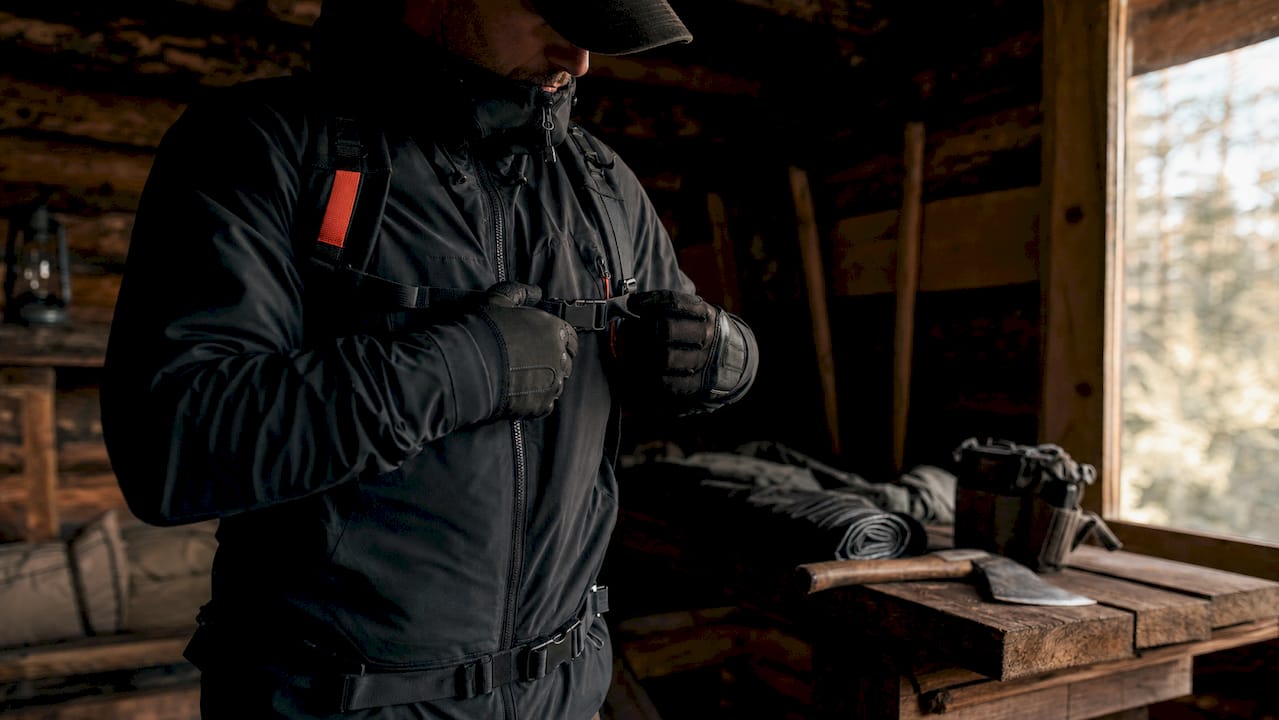
- Gloved-hand operability. Controls, closures, and adjustment points must work when the user is wearing gloves. This single criterion eliminates a large percentage of consumer-grade gear from field consideration.
- Structural load path integrity. Straps, attachment points, and panels must distribute weight and stress along engineered paths, not rely on stitching alone to hold under dynamic load.
- Environmental material resistance. Fabrics and hardware must resist UV degradation, moisture cycling, and abrasion from brush, rock, and repeated contact.
- Balanced protection and comfort. Adding armor or reinforcement without accounting for breathability and range of motion produces gear that hunters abandon after one trip.
Pro Tip: When evaluating any piece of field gear, put on a pair of work gloves and try every zipper, buckle, and adjustment point. If you struggle, the gear will fail you in the field.
Concurrent engineering is the method that ties these principles together. Design teams evaluate material availability, structural requirements, and production feasibility at the same time rather than in sequence. This approach prevents the common failure where a perfectly designed product becomes commercially unviable or structurally compromised during manufacturing. The durable tactical gear materials that survive real field use are almost always the result of this integrated process.
How does field-ready design differ from conventional gear design?
The gap between lab-tested gear and field-ready gear is wider than most hunters realize. Lab success does not guarantee field success; movement and external stresses in real terrain affect material and seam performance in ways that controlled testing cannot replicate. A seam that passes a static pull test can fail completely when subjected to the twisting, bending, and moisture cycling of a full day in the backcountry.
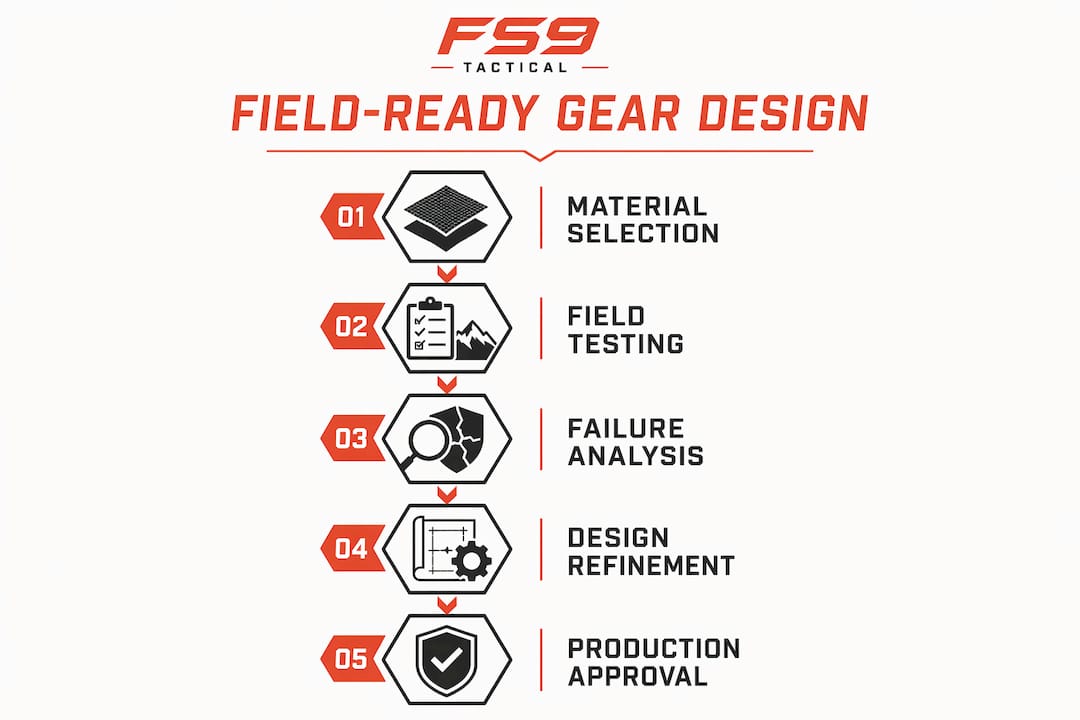
Conventional gear design typically follows a linear path: concept, lab testing, refinement, production. Field-ready design breaks that sequence by inserting real-world testing early and repeatedly. Iterative prototypes go into the field before the design is finalized, and failures become design inputs rather than post-launch warranty problems.
The trade-offs in field-ready gear are also handled differently. Adding features like zippers and pockets creates trade-offs between bulk, failure points, breathability, and waterproofness. A conventional design process often resolves these trade-offs based on marketing priorities. A field-ready process resolves them based on use-case reality. For tactical gloves, for example, breathability frequently takes priority over waterproofing because wet hands in cold climates lose dexterity faster than cold hands do.
Pro Tip: Ask any gear manufacturer whether their products were field-tested before production or only after. The answer tells you everything about how they handle design trade-offs.
The most telling difference shows up in what happens when a prototype fails. In conventional design, a failure triggers a redesign of the specific component. In field-ready design, a failure triggers a question: what does this failure reveal about how the user actually interacts with this gear? Field fixes become permanent design features. A reinforced stress point added after a prototype tears in testing is not a patch. It is data.
| Design approach | How failures are handled | When field input enters the process |
|---|---|---|
| Conventional design | Post-launch warranty claims | After production begins |
| Field-ready design | Pre-production prototype iterations | At concept stage |
What are the benefits of field-ready gear for hunters and survivalists?
The benefits of field-ready gear are concrete and measurable. Field-ready gear delivers enhanced reliability, durability, and efficiency in harsh outdoor settings, which directly increases user confidence and safety. For a hunter on a multi-day backcountry trip, that reliability is not a luxury. It is the difference between a successful hunt and an emergency situation.
The practical advantages include:
- Reduced failure rates at critical moments. Gear built to field-ready standards fails less often precisely when the stakes are highest, because those high-stakes conditions were part of the design brief from day one.
- Lower long-term cost. Field-ready gear costs more upfront but requires fewer replacements. Gear that survives three seasons of hard use costs less per use than cheap gear replaced every season.
- Improved user efficiency. When gear works exactly as expected under stress, hunters and survivalists spend less mental energy managing their equipment and more on the task at hand.
- Greater safety margin. A pack that holds its load path under dynamic stress, a case that keeps moisture out in a downpour, and a kit that opens with cold hands all reduce the risk of critical failure in the field.
- Confidence under pressure. Knowing your gear was designed for your conditions removes a layer of uncertainty that compounds quickly in survival scenarios.
For survivalists specifically, the 7 core categories of outdoor emergency gear all depend on field-ready design principles to function when needed. A shelter system that fails in wind, a fire kit that won’t open with wet hands, or a signaling device with a corroded battery compartment are all design failures, not user errors.
Fs9tactical builds its entire product line around these principles. The brand’s use of ballistic fabrics and reinforced stitching reflects a direct application of field-ready design, and over 20,000 satisfied users confirm that the approach works in practice.
What steps go into manufacturing truly field-ready gear?
Manufacturing field-ready gear requires a process that runs design and production decisions in parallel from the very beginning. Early design stages must evaluate material availability, structural requirements, and production feasibility together to reduce risk and keep costs viable. Waiting until a design is finalized to check whether the chosen fabric is commercially available at scale is a common and expensive mistake.
The manufacturing process for field-ready gear follows this sequence:
- Define field performance standards first. UV resistance ratings, waterproofing specifications, and load tolerance limits are written into the design brief before any sketching begins.
- Select materials based on real outdoor exposure. Fabrics and hardware are chosen for how they perform after repeated moisture cycling, UV exposure, and abrasion, not just how they test in a single-condition lab environment.
- Build functional prototypes, not polished ones. Functional prototypes focused on proof of concept outperform polished early versions because they reveal critical design features that enhance field reliability. A rough prototype that survives a week of field testing tells you more than a beautiful sample that has never left the building.
- Run multiple prototype iterations under realistic conditions. Stress testing under realistic field conditions identifies failure points before production begins, not after thousands of units are already in the field.
- Establish golden samples as production benchmarks. A golden sample is the approved prototype that every production unit is measured against. It locks in the field-tested performance standard and prevents quality drift during scaling.
- Apply Design for Manufacturing principles. Every design decision gets evaluated for whether it can be reproduced consistently at scale without compromising the field performance standard.
| Manufacturing stage | Field-ready requirement | Risk if skipped |
|---|---|---|
| Material selection | Real-exposure testing | Premature degradation in field |
| Prototype development | Functional over aesthetic | Missed failure points |
| Stress testing | Realistic field conditions | Post-launch warranty failures |
| Golden sample approval | Production benchmark | Quality drift at scale |
Hunters and survivalists who want to choose tactical gear that actually meets field-ready standards should ask manufacturers directly about their prototyping process. The answer reveals whether field performance was designed in or bolted on.
Key Takeaways
Field-ready gear design is the only approach that guarantees outdoor equipment performs under the specific stressors of real hunting and survival conditions, because it builds those stressors into the design process from day one.
| Point | Details |
|---|---|
| Field-first from the start | UV resistance, waterproofing, and load tolerance must be specified before design begins, not added later. |
| Lab tests are not enough | Real terrain and movement create stresses that controlled lab testing cannot replicate. |
| Trade-offs require use-case clarity | Breathability versus waterproofing decisions must be resolved by field conditions, not marketing priorities. |
| Functional prototypes outperform polished ones | Rough prototypes tested in the field reveal more critical design data than finished samples tested indoors. |
| Manufacturing must run parallel to design | Evaluating material availability and production feasibility early prevents costly redesigns and quality failures. |
Why I think most hunters underestimate gear design
Most hunters I talk to evaluate gear by how it looks and how it feels in a store. That is the wrong test entirely. The real test is whether the designer ever asked: what happens to this seam after six hours of rain and brush contact? What happens to this zipper when the user is wearing gloves and their hands are shaking from cold?
The common misconception is that a gear item that passes a manufacturer’s quality check is field-ready. Quality checks confirm that a product was made correctly. They do not confirm that it was designed correctly for field conditions. Those are completely different questions.
Field-ready design philosophy changes what you look for when you buy gear. You stop asking “does this look durable?” and start asking “was this designed for the conditions I actually face?” Ballistic fabrics and reinforced stitching are visible signals of field-ready thinking, but the real indicator is whether the manufacturer can tell you what field conditions their design was tested against.
Fs9tactical’s approach of building for hunters, shooters, and survivalists specifically means the design brief starts with field conditions, not retail aesthetics. That distinction matters more than any single material or feature. When your gear was designed for your environment, you carry less mental load in the field. That mental space is worth more than any extra pocket.
— Cody
Fs9tactical gear built for the field, not the shelf
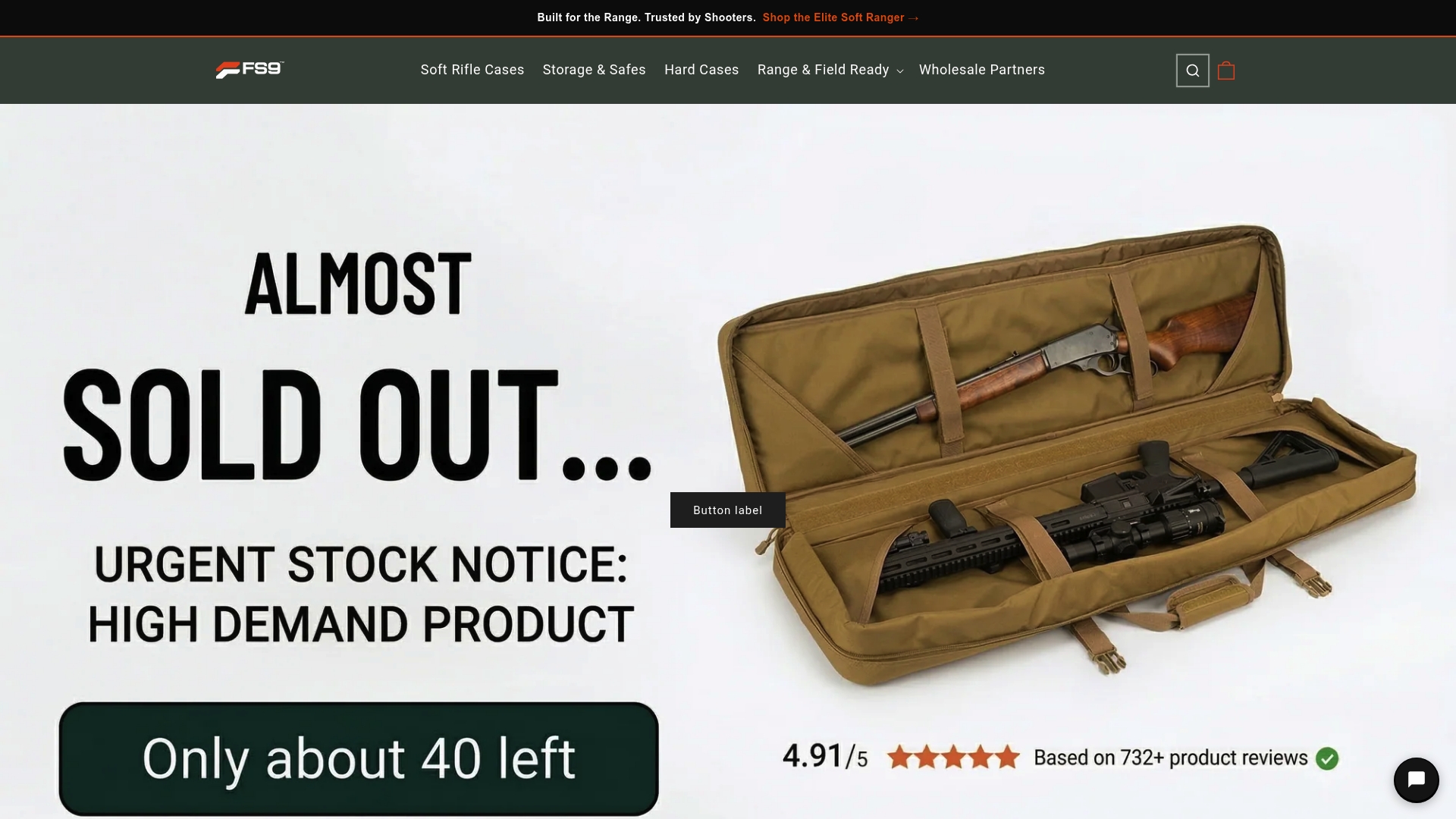
Fs9tactical designs every product around the conditions hunters and survivalists actually face. The 60-in-1 Lifeline Emergency Survival Kit applies field-ready design principles directly: components that open with cold hands, materials that resist moisture and UV degradation, and a load structure that holds under dynamic stress. The brand’s recognition as the second-largest soft rifle case manufacturer in the U.S. reflects a consistent commitment to building gear that performs in the field, not just on a shelf. If you want gear that was designed for your environment, Fs9tactical’s full survival kit lineup is built to that standard.
FAQ
What is field-ready gear design?
Field-ready gear design is the engineering process of building outdoor equipment to perform reliably under real-world stressors like moisture, UV exposure, abrasion, and physical load, with these requirements integrated from the earliest design stage.
How does field-ready design differ from standard gear design?
Standard gear design often relies on lab testing after the design is finalized. Field-ready design inserts real-world field testing early and repeatedly, using prototype failures as design inputs before production begins.
What materials are most important in field-ready gear?
UV-resistant, waterproof, and abrasion-resistant materials are the core requirements. These properties must be evaluated under repeated real-world exposure conditions, not just single-condition lab tests.
Why do functional prototypes matter in field-ready gear development?
Functional prototypes tested in realistic field conditions reveal failure points that polished samples tested indoors cannot. Early aesthetic flaws are acceptable because proving concept durability is the only goal at that stage.
How can hunters identify truly field-ready gear?
Ask the manufacturer what field conditions their prototypes were tested against and how many prototype iterations preceded production. Brands that can answer specifically have built field performance into the design. Brands that cannot have not.
