

Gear Organization in Hunting: Your 2026 Field Guide
Gear organization in hunting is defined as the deliberate, system-based arrangement of all equipment to maximize field efficiency, reduce fatigue, and ensure every item is retrievable without conscious thought. The role of gear organization in hunting goes far beyond tidiness. A well-arranged pack means you reach your rangefinder in seconds, not minutes, and you never miss a shot opportunity because you were digging through a cluttered bag. Organization facilitates the real work of hunting, including scouting and preparation, but it cannot replace core skills like reading wind or tracking animal behavior. What it does is remove friction so those skills can operate at full capacity.
How does biomechanical packing improve hunting pack organization?
Proper weight distribution is the single most impactful factor in hunting pack comfort. 60–70% of a pack’s weight must sit in the upper-middle section of the bag, close to your spine and shoulder blades. That placement keeps your center of gravity stable, reduces the forward pull on your lower back, and cuts fatigue on long treks through uneven terrain.
Experienced hunters apply the “brick and mortar” packing strategy to build a dense, stable load. Heavy items, the “bricks,” go in the upper-mid zone. Soft goods like extra layers, sleeping pads, or food act as the “mortar,” filling gaps and preventing shifting. A shifting load forces your body to constantly compensate, which burns energy and strains your joints over miles of hiking.
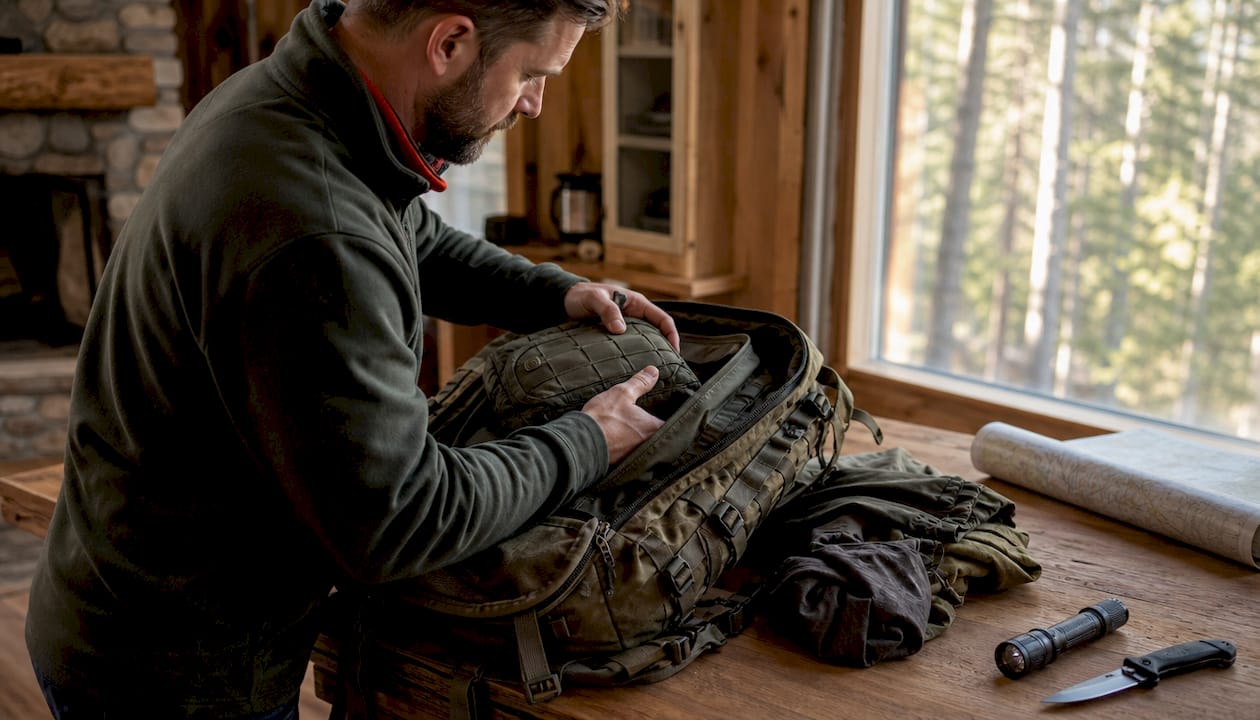
The practical benefits of this approach show up fast. A pack that stays centered on your back lets you move quietly and confidently through thick brush. One that sags or tilts forces you to adjust your gait, which creates noise and slows you down.
Here is how to apply biomechanical packing in practice:
- Place your heaviest items (optics case, water reservoir, food) directly against your back in the main compartment
- Surround heavy items with soft clothing or sleeping layers to lock them in place
- Keep mid-weight items like a first aid kit or rain gear in the middle layer
- Store lightweight, rarely accessed items at the bottom of the main compartment
- Use the outer pockets for frequently needed items: calls, snacks, and a rangefinder
Pro Tip: Use modular ditty bags for each category of heavy and soft items. They compress neatly, maintain the brick-and-mortar structure, and make repacking at camp fast and consistent.
For hunters who want a pack built around these principles, the attachment points guide from Fs9tactical breaks down how tactical pack designs support proper weight distribution.
What are the best strategies for storing hunting gear at home and in the field?
Good gear management for hunters does not start in the field. It starts in your garage or storage room weeks before the season opens.
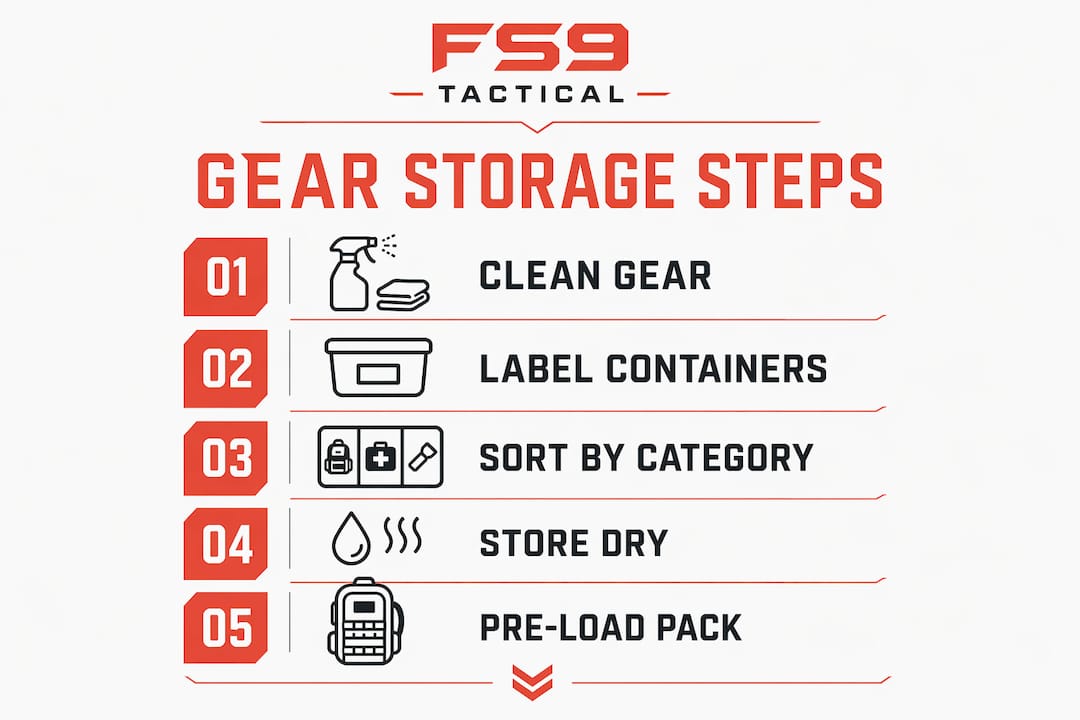
Use clear, labeled containers for home storage
Clear-sided, labeled bins are the standard for long-term gear storage. You can see what is inside without opening every container, which cuts prep time before a hunt. Group items by category: optics in one bin, layering systems in another, and field dressing tools in a third.
Dedicated storage areas with labeled shelving prevent the “gear-strewn” chaos that slows down pre-hunt preparation. A hunter who spends 20 minutes searching for a headlamp the night before a 4:00 AM departure is already behind. A labeled shelf means that headlamp is exactly where it should be, every time.
Clean gear before you store it
Never store dirty gear. Mud, blood, and moisture accelerate fabric breakdown, promote mold, and dull blades. Regular cleaning and inspection after each trip extend gear longevity and catch problems before they become failures in the field. A torn seam found at home is a five-minute fix. Found at camp, it is a ruined hunt.
Organize field gear by function
Here is a practical system for field organization:
- Kill kit pouch: Field dressing gloves, game bags, a folding knife, and zip ties. This pouch comes out the moment an animal is down.
- First aid pouch: Blister treatment, wound closure strips, pain relief, and an emergency whistle. Keep it in an outer pocket, always in the same spot.
- Navigation pouch: Maps, a compass, and a backup GPS unit. Never buried in the main compartment.
- Optics pouch: Rangefinder and binoculars in a padded sleeve, accessible from the top or a side pocket.
- Hydration and nutrition: Water filter, electrolyte tabs, and snacks in a consistent outer pocket.
Modular organizers improve retrieval speed and reduce decision fatigue when you are cold, tired, or under pressure. Knowing your kill kit is always in the left side pocket means your hands go there automatically.
| Storage Context | Best Practice | Outcome |
|---|---|---|
| Home/off-season | Clear labeled bins by category | Fast retrieval, no clutter |
| Garage/shed | Dedicated shelving with labels | Gear stays protected and ready |
| Field pack | Function-based pouches | Instant access under pressure |
| Post-hunt | Clean before storing | Extended gear life, no mold |
Pro Tip: Store your pack pre-loaded with your base system between hunts. Only remove items that need cleaning or restocking. This cuts your prep time to minutes instead of hours.
What common gear organization mistakes do hunters make?
The most damaging mistake is treating a backpack like a general-purpose bin rather than a purpose-built system. When everything goes in loose, nothing has a home. You end up digging through your pack at the worst possible moment, like when a bull elk steps into a clearing at 200 yards.
Here are the mistakes that cost hunters the most time and energy:
- No consistent placement: Putting your rangefinder in a different pocket every trip means you search for it every time. Consistency is the whole point.
- Ignoring weight distribution: Packing heavy items at the bottom or on one side throws off your balance and strains your back over long distances.
- Overpacking: Every redundant item adds weight and creates clutter. If you have not used something in three hunts, pull it from the system.
- Skipping the checklist: Relying on memory leads to forgotten items and last-minute scrambles. A written checklist removes that variable entirely.
- Reorganizing mid-season without reason: Frequent reorganization creates stress and wastes field time. Change your system deliberately, not impulsively.
The psychological barrier here is real. A dialed system enables unconscious gear retrieval even under stress. That only happens when you have packed the same way enough times that muscle memory takes over.
Pro Tip: Build a laminated packing checklist and attach it to your pack. Run through it before every hunt. After three or four trips, the system becomes automatic and the checklist becomes a backup, not a crutch.
For more on building an organized range and field bag, the range bag organization guide from Fs9tactical covers practical hacks that transfer directly to hunting setups.
Step-by-step guide to building a reliable hunting gear system
A reliable hunting gear system is built once and refined over time. It does not require expensive equipment. It requires discipline and repetition.
- Audit your current gear. Lay everything out and sort it into three piles: always needed, sometimes needed, and never used. Cut the third pile entirely.
- Categorize by function and frequency. Items you reach for constantly go in outer pockets. Items used once per hunt go in the main compartment. Emergency items get a fixed outer pocket that never changes.
- Assign permanent compartment locations. Your water filter lives in the left side pocket. Your kill kit lives in the right side pocket. Your first aid kit lives in the top lid pocket. These locations never change, regardless of the hunt type.
- Use mesh sacks for visibility. Clear mesh sacks let you see contents at a glance without opening every pouch. They also compress soft items efficiently to maintain the brick-and-mortar weight structure.
- Run a test pack before the season. Load your pack fully and wear it for 30 minutes. Note any discomfort, shifting, or awkward access points. Adjust before you are in the field.
- Integrate new gear carefully. When you add a new piece of equipment, assign it a permanent location before the hunt. Never drop new gear into your pack without a designated spot.
- Review and refine after each hunt. Regularly reassessing gear placement keeps your system matched to how you actually hunt, not how you planned to hunt.
Pro Tip: Take a photo of your fully packed, open bag before your first hunt of the season. Use it as a visual reference for every pack after that. It takes 10 seconds and eliminates guesswork.
The tactical backpack buyer’s guide from Fs9tactical covers the specific features that make a pack system-friendly, including compartment layout and load-bearing design.
Key Takeaways
Gear organization in hunting is a force multiplier: it reduces fatigue, speeds retrieval, and lets your core hunting skills operate without friction.
| Point | Details |
|---|---|
| Upper-mid weight loading | Place 60–70% of pack weight in the upper-middle zone to reduce fatigue and maintain balance. |
| Function-based pouches | Assign dedicated pouches for kill kit, first aid, and navigation to eliminate search time in the field. |
| Clean before storing | Always clean gear after each hunt to prevent breakdown and extend equipment life. |
| Consistent placement | Assign permanent locations to every item so retrieval becomes automatic under pressure. |
| Refine after every hunt | Reassess your system after each trip to keep it matched to real-world usage patterns. |
What 10 years of hunting taught me about gear systems
Here is the honest truth about gear organization that most articles skip: the biggest gains do not come from buying better gear. They come from knowing exactly where everything is without thinking about it.
I spent my first few seasons treating my pack like a duffel bag. I had good equipment, but I wasted minutes every time I needed something. Minutes matter when a deer steps out at last light. The shift happened when I stopped thinking of my pack as a container and started treating it as a system with rules.
The other thing I have learned is that a simple, well-organized setup beats a complicated, expensive one every time. I have hunted with hunters carrying $800 packs who still dug around for five minutes looking for their rangefinder. Organization is a habit, not a product.
What actually builds confidence in the field is repetition. Pack the same way 10 times and your hands know where to go. That frees your mind to focus on the animal, the wind, and the shot. That is the real payoff of good gear management for hunters: it gets out of your way so you can hunt.
Start simple. Pick five items you reach for constantly and give each one a permanent home in your pack. Build from there. Refine after every hunt. The system will take shape faster than you expect.
— Cody
Fs9tactical gear built for organized, efficient hunters
Fs9tactical builds packs, pouches, and organizers specifically for hunters who take their gear systems seriously. The tactical gear bag features dedicated compartments and ballistic-grade fabric that holds up through rough seasons. For hunters who need modular field organization, the multi-field accessory pouch keeps small tools and critical items sorted and instantly accessible. Fs9tactical’s military tactical backpack is built with ergonomic load distribution in mind, making it a natural fit for the biomechanical packing principles covered in this guide. Over 20,000 hunters trust Fs9tactical gear because it is built to work, not just look good on a shelf.
FAQ
What is the role of gear organization in hunting?
Gear organization in hunting is the practice of arranging equipment by function and frequency of use so every item is retrievable without searching. It reduces fatigue, prevents missed opportunities, and keeps hunters focused on the hunt rather than their pack.
How should I distribute weight in a hunting backpack?
Place 60–70% of your pack’s weight in the upper-middle section, close to your spine. Surround heavy items with soft goods to prevent shifting and maintain balance over long distances.
What is the best way to store hunting gear at home?
Use clear, labeled bins grouped by gear category and store everything clean and dry. Dedicated shelving in a garage or shed keeps gear protected and ready for the next season.
How do I stop wasting time searching for gear in the field?
Assign every item a permanent location in your pack and never deviate from it. After consistent repetition, retrieval becomes automatic, even under pressure or in low light.
How often should I review my hunting gear system?
Review your system after every hunt while the experience is fresh. Adjust placement based on what you actually reached for, and remove any item you did not use.
