

Durable Tactical Gear Materials Checklist for Field Use
Durable tactical gear materials are defined as textiles and construction systems engineered to resist abrasion, tensile stress, and environmental degradation while maintaining full functionality under extreme operational conditions. This durable tactical gear materials checklist covers every critical factor you need to evaluate before buying or building gear for hunting, shooting, or survival use. The core criteria are abrasion resistance, tensile strength, seam integrity, hardware quality, and environmental protection. Industry benchmarks like MIL-SPEC, ASTM, and ISO certifications give you an objective way to verify those claims. Fs9tactical builds its entire product line around these exact standards, which is why over 20,000 users trust the brand in the field.
1. Durable tactical gear materials checklist: the core fabric options
The fabric you choose sets the ceiling for everything else. No amount of good stitching or hardware will save a gear piece built from the wrong base material.
Cordura Nylon (500D and 1000D)
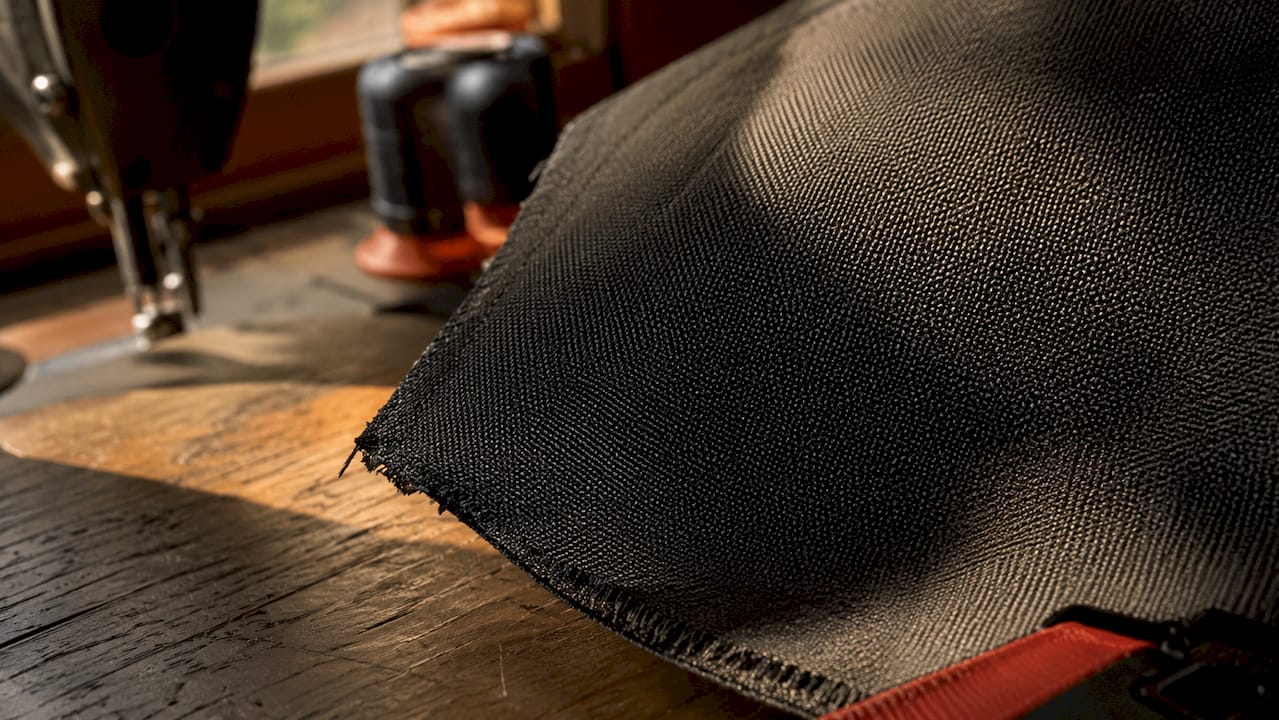
Cordura nylon is the industry standard for tactical bags, cases, and pouches. 500D Cordura withstands over 15,000 Wyzenbeek abrasion cycles and weighs approximately 8.5 oz per square yard. That combination makes it the right choice for 90% of tactical applications where you need durability without punishing weight. The 1000D variant doubles the denier count, adding significant abrasion resistance at the cost of added weight and stiffness. Use 1000D where gear contacts rough surfaces repeatedly, such as drag handles, base panels, and rifle case exteriors.
Ballistic Nylon
Ballistic nylon uses a tighter, heavier weave than standard Cordura. It is heavier and more rigid, but it offers superior durability for structured use like hard-use cases and load-bearing platforms. The trade-off is reduced flexibility, which limits its use in form-fitting or wearable gear.
Specialty Fabrics: X-Pac VX21 and Dyneema Composite Fabric
X-Pac VX21 delivers approximately 285 lbf warp tensile strength and outperforms standard 600D polyester on weather resistance. Dyneema Composite Fabric reaches roughly 400 lbf tensile strength, giving it the highest strength-to-weight ratio of any tactical textile. The catch with Dyneema is reduced abrasion resistance and a significantly higher price point. Both fabrics suit ultralight or mission-specific builds where weight savings justify the cost.
Polyester
Standard polyester, typically sold as 600D, is the budget option in tactical gear. It resists UV degradation better than nylon but falls short on abrasion resistance and tensile strength. Polyester works for light-duty pouches and organizers, but it is not the right call for primary load-bearing gear or anything that takes repeated mechanical stress.
| Fabric | Abrasion Resistance | Tensile Strength | Best Use |
|---|---|---|---|
| Cordura 500D | High (15,000+ Wyzenbeek cycles) | Good | General tactical bags, cases |
| Cordura 1000D | Very High | Very Good | High-abrasion panels, rifle cases |
| Ballistic Nylon | Very High | Excellent | Structured hard-use cases |
| X-Pac VX21 | Moderate | ~285 lbf warp | Weather-resistant packs |
| Dyneema Composite | Moderate | ~400 lbf | Ultralight builds |
| 600D Polyester | Low to Moderate | Fair | Light-duty pouches |
2. Construction elements that determine real-world durability
The weakest point in most tactical gear is not the fabric. Stitching and reinforcement fail before the textile does in the majority of field failures. Choosing the right construction details extends gear life far beyond what fabric denier alone can deliver.
Thread and Stitching
Tex 90 bonded nylon thread is the industry recommendation for high-stress tactical applications. It resists UV degradation, moisture, and repeated flexing better than standard polyester thread. Single or double stitching without bartacks leads to premature failure at attachment points, handle bases, and strap anchors.
Bartack Reinforcements
Bartacks are dense, box-shaped stitch clusters placed at every high-stress junction. They distribute load across a wider area of fabric, preventing the tearing that starts at single stitch termination points. Any gear claiming durability without visible bartacks at strap ends, zipper pulls, and handle roots is cutting corners.
Seam Types and Taped Seams
Flat-felled seams and bound seams add structural integrity compared to simple overlocked edges. For waterproof applications, seam tape is non-negotiable. Waterproof gear requires fully taped seams in addition to coated fabrics because stitch holes allow water ingress even through waterproof fabric. This detail is rare in standard packs but defines mission-critical water resistance.
Hardware: Buckles, Zippers, and Webbing
Glass-filled nylon buckles and YKK Vislon zippers withstand grit, mud, and repeated mechanical stress better than standard coil zippers and low-grade plastic hardware. Low-grade buckles and zippers are the most common failure points in gear that uses otherwise solid fabric. Webbing should be rated nylon or polyester with a minimum 1-inch width for load-bearing straps.
Pro Tip: Pro Tip: Squeeze every buckle and pull every zipper before buying. If a buckle flexes noticeably under hand pressure or a zipper skips teeth, the hardware will fail in the field long before the fabric does.
3. Environmental resistance and fabric treatments
Environmental protection in tactical gear is a system, not a single property. DWR coatings require regular re-application to maintain effectiveness, and waterproof-breathable membranes need taped seams to perform as advertised. Understanding each layer of protection helps you maintain gear correctly and buy smarter.
Durable Water Repellent (DWR) Coatings
DWR is a chemical finish applied to the outer face of fabric. It causes water to bead and roll off rather than saturate the textile. DWR degrades with use, washing, and UV exposure. Re-apply it with a spray-on or wash-in DWR product after every significant field use or when you notice water no longer beading on the surface.
Waterproof-Breathable Membranes
ePTFE membranes, such as those used in GORE-TEX products, bond to the inner face of the outer fabric. They block liquid water while allowing water vapor to escape, which prevents interior condensation during high-output activity. These membranes require fully taped seams to deliver true waterproofing. Without seam tape, water enters through every needle hole in the stitching.
UV and Chemical Resistance
Prolonged UV exposure degrades nylon faster than polyester. Gear used in high-altitude or desert environments benefits from UV-stabilized fabrics or darker colorways that absorb less UV energy. Chemical resistance matters for gear used near solvents, gun-cleaning products, or industrial environments. PVC-coated fabrics offer the strongest chemical barrier but add weight and reduce breathability.
Coating Options: PU, TPU, and PVC
Polyurethane (PU) coatings are the most common and lightest waterproofing layer. Thermoplastic polyurethane (TPU) is more flexible and durable than PU, making it the better choice for gear that flexes repeatedly. PVC coatings are the heaviest and most chemically resistant, suited for submersion-level protection in waterproof tactical bags and pouches.
4. Industry standards and certifications that verify durability claims
MIL-SPEC is not a single quality level. MIL-SPEC refers to specific rigorous benchmarks tied to particular materials, construction methods, and performance thresholds. A product labeled “military-grade” without a cited MIL-SPEC number is a marketing claim, not a verified standard.
Key Standards to Know
ASTM International publishes test methods for abrasion resistance, tear strength, tensile strength, and seam burst strength. The Martindale and Wyzenbeek tests both measure abrasion resistance but use different motions. High-end tactical fabrics meet a minimum of 20,000 Martindale abrasion cycles, while military-grade materials exceed 50,000 cycles. Tear strength thresholds sit at 50 N for standard gear and 80 N for military-grade applications.
ISO certifications cover dimensional stability, which must stay within ±3% shrinkage after washing. That standard matters because fabric that shrinks distorts seams, compresses padding, and misaligns hardware attachment points.
How to Verify Claims
Ask manufacturers for the specific ASTM test number and result, not just the label. Verified ASTM or ISO data gives you a number to compare across products. Certified mil-spec fabrics combined with validated ASTM testing let you assess durability objectively, beyond what any product description claims.
Pro Tip: Pro Tip: Search for the specific MIL-SPEC designation (for example, MIL-C-12369 for Cordura-type nylon) in the product spec sheet. If the manufacturer cannot provide it, the claim is unverified.
5. How to match materials to your specific tactical needs
The best material for your gear depends on your operational context. A daily carry pouch and a 72-hour survival pack have different failure modes, different weight budgets, and different environmental exposures.
Scenario-Based Selection
- Daily carry and EDC: Cordura 500D hits the right balance of durability and weight. A MOLLE EDC pouch in 500D will outlast most users’ needs without adding unnecessary bulk.
- Range duty and shooting sessions: 1000D Cordura or ballistic nylon suits rifle cases and range bags that drag across concrete, gravel, and vehicle floors repeatedly.
- Ultralight travel and backcountry: X-Pac VX21 or Dyneema Composite Fabric saves meaningful weight over long distances. Accept the trade-off in abrasion resistance and cost.
- Prolonged missions and bug-out scenarios: Prioritize fully taped seams, TPU or PVC coatings, and YKK zippers. A 60-in-1 survival kit built into a weatherproof bag covers both the gear and the contents.
Balancing Denier and Weight
Higher denier means heavier fabric. A 1000D bag panel weighs roughly twice what a 500D panel does at the same size. For most hunters and shooters, 500D provides enough abrasion resistance without the weight penalty. Reserve 1000D for specific high-contact zones rather than the entire bag.
Repairability as a Durability Factor
Gear you can repair in the field lasts longer than gear you cannot. Modular construction with replaceable straps, removable panels, and accessible stitching lets you fix a single failed component rather than replace the whole piece. Bartacked attachment points are easier to re-stitch than fused or bonded seams.
Key Takeaways
The most durable tactical gear combines abrasion-resistant fabric, Tex 90 bonded nylon stitching, bartack reinforcements, quality hardware, and verified ASTM or MIL-SPEC certifications into a single, tested system.
| Point | Details |
|---|---|
| Fabric denier is not the whole story | Stitching, thread type, and bartacks determine real-world lifespan more than denier alone. |
| Verify standards by number | Ask for the specific ASTM test result or MIL-SPEC designation, not just the label. |
| DWR and membranes need maintenance | Re-apply DWR regularly and confirm seams are taped for true waterproofing. |
| Match denier to use case | Use 500D for general carry and 1000D for high-abrasion contact zones. |
| Hardware fails before fabric | Specify YKK Vislon zippers and glass-filled nylon buckles to eliminate the most common failure point. |
What I’ve learned choosing tactical materials after years in the field
The single biggest mistake I see buyers make is choosing fabric by how it feels in their hands. Soft, supple fabric feels premium in a store. It fails first in the field. The fabrics that feel stiff and almost plasticky, like 1000D Cordura or ballistic nylon, are the ones that survive a season of hard use.
I’ve settled on 500D Cordura as my default for almost everything. It is light enough to carry all day and tough enough to handle the abuse that hunting and range work put on a bag. The only time I reach for 1000D is on base panels and drag handles, where the gear contacts the ground or a vehicle floor.
The detail most buyers completely ignore is thread. I’ve seen bags with excellent fabric fail at strap bases within a season because the manufacturer used light polyester thread without bartacks. Tex 90 bonded nylon thread with bartacks at every stress point is the spec I look for first, before I even check the fabric label.
Maintenance matters more than most people realize. DWR coatings do not last forever. I re-apply mine after every wet season or every three to four hard uses, whichever comes first. Hardware gets a wipe-down and a light application of zipper lubricant after any muddy or sandy outing. Gear that gets maintained outlasts gear that gets neglected by years, regardless of the original material quality.
— Cody
Fs9tactical gear built to the standards that matter
Fs9tactical designs every product around the material and construction principles covered in this guide. The brand’s soft rifle cases use ballistic fabrics with reinforced stitching and lockable YKK-style zippers, built to protect your rifle through the roughest transport conditions. The military tactical backpack uses durable Cordura-grade construction suited for extended field use. Fs9tactical is the second-largest soft rifle case manufacturer in the U.S., and the brand’s full gear catalog covers everything from rifle cases to survival kits, all built to the durability standards that hunters, shooters, and survivalists actually need.
FAQ
What fabric is best for durable tactical gear?
Cordura 500D nylon is the best all-around choice for most tactical gear, offering over 15,000 Wyzenbeek abrasion cycles at a manageable weight. Use 1000D Cordura or ballistic nylon for high-contact zones that require maximum abrasion resistance.
What does MIL-SPEC mean on tactical gear?
MIL-SPEC refers to specific military performance benchmarks tied to materials and construction methods, not a single quality level. Always ask for the specific MIL-SPEC designation number to verify the claim is real.
How do I know if tactical gear is truly waterproof?
Truly waterproof tactical gear requires a waterproof-breathable membrane or coated fabric plus fully taped seams. Fabric alone cannot prevent water ingress through stitch holes.
Why does stitching matter more than fabric denier?
The weakest point in most tactical gear is the stitching, not the fabric. Tex 90 bonded nylon thread with bartack reinforcements at stress points prevents the premature failures that lighter thread causes at handle bases and strap anchors.
What hardware should I look for in high-quality tactical gear?
Glass-filled nylon buckles and YKK Vislon zippers are the standard for durable tactical hardware. Standard coil zippers and low-grade plastic buckles are the most common failure points even in gear made from strong fabric.
