

Reflective Strips for Tactical Gear: Visibility and Safety
Reflective strips increase low-light detection distance, speed up teammate identification, and enable passive signaling without batteries or powered equipment. The role of reflective strips in tactical gear comes down to three things: getting seen by vehicles before they reach you, getting identified by teammates in the dark, and marking casualties or positions with nothing more than a flashlight beam. For most tactical applications, certified retroreflective microprism elements placed on joints and load-bearing contact points deliver the best combination of distance, durability, and configurability. Use removable or IR-only options when concealment matters.
Primary roles at a glance:
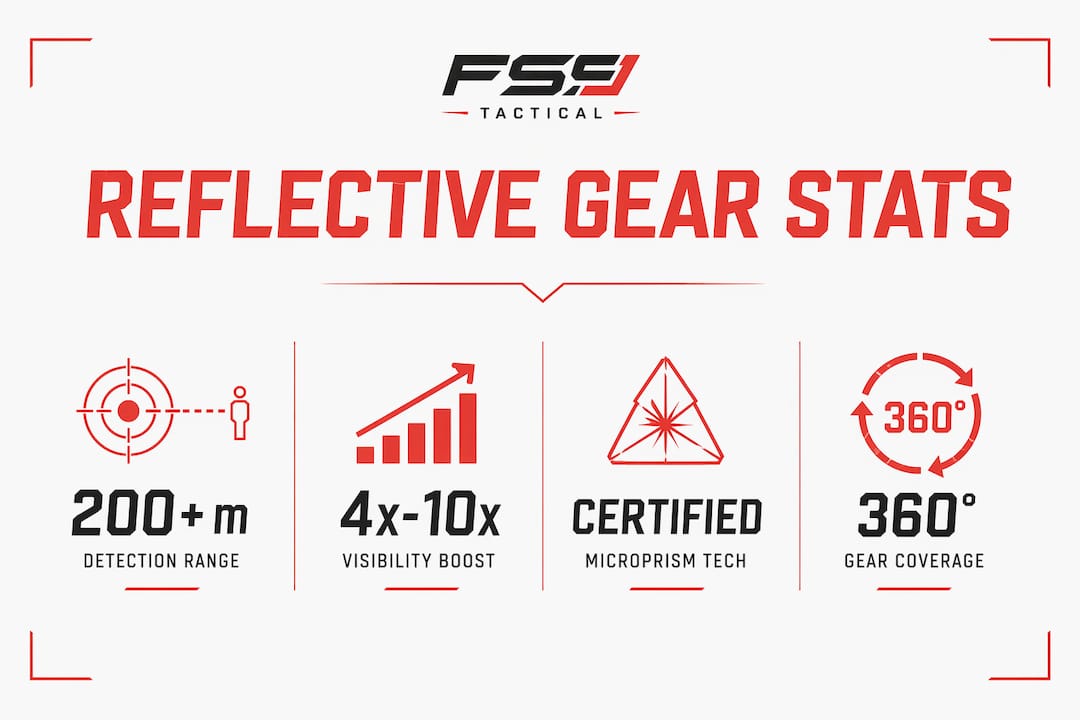
- Detection distance: Retroreflective gear allows drivers to recognize personnel from over 200 meters under high-beam headlights; dark clothing may be visible at only 17–50 meters
- Team identification: Consistent strip placement on shoulders, chest rigs, and pouches lets teammates confirm friendly positions in seconds
- Passive signaling: Retroreflective returns from a flashlight or vehicle light can mark casualties, confirm positions, or signal across a formation without noise or powered gear
- Standards anchor: ANSI/ISEA 107 sets the performance benchmark for high-visibility reflective materials used in professional and tactical contexts
Detection distance headline: Under high-beam headlights, certified retroreflective gear can be spotted at a distance sufficient to allow drivers traveling at typical urban speeds the necessary stopping distance — reflective gear provides that warning margin with room to spare.
Fs9tactical builds removable microprism strips and MOLLE-compatible reflective panels into select vests, pouches, and backpacks so operators can dial visibility up or down per mission.
Table of Contents
- How does retroreflection actually work for tactical visibility?
- Which reflective materials actually hold up in the field?
- Where should you place reflective strips on tactical gear?
- How effective are reflective strips? What the numbers show
- What are the real tradeoffs of adding reflectives to tactical kit?
- How to care for reflective strips and keep them performing
- How reflective strips are used in real operations
- How Fs9tactical implements reflective elements across its gear line
- Key Takeaways
- The visibility tradeoff most operators underestimate
- Fs9tactical gear built for configurable visibility
- Useful sources and further reading
How does retroreflection actually work for tactical visibility?
Retroreflection is not the same as being shiny. A mirror scatters light in one direction; a wet road surface scatters it in many. Retroreflective materials use engineered optics — either glass beads or microprisms — to return incident light toward its source. That means a driver’s headlights hit your gear and the bright return goes straight back to the driver’s eyes, not off to the side. That is why the detection gain is so dramatic compared with ordinary reflective sheen.
The biomotion effect adds another layer. Placing reflective elements on joints — wrists, elbows, knees, shoulders — creates a moving light signature as a person walks or runs. Joint-based reflector placement can double human-recognition distance compared with a single static chest patch, because the human visual system is wired to recognize limb motion patterns. A chest-only reflector tells a driver “something is there.” Joint reflectors tell them “a person is moving there” — a much faster cognitive signal.
Practical implications for tactical users:
- Detection distance: Certified retroreflective strips extend vehicle-recognition range to 200+ meters versus under 50 meters for dark clothing
- Angle sensitivity: Retroreflective return is strongest when the light source is close to the observer’s line of sight — performance drops at extreme angles, so 360° placement matters
- Wet-weather performance: Microprism constructions retain retroreflective capability when wet; glass-bead materials can lose significant performance when the bead surface is covered with water
- IR illumination: Retroreflective materials also return IR light, making them useful under night-vision devices when visible-spectrum concealment is required
Statistic callout: Detection studies show pedestrians with reflective gear are spotted at substantially greater distances than those in dark clothing — several times the detection range.
Which reflective materials actually hold up in the field?
Microprism retroreflective materials are the right call for tactical field use. Microprism materials maintain certified reflective performance better than glass beads when wet or contaminated, and they hold up under the bending cycles and abrasion that tactical gear routinely sees. Glass-bead tape is cheaper and widely available, but the beads can dislodge or fill with dirt, degrading performance faster in field conditions.
Common constructions you will encounter:
- Microprismatic film: Highest performance, best wet-weather retention, preferred for professional-grade gear
- Glass-bead reflective tape: Lower cost, adequate for low-risk or training use, degrades faster under abrasion and moisture
- Reflective fabric: Woven or knit with retroreflective yarns; flexible and comfortable, lower peak brightness than film
- Bonded laminated systems: Retroreflective film bonded to a textile carrier with adhesive or heat-seal; durable construction for heavy-use gear when properly applied
- Hybrid solutions: Retroreflective film combined with active LED strips for dual passive/active visibility
ANSI/ISEA 107 is the standard to reference when evaluating materials. It sets minimum retroreflective performance levels (measured as coefficient of retroreflection, RA) for high-visibility safety apparel. For tactical gear, look for materials that meet or exceed the performance thresholds in that standard, even if the gear itself is not certified apparel.
| Attribute | Microprism film | Glass-bead tape | Reflective fabric |
|---|---|---|---|
| Brightness at distance | High | Moderate | Moderate |
| Wet-weather retention | Strong | Reduced | Moderate |
| Flexibility | Good | Good | Excellent |
| Abrasion resistance | Good (with laminate) | Lower | Moderate |
Buyer checks before purchasing:
- Confirm microprism specification, not just “reflective”
- Ask for RA value or manufacturer test data against ANSI/ISEA 107 thresholds
- Verify laminated backing for heavy-use attachment points
- Check recommended attachment method (stitched, hook-and-loop, adhesive) matches your gear’s construction
Where should you place reflective strips on tactical gear?
Place strips to create 360° visibility and biomotion cues. That means wrists, elbows, shoulders, the sternum strap, pouch edges, backpack sides, and the lower rear panel. A single chest patch is better than nothing, but it only works when someone is facing you. Rear and side coverage, combined with joint placement, is what actually gets you seen from a vehicle approaching from any direction.
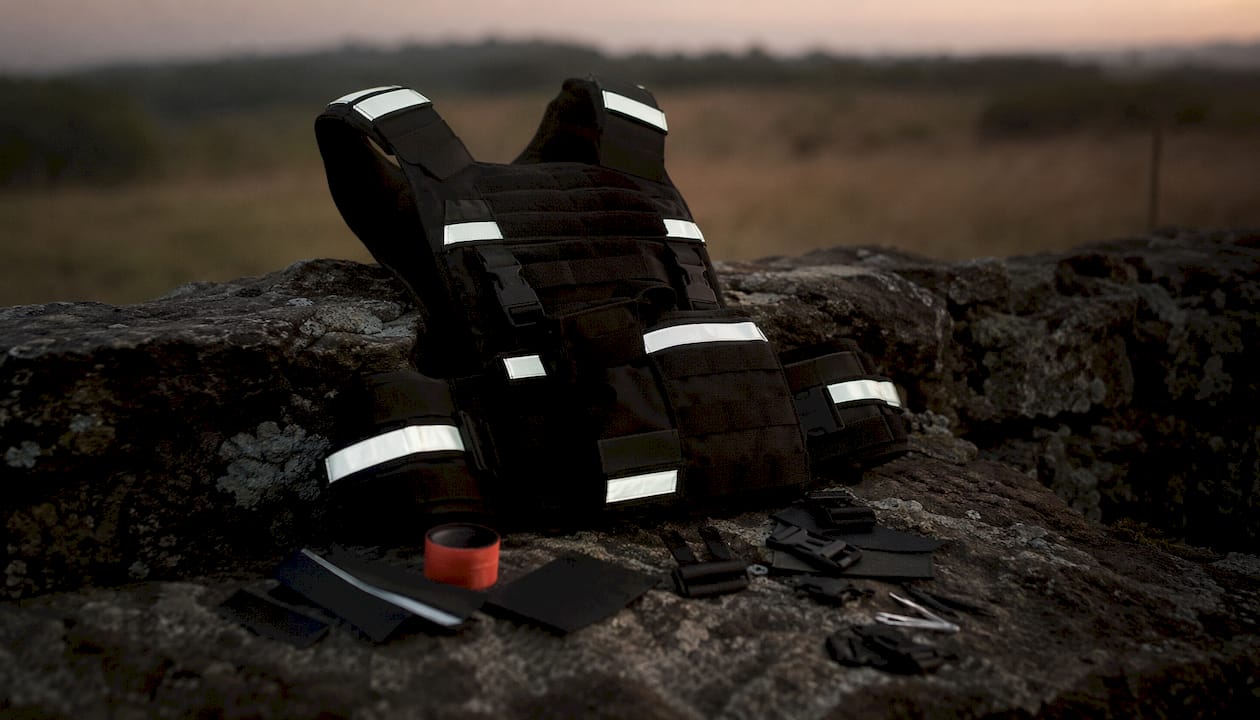
Front/side/rear coverage matters more than total area. A small strip on the back of each shoulder and the lower rear of a backpack covers the approach angle of most vehicle traffic. Strips on the wrists and elbows add the biomotion signal that modular-placement research supports for faster recognition.
Gear-specific placement guide:
- Plate carrier / tactical vest: Shoulder tops, lower front panel, lower rear panel, and cummerbund sides — the adjustable modular vest from Fs9tactical uses MOLLE webbing that accepts hook-and-loop reflective panels without modification
- Chest rig pouches: Top edge and side edges of outermost pouches; avoid covering buckles or zipper pulls
- Sling: A short strip of reflective piping on the tri-point combat sling near the shoulder contact point adds a moving biomotion cue
- Belt: Rear and side panels; keep strips away from holster draw paths
- Backpack: Side panels at mid-height and lower rear; the military tactical backpack has rear attachment points suited for hook-and-loop panels
- Thigh bag: Outer face and rear edge; the tactical thigh bag sits at a height that catches vehicle headlights well
Pro Tip: Use two configurations: a high-vis mode with full retroreflective panels for roadside stops or training, and a low-profile mode with subdued or IR-only patches for concealed movement. Hook-and-loop attachment makes switching between modes a 30-second field task.
How effective are reflective strips? What the numbers show
Certified retroreflective strips substantially extend detection distance. Under vehicle headlights, detection ranges commonly exceed 200 meters for personnel wearing retroreflective gear, compared with 17–50 meters for dark clothing. At 31 mph (50 km/h), a driver needs roughly 35 meters to stop — so retroreflective gear provides a warning margin several times the minimum stopping distance.
The biomotion multiplier is the less-discussed figure. Placing reflectors on joints rather than only on the chest can double recognition distance in dynamic situations, because the moving light pattern triggers faster human identification. That is not a marginal gain — it is the difference between a driver slowing down in time and not seeing a person at all until they are already in the stopping zone.
| Metric | Reflective gear | Dark clothing | Notes |
|---|---|---|---|
| Vehicle detection distance | 200+ meters | 17–50 meters | Under high-beam headlights |
| Stopping distance at 31 mph | ~35 meters | ~35 meters | Driver reaction + braking |
| Recognition multiplier (joint placement) | double | Baseline | Biomotion effect |
Statistic callout: Driver detection studies consistently show a multiple-times improvement in detection range for retroreflective gear versus dark clothing under headlights — a margin that directly translates to reaction time for drivers and safety for operators.
The practical takeaway: retroreflective strips are not a comfort feature. They are a measurable safety margin with documented performance data behind them.
What are the real tradeoffs of adding reflectives to tactical kit?
Reflective strips improve teammate and vehicle detection, but they also increase your general conspicuity. Any light source — not just a friendly vehicle — will return off your gear. That is the core tradeoff, and it is why placement and removability matter as much as the material itself.
Pros:
- Substantially increased detection distance under vehicle headlights and handheld illumination
- Faster team identification in low-light formations without powered equipment
- Passive and reliable — no batteries, no activation required
- Supports casualty marking and position signaling with minimal kit
Cons:
- Increases visual signature to any observer with a light source, including unknown parties
- Reduces concealment in environments where light discipline is critical
- Performance degrades with dirt, abrasion, and moisture (especially glass-bead constructions)
- Retroreflection is passive — requires an external light source to function; useless in total darkness without illumination
Operational limitations worth knowing:
- Retroreflective return is angle-dependent; a light source at a steep angle to the observer gets a weaker return
- Dirty or mud-covered strips can lose most of their effectiveness — a strip that looks intact may not be performing
- A single chest patch creates a false sense of full coverage; 360° placement is the actual standard
Pro Tip: Before any mission or roadside operation, do a quick field test: have a teammate shine a flashlight or drive past at low speed while you wear the configured gear. Confirm which strips are returning light and from which angles. A 60-second check prevents the false confidence of assuming strips are working when they are covered or worn.
How to care for reflective strips and keep them performing
Regular cleaning, correct attachment, and timely replacement are the three things that keep retroreflective performance from quietly degrading. A strip that looks fine visually may have lost most of its optical performance from abrasion or contamination — you will not know unless you test it.
Field maintenance checklist:
- Clean with mild soap and a soft brush: Avoid abrasive cleaners or stiff brushes that scratch the optical layer; rinse thoroughly and air dry
- Dry before storage: Storing wet strips against gear can degrade adhesives and promote delamination
- Avoid prolonged heat and UV exposure: UV degradation affects both the retroreflective layer and adhesive backing; store gear out of direct sunlight when not in use
- Inspect for abrasion and delamination: Look for cloudy patches, peeling edges, or areas where the film has separated from the carrier — these zones are no longer performing
- Check attachment hardware: Velcro hook-and-loop loses grip over time; replace worn sections before they allow a panel to shift or detach during movement
- Replace worn strips proactively: If a strip has visible abrasion across more than a quarter of its surface, replace it — degraded strips create false confidence without delivering real detection distance
Microprism materials generally retain performance better when wet than glass-bead alternatives, but neither technology is maintenance-free. Mud and grit are the fastest way to kill retroreflective performance in the field, so a quick wipe-down after each use is worth the 30 seconds it takes.
How reflective strips are used in real operations
Reflective strips serve four distinct operational functions: roadside safety, formation identification, casualty marking, and short-range signaling. The protocol for each is different, and knowing which mode you are in determines how and where strips should be displayed.
Use-case protocols:
- Roadside stops and vehicle approach: Full high-vis mode — all retroreflective panels deployed, facing the direction of traffic; this is the scenario where the 200-meter detection distance matters most for outdoor emergency scenarios
- Concealed approach: Strips removed or covered; IR-only patches remain for night-vision identification within the team
- Formation movement at night: Consistent strip placement on shoulders and lower rear allows trailing teammates to maintain spacing without verbal communication
- Casualty marking: A detached reflective panel placed near a casualty’s position can be located quickly by a vehicle or teammate with a flashlight — no powered marker needed
- Night training: Strips on all personnel simplify range safety and accountability without requiring active lighting that degrades night vision
Pro Tip: Establish a simple panel orientation protocol for signaling: a strip laid flat signals “position secure,” rotated 90° signals “need assistance.” It takes two minutes to brief and works with any retroreflective surface and a flashlight. No radio, no battery, no noise.
Consistent placement across a team also reduces the risk of misidentification. When every operator carries strips in the same locations, a quick flashlight sweep confirms friendly positions without ambiguity.
How Fs9tactical implements reflective elements across its gear line
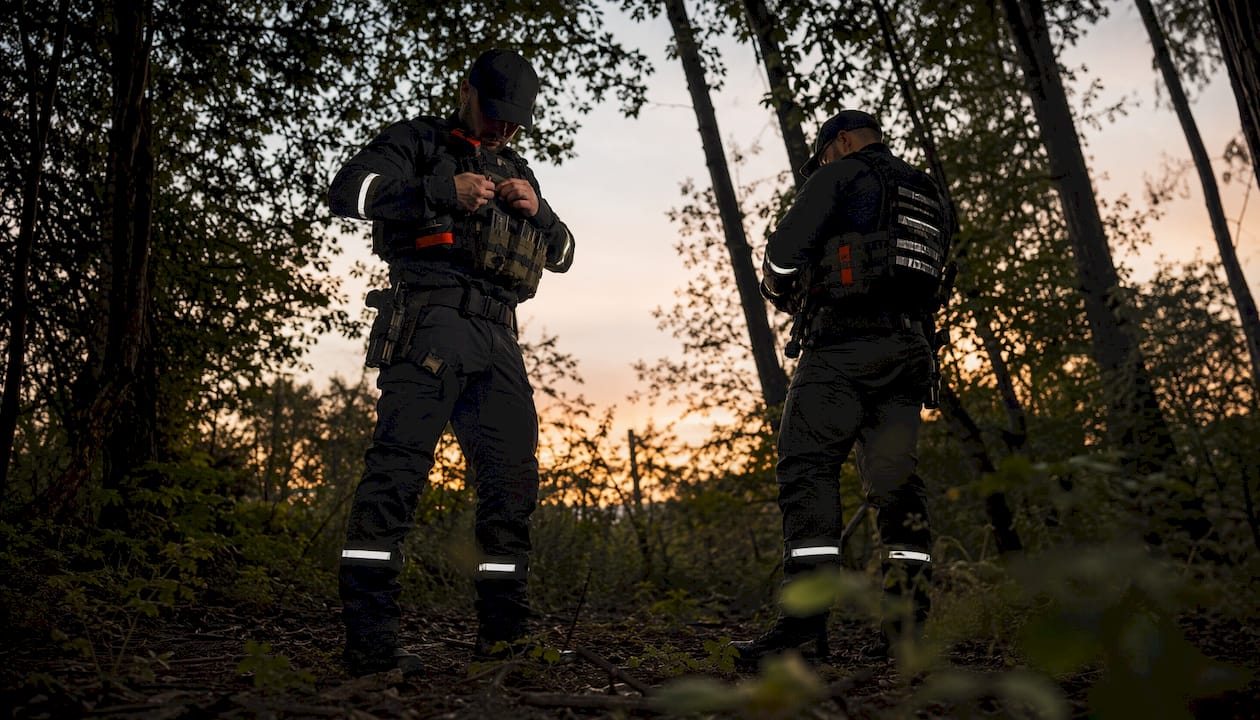
Fs9tactical integrates removable microprism strips and MOLLE-compatible reflective panels on select vests, pouches, and backpacks to give operators configurable visibility without sacrificing the durability the brand is built on. The approach is modular by design: strips attach via hook-and-loop or MOLLE adapters so they can be added, removed, or repositioned in the field without tools.
Implementation examples across the Fs9tactical line:
- Tactical vests and plate carriers: Retroreflective panels attach to MOLLE webbing on the shoulder and lower rear; the adjustable combat vest supports hook-and-loop panels on the cummerbund and front placard
- Pouches and chest rigs: Reflective piping runs along top and side edges of primary pouches; attachment is stitched at the factory on select configurations, hook-and-loop on modular variants
- Backpacks: Side and rear panel attachment points accept standard hook-and-loop reflective strips; the tactical gear bag includes rear loop fields sized for full retroreflective panels
- Slings and straps: Short retroreflective tabs stitched near shoulder contact points add biomotion cues without adding bulk
- Subdued and IR configurations: Select products ship with IR-reflective patches that are invisible to the naked eye but return clearly under night-vision devices — visible-spectrum strips are removable for concealment operations
Fs9tactical’s over 20,000 satisfied users and thousands of five-star reviews reflect a product line built for operators who need gear that performs under pressure, not just in the catalog. The brand’s emphasis on ballistic fabrics and reinforced stitching extends to how reflective elements are attached — panels are tested for bending cycles and abrasion before production.
Pro Tip: When retrofitting existing gear with aftermarket strips, avoid sewing directly through ballistic layers on plate carriers or load-bearing vests. Use MOLLE attachment or adhesive-backed hook-and-loop on the outer face of the carrier. Penetrating ballistic material with a needle compromises the structural integrity of the panel — a small detail that matters when the gear is doing its job.
Key Takeaways
Certified microprism retroreflective strips placed on joints and load-bearing contact points deliver the largest measurable gain in low-light detection distance, team identification speed, and passive signaling reliability for tactical operators.
| Point | Details |
|---|---|
| Detection distance gain | Retroreflective gear is spotted at 200+ meters under headlights; dark clothing registers at 17–50 meters. |
| Biomotion placement | Joint-based strip placement can double recognition distance compared with a chest-only reflector. |
| Material choice | Microprism constructions outperform glass-bead in wet and dirty field conditions; verify RA value before buying. |
| Removability is operational | Hook-and-loop and MOLLE-compatible panels let operators switch between high-vis and low-profile modes in under a minute. |
| Fs9tactical implementation | Fs9tactical’s modular vests, backpacks, and pouches support configurable retroreflective panels with hook-and-loop and MOLLE attachment. |
The visibility tradeoff most operators underestimate
There is a tendency in the tactical community to treat reflective strips as a binary: either you need them or you do not. That framing misses the more useful question, which is when and where you need them, and whether your current setup actually delivers the performance you think it does.
The detection-distance data is not subtle. A four-to-ten-times improvement in vehicle recognition range is not a marginal safety upgrade — it is the difference between a driver having time to react and not. But that gain only materializes if the strips are clean, properly placed, and facing the right direction. A mud-covered strip on a chest rig facing away from traffic is not doing anything. Most operators who wear reflective gear have never actually tested whether their specific configuration is visible from the angles that matter in their operational environment.
The biomotion finding is the piece most gear guides skip entirely. A single chest patch is the default, and it is also the least effective placement for human recognition. Wrists and elbows are awkward to outfit, but the recognition-distance data makes a strong case for it. If you are running a training exercise or a roadside stop, joint placement is worth the extra effort.
The concealment tradeoff is real but often overstated for non-combat contexts. For hunters, search-and-rescue operators, and anyone working near vehicle traffic at night, the conspicuity risk from reflective strips is essentially zero. The risk from not wearing them is documented and quantifiable. Removable panels solve the problem for mixed-use scenarios — there is no reason to choose between the two modes permanently.
Fs9tactical gear built for configurable visibility
If you are putting together a kit that needs to perform in low-light conditions, Fs9tactical’s modular gear line gives you a practical starting point. The 60-in-1 Lifeline Emergency Survival Kit includes core emergency accessories designed for field-ready deployment, and the modular pouch and vest systems accept retroreflective panels without modification.

For operators who want a complete kit with configurable visibility built in, the emergency survival gear kit pairs well with Fs9tactical’s MOLLE-compatible reflective panels. The brand’s emphasis on ballistic fabrics and reinforced stitching means attachment points hold under the bending cycles and abrasion that field use demands. Over 20,000 users have put this gear through real conditions — the construction reflects that feedback. Browse the full Fs9tactical line at fs9tactical.com and configure your visibility setup before your next operation.
Useful sources and further reading
| Source | Notes |
|---|---|
| ANSI/ISEA 107 — High-Visibility Safety Apparel Standard | Sets minimum retroreflective performance (RA values) for high-visibility materials; the benchmark for evaluating tactical reflective gear |
| PubMed — pedestrian visibility and detection studies | Peer-reviewed research on detection distances and stopping-distance implications under vehicle headlights |
| Biomotion recognition — PMC article | Documents the joint-placement biomotion effect and its impact on human-recognition distance |
| Retroreflection principles — DOT research document | Technical explanation of how retroreflective optics (glass beads and microprisms) return light to its source |
| The science of being seen — We-Flex | Accessible summary of driver detection studies with distance comparisons for reflective vs. dark clothing |
| Why Level 3 exists — Reflective Fabrications | Explains biomotion placement principles and modular reflective integration for professional gear |
| Reflective accessories for tactical and emergency use — ASafetyProducts | Engineering and procurement guidance for durable retroreflective accessories in tactical and emergency contexts |
