

Tactical Accessories for Outdoor Adventures: Full Guide
The most useful types of tactical accessories for outdoor adventures fall into six clear categories: load-carrying gear, modular storage, wearable systems, protective apparel, preparedness tools, and weapon accessories. Unlike standard outdoor gear, tactical accessories prioritize modularity, ruggedness, and quick access over lightweight minimalism. Here is what each category covers:
- Load-carrying gear: Tactical backpacks, sling bags, duffels, and range bags
- Modular storage: IFAK pouches, admin pouches, utility pouches, and magazine pouches
- Wearable systems: Duty belts, battle belts, and inner/outer belt setups
- Protective apparel: Tactical gloves, eyewear, reinforced clothing, and boots
- Preparedness tools: Survival kits, hydration systems, navigation devices, and lighting
- Weapon accessories: Holsters, slings, mounts, multi-tools, and knives
Tactical gear differs from general outdoor gear in one fundamental way: it is built around organization, load distribution, and field utility rather than sport-specific comfort. That distinction shapes every category below.
What types of tactical accessories work best for outdoor adventures?
Load-carrying gear is the foundation of any field setup. A tactical backpack built with MOLLE webbing lets you attach pouches, water bottle holders, and first-aid kits directly to the exterior, so your configuration changes with the mission. Sling bags handle compact carry for day trips, while duffels and range bags manage larger loads for multi-day hunts or shooting sessions.
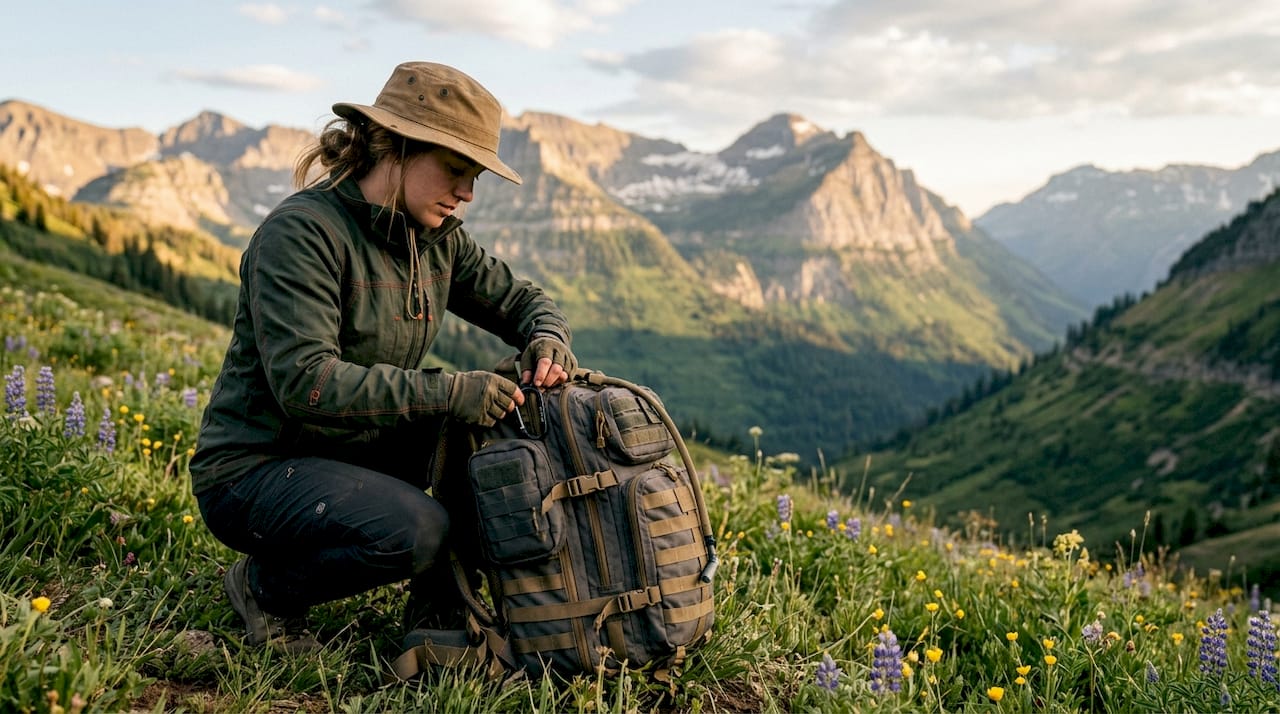
Modular storage is where tactical gear earns its reputation for adaptability. IFAK pouches hold first-aid supplies in a dedicated, grab-ready location. Admin pouches keep maps, IDs, and small tools organized without digging through a main compartment. Utility pouches handle overflow gear, and magazine pouches keep ammunition accessible on a belt or vest.
Pro Tip: Buy pouches with universal MOLLE attachment before committing to a specific vest or belt. A pouch that transfers between platforms saves money and gives you a more flexible kit over time.
- IFAK pouches: dedicated first-aid access, attachable to vest or pack
- Admin pouches: maps, documents, and small tools in one flat panel
- Utility pouches: general overflow storage for field items
- Magazine pouches: ammunition organization for range or hunting use
- Dump pouches: temporary storage for spent magazines or collected items
The benefits of rugged tactical storage gear go beyond organization. When gear has a fixed, accessible location, you spend less time searching and more time focused on the environment around you.
How wearable tactical systems support mobility and protection
Tactical belts do more than hold your pants. A duty belt or battle belt carries holsters, knives, pouches, and radios around your waist, distributing weight so your shoulders and back stay free. Two-piece inner/outer belt systems add stability by anchoring the outer load-bearing belt to a stiff inner belt threaded through your pants loops. For extended hikes or hunting trips, that stability prevents the belt from shifting under load.
Protective apparel rounds out the wearable category. Tactical gloves protect hands from cuts, abrasion, and cold while preserving enough dexterity to tie knots, operate a compass, or adjust gear quickly. Eyewear rated for ballistic or impact resistance shields against debris, branches, and UV exposure in open terrain. Reinforced tactical pants with knee panels and multiple pockets handle rough ground without tearing.
Cold-weather glove technology has advanced considerably. The MoG FrostTac ECW uses Aerogel nano-particle insulation and a trigger-finger architecture to achieve level 5 dexterity certification, maintaining full hand function down to -20°C. That kind of engineering shows how far protective apparel has moved beyond basic insulation.
- Duty belts: single-layer reinforced belts for holsters and pouches
- Battle belts: padded, load-bearing platforms for heavier field setups
- Inner/outer belt systems: two-piece stability for extended carry
- Tactical gloves: abrasion-resistant with grip and dexterity ratings
- Eyewear: impact-rated lenses for debris and UV protection
- Reinforced clothing: pants, combat shirts, and softshell jackets built for field movement
- Tactical boots: ankle support, non-slip soles, and waterproof construction
Preparedness and utility accessories every outdoor kit needs
Survival readiness depends on having the right tools in the right place. Navigation gear sits at the top of that list. A baseplate compass works without batteries, while a GPS device provides precise coordinates in unfamiliar terrain. Carrying both covers you when electronics fail.
Lighting is non-negotiable after dark. A tactical flashlight with multiple brightness settings handles camp setup and trail navigation, while a headlamp keeps both hands free for technical tasks. Chemical light sticks serve as backup signaling tools that require no power source at all. For outdoor emergency scenarios, having redundant lighting systems is the difference between a manageable situation and a dangerous one.
Communication devices extend your safety margin in remote areas. Handheld radios with weather channels keep you informed of incoming conditions, and signal mirrors or personal locator beacons provide emergency contact options when cell coverage disappears. Weapon accessories complete the kit: a quality holster secures a sidearm for quick access, a rifle sling distributes firearm weight across your body during long carries, and optic mounts keep sights zeroed through rough handling.
- Compasses and GPS devices: primary and backup navigation
- Tactical flashlights and headlamps: adjustable output for camp and trail use
- Chemical light sticks: no-battery emergency signaling
- Handheld radios: weather updates and team communication
- Personal locator beacons: emergency contact in remote terrain
- Holsters: secure, accessible sidearm carry
- Rifle slings: hands-free firearm carry during extended movement
- Multi-tools: pliers, blades, screwdrivers, and wire cutters in one unit
- Fixed-blade knives: field dressing, cutting, and emergency tasks
- Repair kits: field patches, cordage, and adhesive for gear failures
Why durability and modularity define quality tactical gear
Gear that fails in the field is worse than no gear at all. That is why MIL-STD 810 and IP67 certifications matter for tactical accessories used in extreme conditions. MIL-STD 810 covers vibration, drop, salt fog, temperature shock, and rain testing. IP67 certifies full dust-tight sealing and waterproofing to one meter of submersion. Gear meeting both standards has been validated in conditions that destroy standard commercial equipment.
Ballistic fabrics and reinforced stitching extend the lifespan of soft goods like backpacks, pouches, and belts. Fs9tactical builds its gear around exactly these materials, which is why the brand has earned a large and loyal customer base with numerous positive reviews. Outdoor gear that prioritizes lightweight weather resistance alongside ergonomic performance serves hikers, hunters, and survivalists better than purely military-spec designs.
Viewing quality tactical cases and carriers as long-term assets rather than one-time purchases changes how you budget. Rugged tactical cases prevent expensive gear damage and maintain operational readiness across years of use, reducing total replacement costs significantly.
Pro Tip: Clean latches and seals after every wet or dusty trip, use custom foam inserts to prevent internal movement, and inspect for cracks or compromised seals before each outing. These three habits extend gear life more than any single product upgrade.
Fs9tactical’s 60-in-1 survival kit packages the core preparedness category into a single ready-to-deploy unit, covering navigation, lighting, first aid, and signaling tools in one organized kit. For adventurers building out a complete loadout, it is a practical starting point that covers the preparedness category without requiring individual sourcing of every component.
Key Takeaways
Tactical accessories for outdoor adventures succeed when they combine certified durability, modular configuration, and purpose-built utility across every category from load-carrying to preparedness.
| Point | Details |
|---|---|
| Six core categories | Load-carrying, modular storage, belts, protective apparel, preparedness tools, and weapon accessories cover every field need. |
| MOLLE compatibility | Choosing MOLLE-compatible pouches and packs lets you reconfigure your kit for different trips without buying new gear. |
| Certification matters | MIL-STD 810 and IP67 ratings confirm gear survives dust, water, shock, and temperature extremes in real conditions. |
| Maintenance extends lifespan | Cleaning seals, using foam inserts, and inspecting latches before each trip prevents premature gear failure. |
| Durability over price | Rugged tactical gear costs more upfront but reduces long-term replacement and equipment damage costs. |
