

How UV Resistance Affects Tactical Gear Durability
UV resistance in tactical gear is defined as a material’s ability to prevent ultraviolet radiation from breaking down its molecular structure, preserving tensile strength and fabric integrity over time. For hunters, shooters, and survivalists who spend extended hours outdoors, this is not a minor spec. It is the difference between gear that holds up under pressure and gear that fails without warning. Understanding how UV resistance affects tactical gear starts with knowing what UV radiation actually does to the fibers you depend on.
How UV radiation damages tactical gear materials
Photodegradation is the core mechanism behind UV damage. When UV photons strike synthetic polymer chains in fabrics like polyester, nylon, or Kevlar, they break chemical bonds at the molecular level. The result is a fiber that looks intact but has lost a significant portion of its load-bearing capacity.
The numbers are stark. Untreated Kevlar loses 20–45% of its tensile strength within just 24 hours of direct, high-intensity UV exposure. That means a vest or panel rated to stop a bullet on Monday morning may be operating at a fraction of its designed capacity by Tuesday. No visible crack. No obvious fray. Just silent, structural failure waiting for a load event.
Not all fibers degrade at the same rate. Polyester is naturally more UV resistant than nylon, making it a better base fabric for packs, pouches, and cases that see constant sun. Nylon absorbs UV energy more readily, which accelerates embrittlement and color fading. High-performance fibers like Kevlar and UHMWPE sit at the opposite end of the spectrum: exceptional strength, but high UV sensitivity without protective coatings.
| Material | UV Sensitivity | Primary Risk |
|---|---|---|
| Polyester | Low | Gradual color fade |
| Nylon | Moderate | Embrittlement, strength loss |
| Kevlar | High | Rapid tensile strength loss |
| UHMWPE | High | Polymer chain breakdown |
| Treated ballistic fabric | Low | Coating wear over time |
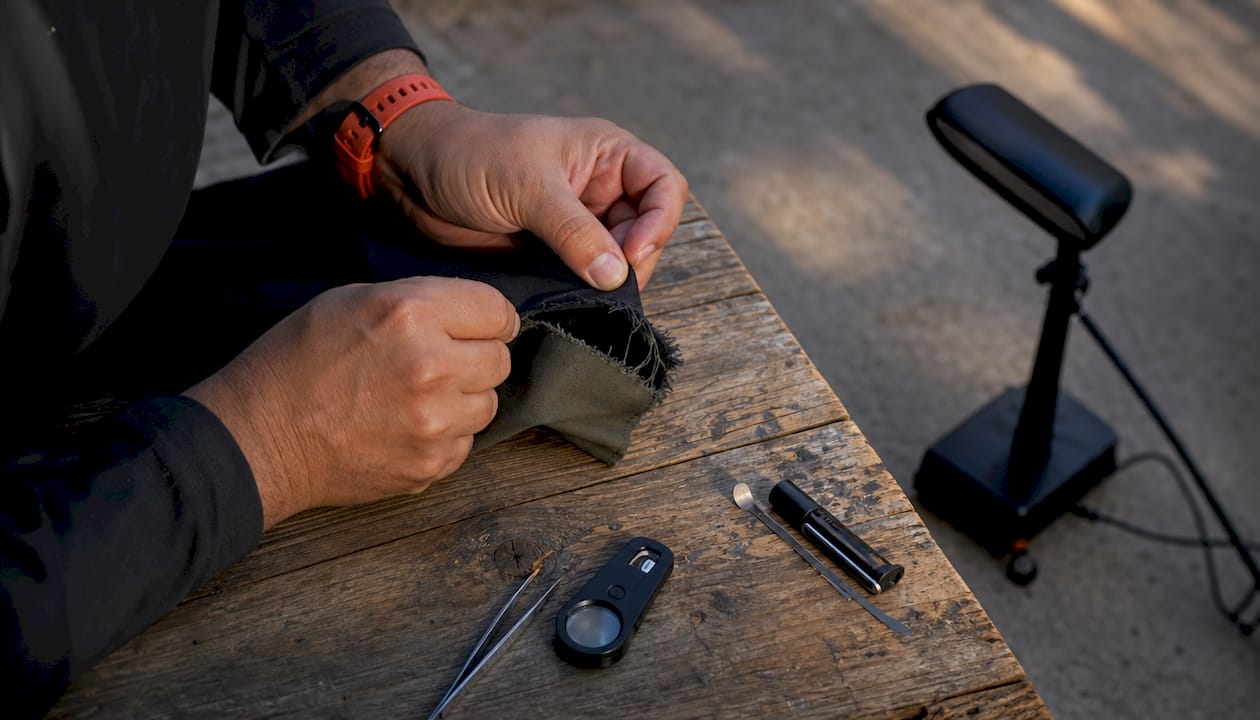
Pro Tip: Run your fingers along load-bearing webbing after any extended sun exposure. Stiffness or a slightly fuzzy texture are early signs of UV embrittlement, long before visible damage appears.
Inherent UV resistance vs. surface treatments: what is the difference?
The most important distinction in tactical gear UV protection is whether UV resistance is built into the fiber itself or applied as a surface coating afterward. These two approaches deliver very different results in the field.
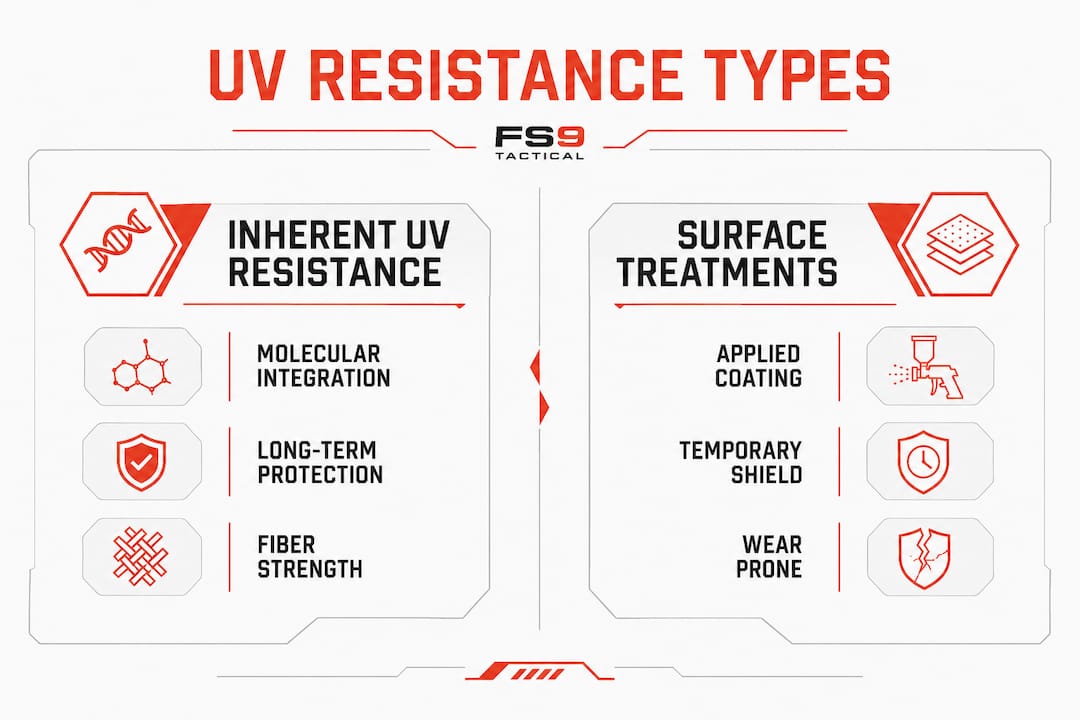
Inherent UV resistance is molecularly integrated into the polymer during manufacturing. The fiber’s chemical structure resists photodegradation from the inside out. This type of protection does not wash off, peel, or wear away with abrasion. Gear built with inherently UV-resistant materials retains both colorfastness and structural strength across its full service life.
Surface UV treatments work differently. Manufacturers apply UV-blocking coatings or finishes to the outside of a fabric after weaving. These coatings are effective when new, but they degrade with washing, abrasion, and chemical contact. A treated nylon bag may perform well for the first season and then lose most of its UV protection without the user realizing it.
Key differences to know before buying:
- Inherent resistance survives repeated washing and field abrasion without degrading
- Surface coatings typically require reapplication after heavy use or laundering
- Inherently UV-resistant fabrics maintain colorfastness longer, which matters for camouflage patterns in the field
- Coated fabrics may show UV damage faster in high-abrasion contact zones like shoulder straps and drag handles
- Kevlar and UHMWPE require laminates or coatings because their base fibers are UV-sensitive, regardless of their mechanical strength
Choosing gear with inherent UV resistance is the more reliable long-term investment. Surface treatments are acceptable for lower-stress applications, but they should not be the primary UV defense in load-bearing or safety-critical gear.
What are the real-world safety risks of UV-damaged gear?
UV damage creates a specific failure pattern that makes it especially dangerous: the gear looks fine right up until it does not. UV damage to fibers is often invisible until sudden, catastrophic failure occurs under dynamic load. A strap that has been quietly degrading for months will snap the moment you put real weight on it.
This “cliff-edge” failure mode is the central safety argument for understanding the impact of UV on gear. There is no gradual warning. The fiber does not stretch more or feel looser. It simply breaks when stressed, often at the worst possible moment in the field.
Chemical exposure compounds the problem significantly. Sunscreen and DEET act as plasticizers that separate polymer chains, accelerating UV-induced degradation in hours rather than days. Every time you apply bug spray or sunscreen and then handle your pack straps or sling, you are speeding up the breakdown process. This is not a theoretical risk. It is a documented chemical interaction that shortens gear life measurably.
Storage location matters more than most users realize. UVA radiation passes through most vehicle side and rear windows, meaning gear stored in a truck cab or cargo area is still accumulating UV damage even when not in use. A rifle case or pack left on a back seat through a summer of hunting trips is absorbing radiation every day.
Early detection inspection routine:
- Run your palm firmly along all webbing and straps, feeling for stiffness or brittleness
- Check for surface fuzziness on load-bearing fabric, a sign of fiber breakdown
- Inspect stitching at stress points for thread discoloration or fraying
- Look for color fading or chalking on coated surfaces, which signals coating failure
- Flex rigid components like buckles and frame stays to check for micro-cracking
- Replace any component that shows two or more of these signs, regardless of how it looks at a glance
Pro Tip: Schedule a full gear inspection at the start and end of every season. UV damage accumulates silently, and a five-minute check can prevent a critical failure at the worst possible time.
How to choose and maintain UV-resistant tactical gear
Selecting gear with genuine UV resistance starts with knowing which materials hold up and which ones need help. For durable tactical gear, the material choice is the foundation of everything else.
Polyester-based fabrics are the best starting point for bags, cases, and pouches that see sustained sun exposure. Ballistic polyester, used in quality rifle cases and tactical bags, combines high abrasion resistance with lower UV sensitivity than nylon alternatives. For load-bearing webbing and slings, look for materials that specify UV stabilizers in their construction. A minimum of 2% UV stabilizer by weight is the industry-recommended threshold for outdoor polymers. That additive prevents the chain-breaking reaction that causes embrittlement.
Material selection guidance by gear type:
- Rifle cases and bags: Prioritize ballistic polyester or UV-stabilized nylon with inherent resistance ratings
- Slings and webbing: Confirm UV stabilizer content; avoid untreated nylon for primary load-bearing roles
- Soft armor panels: Require UV-protective laminates over Kevlar or UHMWPE; verify coating integrity regularly
- Pouches and accessories: Polyester-based fabrics with DWR coatings offer adequate UV and weather resistance for most field conditions
Maintenance practices extend gear life significantly. Choosing UV-resistant materials yields 15–20% durability gains over untreated alternatives, but only if the gear is also stored and maintained correctly. Keep gear out of direct sun when not in use. Store it in a dark, cool location rather than a vehicle cab. Wipe down surfaces after contact with sunscreen or insect repellent. For gear with surface UV coatings, reapply UV-protective sprays after heavy washing or extended field use. Pair these habits with the inspection routine above, and you extend the functional life of your kit considerably. Fs9tactical builds its gear with weatherproofing principles that align directly with these practices.
Key Takeaways
UV resistance is the single most underrated durability factor in tactical gear, and ignoring it creates invisible failure risks that no amount of field repair can fix.
| Point | Details |
|---|---|
| UV damage is invisible | Fibers lose tensile strength silently; failure happens suddenly under load with no prior warning. |
| Inherent beats surface treatment | Molecularly integrated UV resistance outlasts coatings, which wear off with washing and abrasion. |
| Chemicals accelerate damage | Sunscreen and DEET act as plasticizers, speeding up UV degradation in hours rather than days. |
| Storage location matters | UVA penetrates vehicle glass, so gear stored in trucks still accumulates UV damage over time. |
| Inspect regularly | Check for stiffness, fuzziness, and color fading at the start and end of every season. |
UV resistance is the gear spec most hunters ignore until it costs them
I have handled a lot of tactical gear over the years, and the pattern I see most often is this: hunters and shooters spend serious money on optics, ammunition, and firearms, then buy the cheapest bag or sling they can find and store it in the back of a hot truck all summer. By the time fall season opens, the webbing is already compromised. They just do not know it yet.
The part that frustrates me is how preventable this is. UV resistance is not a premium feature reserved for military contracts. It is a material decision that manufacturers make at the design stage, and it costs relatively little to get right. The problem is that most gear labels do not tell you whether the UV resistance is inherent or just a surface spray applied at the factory. You have to ask, or buy from brands that are transparent about their materials.
I also think the chemical interaction with sunscreen and DEET is genuinely underappreciated. Most people know that bug spray is harsh on plastics. Fewer realize it actively accelerates UV-induced fiber breakdown. If you are applying DEET in the field and then grabbing your pack straps with the same hands, you are doing real damage over a season of use. Wiping down your gear after a day out is not obsessive. It is just smart maintenance.
My honest recommendation: treat UV resistance the same way you treat waterproofing. Check for it before you buy. Verify whether it is inherent or coated. And build a seasonal inspection habit that catches degradation before it becomes a failure. Gear that looks fine can be structurally compromised. The only way to know is to check.
— Cody
Gear built to handle what the sun throws at it
Fs9tactical designs its products for hunters, shooters, and survivalists who cannot afford gear that quits in the field. Every product in the lineup reflects a commitment to materials that hold up under real outdoor conditions, including sustained UV exposure.
The Fs9tactical survival kit is built with durability-first materials suited for extended outdoor use, where UV exposure is a constant factor. For those who need a full loadout that travels well and holds up across seasons, the 60-in-1 tactical emergency kit offers comprehensive gear in a UV-conscious package. Fs9tactical backs every product with over 20,000 satisfied users and thousands of five-star reviews. Browse the full lineup and invest in gear that is built to last.
FAQ
What does UV resistance mean in tactical gear?
UV resistance is a material’s ability to prevent ultraviolet radiation from breaking down its polymer chains, preserving tensile strength and structural integrity over time. Gear without it degrades silently and can fail without visible warning.
Which tactical gear materials have the best UV resistance?
Polyester offers the best natural UV resistance among common tactical fabrics, while Kevlar and UHMWPE require protective coatings or laminates to prevent rapid degradation under sun exposure.
How does sunscreen damage tactical gear?
Sunscreen and DEET act as plasticizers that separate polymer chains, accelerating UV-induced fiber breakdown in hours rather than days. Wiping down gear after field use significantly reduces this risk.
Can gear stored in a vehicle still suffer UV damage?
Yes. UVA radiation passes through most vehicle side and rear windows, meaning synthetic fibers in bags, cases, and slings continue to degrade even when stored inside a truck cab or cargo area.
How often should I inspect tactical gear for UV damage?
Inspect gear at the start and end of every season at minimum. Run your hands along all webbing and straps to check for stiffness, fuzziness, or brittleness, which are early signs of UV embrittlement before visible failure occurs.
