

Why Color Choice Matters for Tactical Accessories
Color choice in tactical accessories is a direct determinant of concealment effectiveness, rescue visibility, and operational safety across every terrain type. Most gear buyers treat color as an aesthetic preference. That is a costly mistake. Coyote brown and ranger green make up roughly 70% of current U.S. Military gear, chosen specifically because they blend into arid, mixed, and woodland environments far better than black. The science behind tactical gear color significance draws on camouflage theory, luminance contrast research, and color psychology, and every outdoor enthusiast who carries gear in the field benefits from understanding it.
Why color choice matters in tactical accessories: concealment and effectiveness
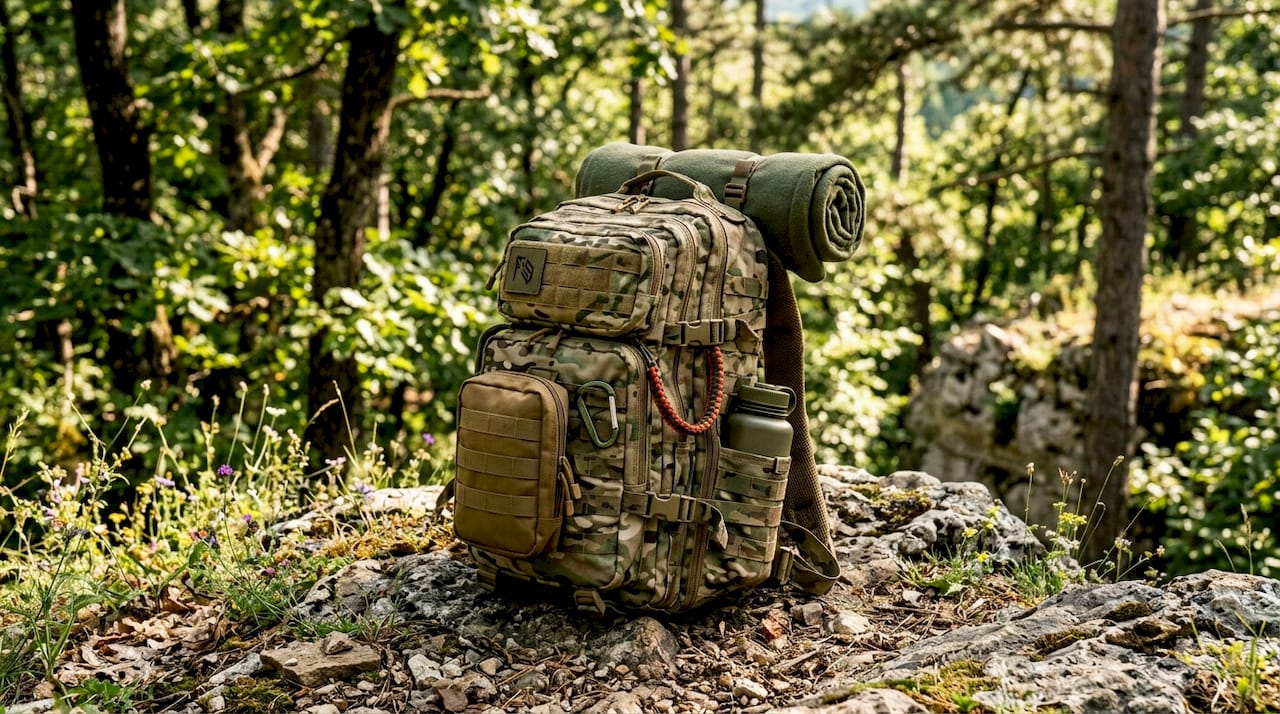
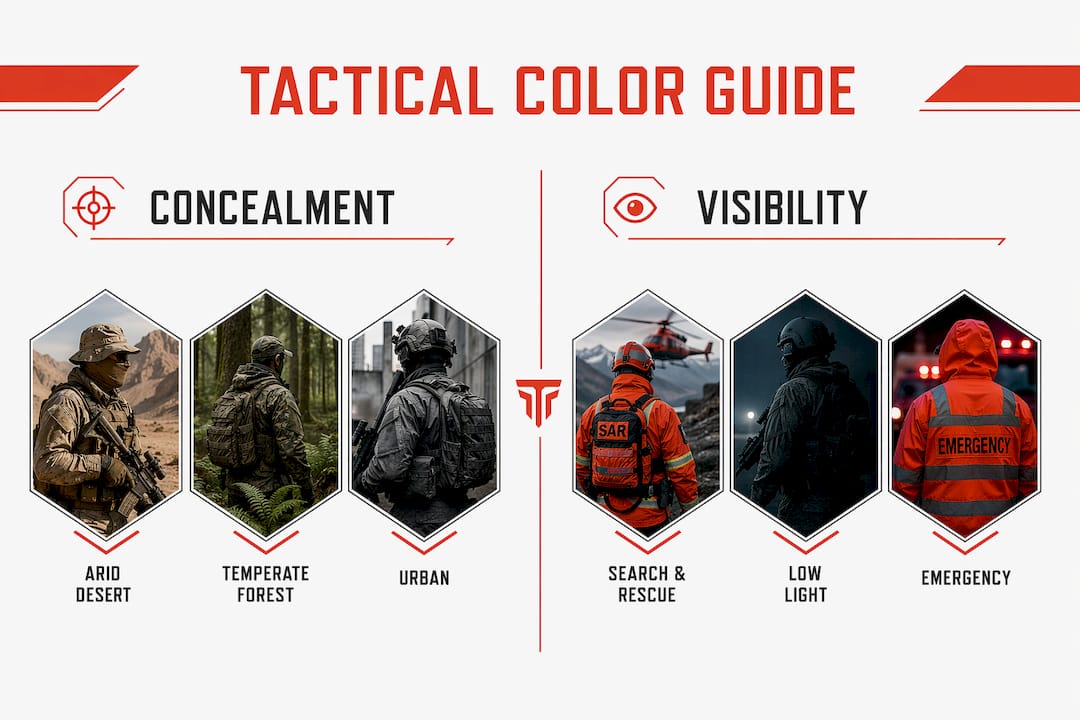
Color selection directly controls how well your gear disappears into its surroundings. The U.S. Military’s heavy use of coyote brown and ranger green is not arbitrary. Those colors match the dominant tones of the environments where most field operations occur, from desert scrub to temperate woodland. Choosing the wrong color breaks concealment even when your technique is perfect.
Black is the most misunderstood color in tactical gear. Black gear fails in about 80% of outdoor scenarios because true black is almost nonexistent in nature. That means a black pack or pouch creates an unnatural silhouette that stands out rather than blends in. Under night vision, the problem compounds: black absorbs infrared light and creates a stark, high-contrast signature that makes the wearer easier to detect, not harder.
Camouflage science adds another layer to this. Tactical patterns create “false shadows” by placing dark bits within a pattern to visually break up the human silhouette. Navy and dark gray mimic natural shadow tones far better than true black, because shadows in nature carry blue and gray undertones. A solid black accessory destroys that visual breakup effect entirely.
Pro Tip: If you operate in low-light or mixed terrain, choose dark navy or charcoal over black for pouches and accessories. You get the shadow effect without the infrared liability.
Terrain-specific color performance
| Terrain | Recommended color | Why it works |
|---|---|---|
| Arid desert | Coyote brown | Matches sand, dry grass, and rock tones |
| Temperate woodland | Ranger green | Blends with foliage and damp earth |
| Urban/concrete | Dark gray or navy | Mimics shadow and concrete tones |
| Snow/alpine | White or light gray | Reflects ambient light, breaks silhouette |
| Mixed/transitional | Multicam | Multi-tone pattern adapts across zones |
What role does color play in visibility and rescue safety?
Color choice does not only serve concealment. For hunters, hikers, and survivalists, the right color can mean the difference between being found and being missed. 78% of search and rescue (SAR) volunteers in Colorado confirm that bright outerwear improves rescue success. That statistic reflects a real operational gap: most outdoor gear sold today trends toward muted beige and earth tones that prioritize fashion over function.
Visibility works through two distinct mechanisms: luminance contrast and chromatic contrast. Luminance contrast is the difference in brightness between your gear and the background. Chromatic contrast is the difference in color. Both matter, but chromatic contrast is what makes a color pop at distance when lighting conditions are flat or overcast.
Terrain determines which high-visibility color performs best. Royal blue outperforms blaze orange in red-rock desert environments, while blaze orange dominates in temperate forests and snow. That is a counterintuitive finding that most gear buyers never encounter. Carrying the wrong signal color for your terrain is as bad as carrying none at all.
Effective high-visibility signaling does not require sacrificing your low profile. Deployable bright layers, such as a blaze orange pack cover or a high-vis beanie, give you earth-tone concealment at baseline and instant visibility when you need rescue detection. The key is keeping those layers accessible, not buried at the bottom of your pack.
The biomotion effect adds a practical tool to your safety kit. Adding brightly colored markers to your limbs improves detection distance by up to 10x compared to a static bright patch on your torso. Movement amplifies color detection. A bright wrist wrap or ankle marker works harder than a colored vest when you are moving through terrain.
- Use blaze orange in forests, snow, and temperate zones
- Use royal blue or high-contrast yellow in red-rock or desert terrain
- Attach bright markers to limbs, not just your torso, for maximum detection
- Keep a deployable high-vis layer accessible at the top of your pack
- Check your tactical accessories in emergency scenarios before every trip to confirm your signaling setup is functional
How does color psychology affect tactical gear performance?
Color influences more than optics. Gear that aligns with your tactical identity and confidence improves focus and decision speed in high-stress scenarios. Color does not increase physical strength, but it lowers what researchers call “threat temperature” in social dynamics. That means the right color choice can project authority and reduce confrontational escalation before a word is spoken.
This psychological dimension matters most in competitive shooting, law enforcement training, and high-stakes hunting scenarios. A shooter who feels confident in their gear setup performs more consistently under pressure. Color is one of the inputs that shapes that confidence, alongside fit, weight, and material quality.
Laser and illumination accessory colors carry their own performance logic. Green and cyan lasers appear significantly brighter than red or blue lasers at the same milliwatt output because human eye sensitivity peaks in the green-cyan range. This is not a matter of preference. It is a function of how the human visual system processes wavelengths. A green laser at 5mW is operationally superior to a red laser at 5mW in most daylight conditions.
- Green lasers: highest daytime visibility, best for most field applications
- Cyan lasers: strong perceived brightness, useful in mixed lighting
- Red lasers: lower visibility in daylight, better battery efficiency
- Blue lasers: lowest perceived brightness for tactical use
Pro Tip: For daytime field use, always choose a green laser over red. The brightness advantage is not marginal. It is the difference between a visible aiming point and a nearly invisible one in bright sunlight.
Practical guidelines for choosing tactical accessory colors by environment
Matching your gear color to your environment starts with an honest assessment of where you spend most of your time. A hunter who works mixed woodland and open meadow terrain needs different color logic than a shooter who trains in an urban range environment. The tactical range backpack buyer’s guide covers this terrain-to-color matching in practical depth for shooters.
Heat absorption is a factor most gear buyers ignore. Black tactical surfaces absorb up to 90% of visible light and can reach surface temperatures around 80°C in direct summer sun. Tan and coyote surfaces stay 20–25°C cooler. That temperature difference affects comfort, equipment longevity, and the performance of any electronics or medical supplies stored inside your gear.
Infrared compliance adds a layer of complexity for users who operate with night vision or alongside military and law enforcement units. Some dyed fabrics reflect near-infrared light differently than their visible color suggests. A fabric that looks coyote brown in daylight may glow bright under night vision if it uses non-IR-compliant dye. Always verify IR compliance when purchasing gear for low-light operations.
Color fading under UV exposure is a long-term durability concern. Ranger green and coyote brown fabrics fade at different rates depending on dye quality and fabric construction. A faded multicam pattern loses its visual breakup effect and can shift toward tones that no longer match the intended terrain. Fs9tactical builds its gear with materials selected for durability, including resistance to the UV degradation that compromises color integrity over time. The durable tactical gear materials checklist outlines what to look for when evaluating long-term color performance in field gear.
- Coyote brown: best for desert, arid scrub, and dry grassland
- Ranger green: best for woodland, jungle, and wet temperate environments
- Multicam: best for transitional or multi-environment use
- Navy or dark gray: best for urban settings and shadow-heavy environments
- Olive drab: strong performer in mixed woodland and legacy military contexts
Key Takeaways
Color choice in tactical accessories directly controls concealment, rescue visibility, heat management, and user confidence across every operational environment.
| Point | Details |
|---|---|
| Black underperforms outdoors | Black fails in about 80% of outdoor scenarios due to heat absorption and poor IR performance. |
| Terrain drives color selection | Match coyote brown to desert, ranger green to woodland, and navy to urban environments. |
| Visibility color is terrain-specific | Royal blue outperforms blaze orange in red-rock desert; blaze orange leads in forests and snow. |
| Biomotion boosts detection | Bright markers on limbs improve detection distance by up to 10x compared to static patches. |
| Green lasers outperform red | Human eye sensitivity peaks in the green-cyan range, making green lasers brighter at equal power. |
Color is a tactical decision, not a style preference
I have watched experienced hunters and shooters spend serious money on high-quality gear and then choose black because it “looks professional.” That choice costs them in the field every single time. Black is a cultural shorthand for tactical credibility. It is not a functional color for most real-world outdoor scenarios.
The insight that changed how I think about this came from studying military procurement decisions. The U.S. Military did not shift to coyote brown and ranger green because those colors look good on a catalog page. They made that shift because field data showed those colors kept personnel harder to detect and cooler in the environments where they operated. That is a direct performance outcome, not an aesthetic one.
The other misconception I see constantly is treating high-visibility color as the enemy of tactical credibility. Hunters especially resist blaze orange because it feels like it gives away their position. But a deployable high-vis layer that lives in the top pocket of your pack gives you the best of both worlds. You stay low-profile during the approach and become instantly visible if you need rescue. That is not a compromise. That is good planning.
The outdoor industry’s drift toward muted beige tones makes this worse. Beige prioritizes fashion over functional visibility, and that trend disadvantages anyone who spends real time in demanding environments. Color is a feature. Treat it like one.
— Cody
Fs9tactical gear built around color that performs
Fs9tactical designs its accessories with color as a functional specification, not an afterthought. The olive drab tactical gear bag and the coyote trauma dump pouch reflect deliberate terrain-matched color choices backed by the same logic the U.S. Military uses in procurement. Both colors perform across the woodland-to-arid spectrum where most hunters, shooters, and survivalists operate.
Fs9tactical’s 60-in-1 emergency survival kit pairs earth-tone concealment with deployable high-visibility components, so you get the full color strategy in one package. Over 20,000 satisfied users have trusted Fs9tactical gear in demanding conditions. Browse the full range and choose gear where every color decision has already been made with your environment in mind.
FAQ
Why does black tactical gear underperform outdoors?
Black absorbs up to 90% of visible light and creates stark infrared signatures, making it highly visible under night vision and dangerously hot in direct sun. Earth tones like coyote brown stay significantly cooler and blend far better in natural environments.
What is the best color for tactical gear in woodland environments?
Ranger green is the top performer in temperate woodland and jungle terrain because it matches the dominant green and brown tones of foliage and damp earth. Multicam is a strong alternative when you move between woodland and open terrain.
How does color affect search and rescue visibility?
Terrain determines which high-visibility color works best. Blaze orange leads in forests and snow, while royal blue outperforms it in red-rock desert settings. Attaching bright markers to your limbs amplifies detection through the biomotion effect.
Does color affect laser accessory performance?
Green and cyan lasers appear significantly brighter than red or blue at equal power output because human eye sensitivity peaks in the green-cyan wavelength range. For daytime field use, green is the most effective laser color.
Can I balance concealment and high visibility in the same kit?
Yes. Carry earth-tone gear for baseline concealment and pack a deployable high-visibility layer, such as a blaze orange cover or bright beanie, at the top of your bag. This approach gives you stealth during normal operations and instant rescue visibility when needed.
