

Tactical Accessories in Emergency Scenarios: A Field Guide
Tactical accessories are defined as modular, load-bearing tools and carriers designed to organize, protect, and provide rapid access to critical gear during high-stress operations. The role of tactical accessories in emergency scenarios goes far beyond storage. They determine how fast you reach a tourniquet, whether your pack survives a river crossing, and how much weight your body can sustain over miles of rough terrain. A 2025 Red Cross survey found that 73% of households fail to complete emergency preparedness plans. Curated, modular kits built around MOLLE webbing and 500D or 1000D Cordura nylon directly address that gap by making preparation concrete and manageable.
How do tactical accessories improve accessibility and modularity during emergencies?
MOLLE/PALS webbing is the foundation of modern tactical organization. MOLLE stands for Modular Lightweight Load-carrying Equipment, and PALS is the Pouch Attachment Ladder System that makes it work. Together, they let you attach, reposition, and swap pouches on any compatible surface without tools or downtime.
The practical payoff is speed. In a high-stress emergency, your hands shake and your vision narrows. Knowing exactly where each pouch sits on your pack or plate carrier means you retrieve gear by muscle memory, not by searching. Dedicated medical pouches prioritize tourniquets, dressings, and airway devices with quick-open access designed to save critical seconds during hemorrhage control.
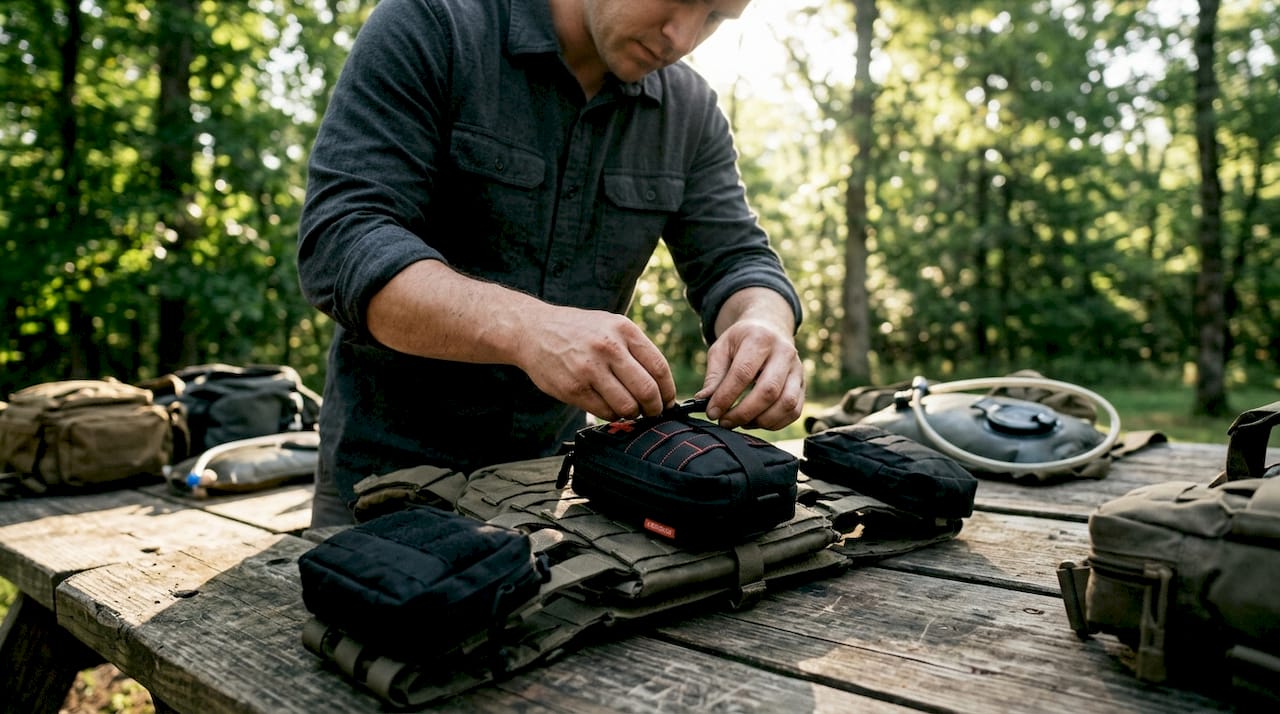
Real-world examples make this concrete. A trauma kit pouch mounted at the front of a chest rig gives a first responder one-handed access without removing the pack. A multitool pouch clipped to a hip belt keeps cutting tools separate from food and water, preventing cross-contamination and wasted search time. A radio pouch with a retention strap holds a communication device securely during movement while keeping it reachable in seconds.
The modular approach also scales with the mission. You can strip a pack down to a lightweight day configuration or expand it with additional pouches for a 72-hour scenario, all using the same base system.
- Mount medical pouches at the front or side of your pack for one-handed access
- Use dedicated communication pouches with retention straps to secure radios and GPS devices
- Separate food, water, and tools into labeled pouches to eliminate search time under stress
- Attach fire-starting and navigation tools to exterior MOLLE loops for immediate retrieval
Pro Tip: Preload pouches by mission type before an emergency occurs. A “trauma” pouch, a “navigation” pouch, and a “shelter” pouch each stay packed and ready, so you grab the right module for the situation without repacking under pressure.
What types of tactical bags and accessories best suit different emergency scenarios?
Bag selection is the single most consequential gear decision you make before an emergency. The wrong size creates either a dangerously light kit or a load that breaks you down before you reach safety.
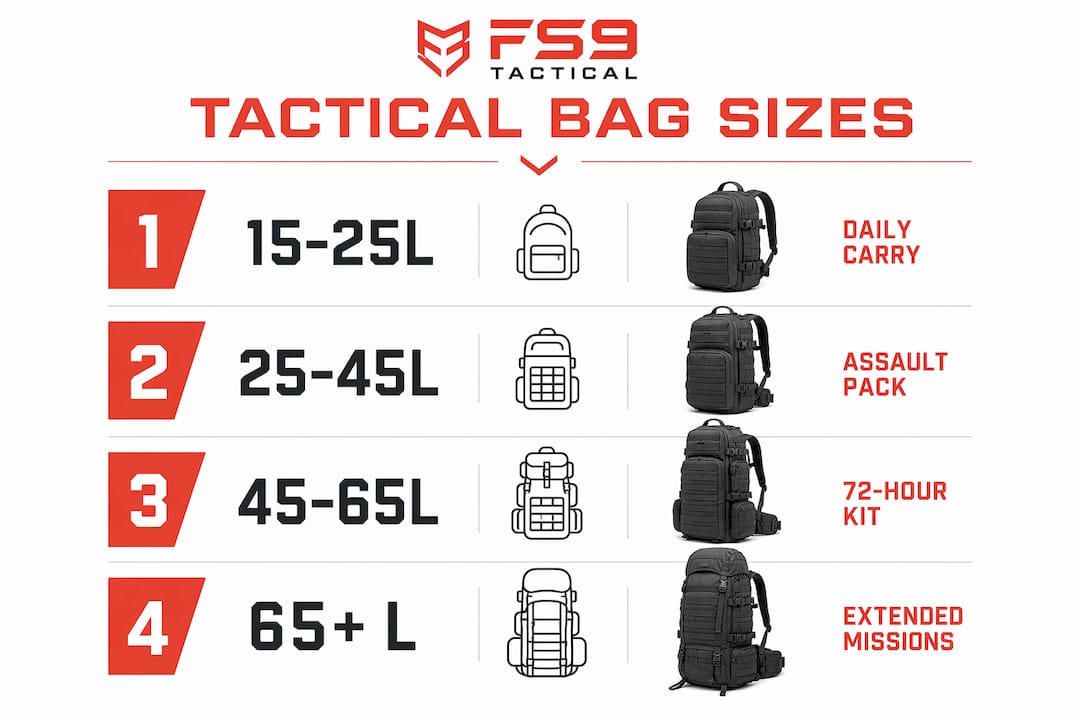
Expert sizing guidance establishes three tiers based on mission duration. A 15–25L bag covers everyday carry and short evacuations. A 25–45L bag supports 24–48 hour operations with shelter, water filtration, and food. A 45–65L bag handles 72-hour-plus scenarios where you carry full survival infrastructure. Each tier demands a different weight discipline and packing strategy.
Material choice determines whether the bag survives the mission. Standard hiking packs use lightweight fabrics that tear on barbed wire, abrade against concrete rubble, and absorb water like a sponge. Ultralight hiking gear lacks the abrasion-resistant materials like 500D or 1000D Cordura nylon necessary for hostile terrain. The difference is not cosmetic. A torn bag in a flood zone or wildfire evacuation means scattered gear and a failed mission.
Design also affects access speed. Clamshell panel-loading bags open completely flat, giving you instant visibility of every item inside. Top-loading bags require unpacking from the top down to reach buried items, which costs time and composure when seconds matter.
| Bag type | Volume | Ideal use case | Key feature |
|---|---|---|---|
| EDC tactical pack | 15–25L | Daily carry, short evacuation | Compact, quick-access front panel |
| Assault pack | 25–45L | 24–48 hour emergency ops | MOLLE exterior, hydration sleeve |
| Bug-out bag | 45–65L | 72-hour-plus survival | Clamshell opening, frame support |
| Tactical thigh bag | 5–10L | Vehicle or close-quarters use | Leg-mount, waterproof exterior |
| Modular pouch system | 1–5L per pouch | Supplement any base pack | MOLLE-compatible, mission-specific |
The Fs9tactical Military Tactical 25L Backpack fits the assault pack tier with full MOLLE exterior coverage and a hydration bladder sleeve, making it a direct match for 24–48 hour emergency use.
Why do rugged tactical accessories matter more than standard gear in emergency situations?
Standard civilian packs are built for comfort on marked trails. Tactical gear is built for survival on terrain that has no rules. That design difference becomes life-or-death when conditions deteriorate.
Tactical packs drain water quickly through drainage ports and mesh panels, preventing water accumulation from rain, stream crossings, or flooding. A waterlogged civilian pack adds pounds of dead weight and soaks critical gear. Tactical packs shed that water and keep moving.
Mechanical reinforcement separates tactical gear from everything else:
- Bartack stitching at shoulder strap junctions uses 42-stitch reinforcements at load-bearing points, preventing strap separation under heavy loads
- External MOLLE webbing distributes weight across a rigid grid rather than concentrating stress at single attachment points
- Reinforced grab handles allow one-handed lifting and dragging without tearing the pack body
- YKK or equivalent zippers resist corrosion and maintain function in wet, sandy, or freezing conditions
The failure point analysis is straightforward. Civilian packs fail at stitching junctions, zipper pulls, and thin fabric panels. Tactical packs address each of those points with deliberate engineering. When you are carrying 40 pounds through a disaster zone, you cannot afford a shoulder strap that separates three miles from shelter.
Tactical gear prioritizes reliability in hostile environments over the lightweight designs favored in hiking backpacks. That trade-off is intentional and correct for emergency use.
How to select and integrate tactical accessories effectively for your emergency kit
Choosing the right accessories starts with a clear mission profile. A suburban evacuation kit looks different from a wilderness survival kit. Define your most likely emergency scenario first, then build your accessory selection around it.
Follow this process when assembling your kit:
- Identify your mission duration. Match bag volume to the 15–25L, 25–45L, or 45–65L tiers based on how long you need to sustain yourself without resupply.
- Select pouches by function, not appearance. Choose pouches with quick-open closures for medical and navigation gear. Use sealed pouches for electronics and documents.
- Check compartmentalization. A good tactical pouch has internal dividers or elastic loops that hold items in fixed positions. Loose gear inside a pouch defeats the purpose of organized access.
- Test under full load. Full-weight walks with a packed tactical bag identify structural and organizational weaknesses before an actual emergency. Walk at least two miles with your full kit to find friction points, pressure spots, and balance issues.
- Integrate with your base system. Attach pouches to MOLLE webbing in a consistent layout. Heavier items sit low and close to your back. Frequently accessed items sit at the front or sides.
Pro Tip: Organize gear so the three items you need fastest are always in the same position. Muscle memory built during practice carries over under stress, when conscious decision-making slows down.
Common mistakes to avoid: overloading the pack beyond 30% of your body weight, stacking pouches so high they block your peripheral vision, and choosing pouches with buckle closures that require two hands to open. The emergency kit checklist from Fs9tactical walks through a complete loadout framework that prevents these errors before they happen.
The best survival tool kits pair modular pouches with a base pack that has enough MOLLE real estate to mount everything you need without crowding.
Key Takeaways
Tactical accessories determine survival outcomes in emergencies by combining modular organization, durable materials, and rapid-access design into a single integrated system.
| Point | Details |
|---|---|
| MOLLE modularity saves time | Attach mission-specific pouches to any MOLLE surface for muscle-memory retrieval under stress. |
| Match bag volume to mission length | Use 15–25L for EDC, 25–45L for 48-hour ops, and 45–65L for 72-hour-plus scenarios. |
| Material quality determines durability | 500D or 1000D Cordura nylon and bartack stitching prevent pack failure in hostile terrain. |
| Clamshell design beats top-loading | Panel-loading bags open flat for instant full access, critical when seconds matter. |
| Test gear before you need it | Full-weight walks expose structural and organizational flaws that idle storage never reveals. |
What I’ve learned from gear that fails at the worst moment
Most people build their emergency kit once, store it in a closet, and assume it will perform when called upon. That assumption gets people hurt.
The gap between a kit that looks good on a table and one that functions under load is wider than most preparedness guides admit. I have seen MOLLE pouches mounted so high on a pack that the user could not reach them while wearing the bag. I have seen zippers fail on civilian packs after a single wet-weather test. I have seen shoulder straps delaminate from the pack body after one serious load carry.
The fix is not buying more gear. The fix is testing what you have, hard, before you need it. Walk your full kit for two miles on uneven ground. Reach for your medical pouch while moving. Try to open your navigation pouch with one hand in the dark. Every failure you find in practice is a failure you avoid in the field.
Modularity matters most when your situation changes mid-mission. The ability to strip a pack down or add a pouch without repacking everything is not a convenience feature. It is a force multiplier. Gear that adapts to the situation keeps you moving. Gear that forces you to stop and reorganize costs time you may not have.
Build your kit around the worst scenario you can realistically face, test it until it fails, fix the failures, and test it again. That process is what separates prepared from unprepared.
— Cody
Fs9tactical gear built for real emergency use
Fs9tactical designs gear for people who cannot afford equipment failure. The 60-in-1 emergency survival kit covers 72-hour preparedness with tools, medical supplies, and shelter gear organized for rapid deployment. Every product in the Fs9tactical line uses ballistic-grade fabrics and reinforced stitching built to the same standards as mission-critical military gear.
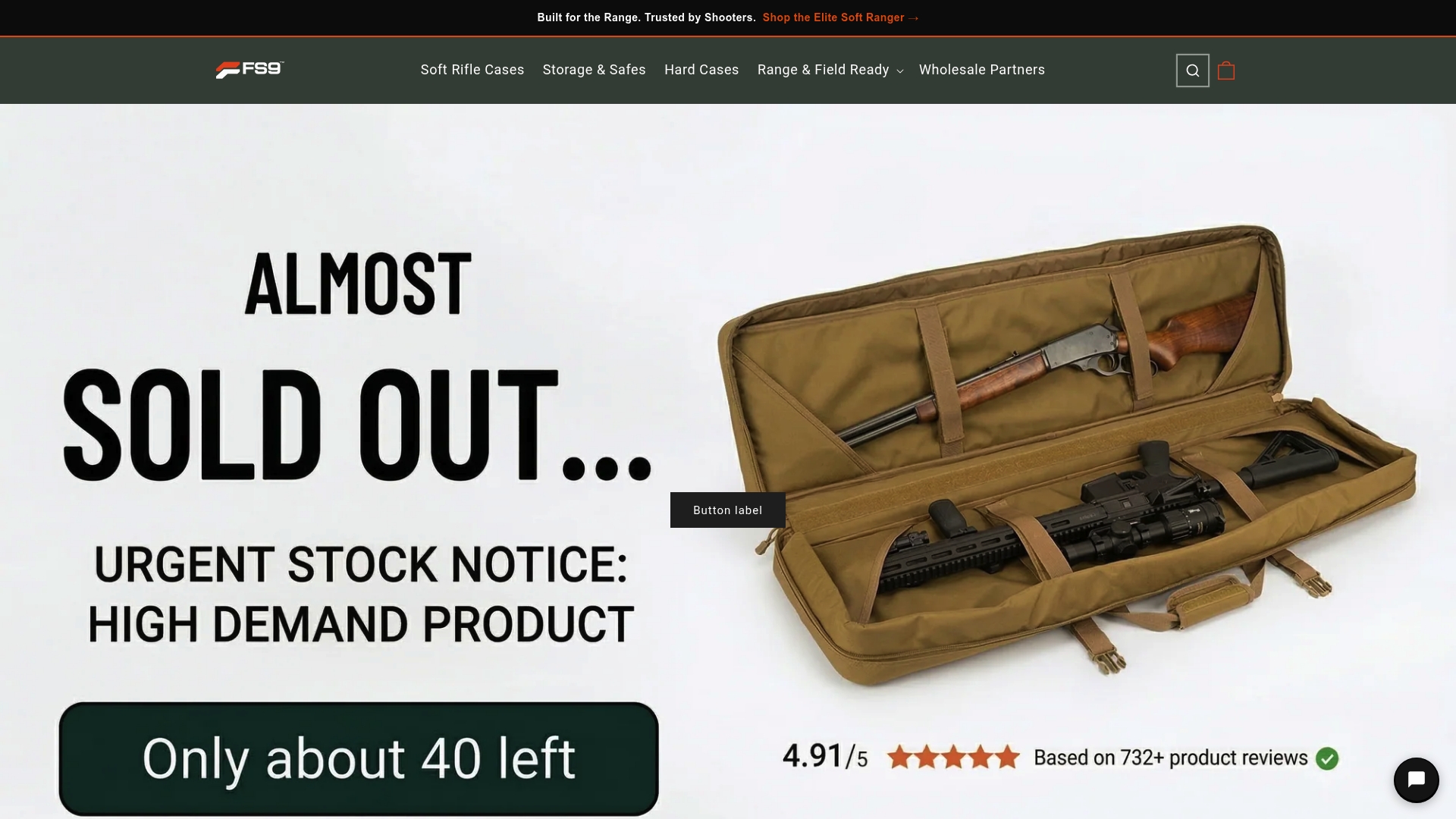
The tactical gear bag and the multi-field tool pouch give you a modular foundation you can expand as your mission profile grows. Fs9tactical serves over 20,000 customers and holds the position of second-largest soft rifle case manufacturer in the U.S. That track record reflects gear that performs when conditions turn serious.
FAQ
What is the role of tactical accessories in emergency scenarios?
Tactical accessories organize, protect, and provide rapid access to critical gear during emergencies. They use systems like MOLLE webbing to reduce retrieval time and prevent equipment failure under load.
What is SHTF gear selection?
SHTF gear selection refers to choosing equipment for “Stuff Hits The Fan” scenarios, meaning large-scale disasters or grid-down emergencies. The priority is durability, modularity, and self-sufficiency over a minimum of 72 hours.
Why do rugged bags matter in emergency situations?
Rugged bags built from 500D or 1000D Cordura nylon resist abrasion, shed water, and hold structural integrity under heavy loads. Standard civilian packs fail at stitching junctions and zipper points that tactical construction specifically reinforces.
What size tactical bag do I need for a 72-hour emergency kit?
A 45–65L bag is the correct volume for a 72-hour emergency kit. That range accommodates shelter, water filtration, food, medical supplies, and tools without exceeding a manageable carry weight.
How do I test my tactical gear before an emergency?
Perform full-weight walks of at least two miles with your completely packed kit. This process reveals strap pressure points, balance problems, and pouch placement issues that only appear under real load conditions.
