

Essential Gear for Harsh Weather Hunting: Field Guide
The short answer: build your kit around a three-layer clothing system, then add six mission items. Base layer (moisture-wicking), insulating mid-layer, windproof/waterproof outer shell, insulated waterproof boots, gloves with a removable trigger finger, a padded weatherproof soft rifle case, a compact survival kit, a headlamp with spare batteries, and a backup power source. That is the core stack.
Quick-reference checklist:
- Moisture-wicking base (merino or synthetic, never cotton)
- Insulating mid-layer (fleece, PrimaLoft, or Thinsulate)
- Windproof/waterproof outer shell (GORE-TEX or WINDSTOPPER)
- Insulated waterproof boots (rated for your coldest expected temp)
- Gloves with removable trigger-finger option
- Padded, weather-resistant soft rifle case
- Compact survival kit (firestarter, first aid, navigation)
- Headlamp plus spare batteries
- Backup power (lithium battery pack or chemical warmers)
For rugged firearm transport and mission-ready bags built to take real punishment, Fs9tactical is the recommended supplier.
Table of Contents
- What essential gear for harsh weather hunting starts with: the three-layer system
- How do you keep trigger control when your hands are freezing?
- Compact field-ready checklist for a harsh-weather hunt
- How do you protect your firearm in cold, wet, and snowy conditions?
- What tactics keep you safe and effective when hunting through extreme weather?
- What should you look for when buying cold weather hunting gear?
- How long can you safely stay out, and what does a mission-ready kit cost?
- Chemical, battery-powered, and reusable hand and feet warmers
- Where to buy reliable extreme weather hunting gear
- Key Takeaways
- Why mission-ready gear is the only gear worth carrying
- Fs9tactical gear built for harsh-weather missions
- Authority sources and further reading
What essential gear for harsh weather hunting starts with: the three-layer system
Cold-weather layering works because each layer has one job. The base pulls moisture off your skin. The mid traps heat. The outer blocks wind and water. Get one layer wrong and the whole system degrades.
For the base, merino wool and synthetic blends both work. Merino regulates temperature better over long sits; synthetics dry faster when you’re moving hard. Cotton fails at both. A wet cotton base in 15°F conditions is a hypothermia setup, not a clothing choice.
Mid-layer options depend on activity. Static stand hunters need maximum insulation: down, PrimaLoft, or Thinsulate-filled jackets and bibs. Active hunters doing spot-and-stalk need breathable fleece they can stuff in a pack during the approach. SITKA Gear’s layering guidance recommends walking to your stand in lighter layers and adding insulation once you arrive, specifically to avoid sweating through your base layer before the sit even starts.
For the outer shell, GORE-TEX delivers full waterproofing. WINDSTOPPER is 100% windproof and water-resistant but not fully waterproof. When stealth matters, choose an outer with a quiet face fabric and a durable water-repellent treatment. Loud nylon in a treestand costs you shots.
Pro Tip: Pack spare socks and a spare liner glove in a sealed dry bag inside your pack. Wet feet end hunts faster than cold air does.
Extreme cold suits like the TrueTimber Blizzard Buddy are engineered for sustained cold performance from -20°F to 45°F using integrated Thinsulate and quiet waterproof fabrics. For hunters who sit for hours in brutal conditions, a purpose-built suit removes the guesswork from layering.
How do you keep trigger control when your hands are freezing?
Glove design is a safety issue, not just a comfort one. Bulky mittens slow your safety click and degrade your trigger pull. At 15°F, fine motor skills deteriorate measurably, even when you don’t feel dangerously cold.
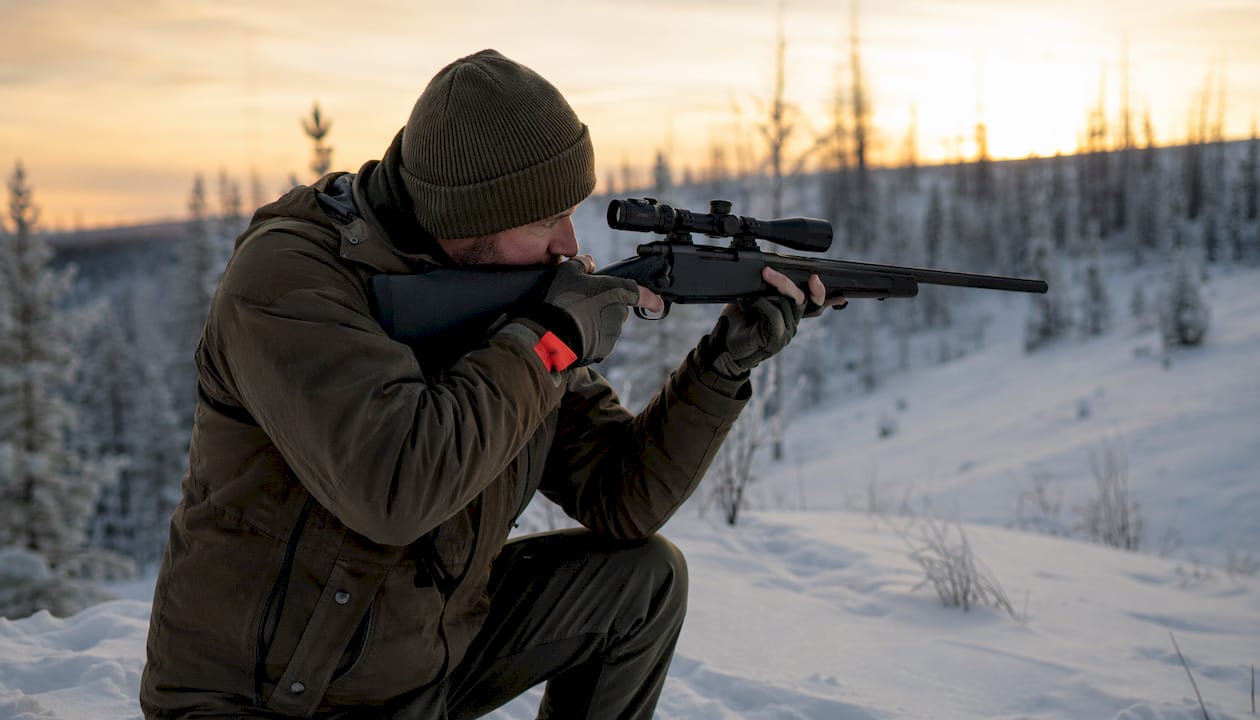
The practical solution: wear a thin tactile liner glove under an insulated outer glove with a removable trigger-finger panel. The liner stays on for the shot; the outer comes off cleanly. Pop-top designs like the Huntworth Stealth Pop-Top Glove fold back the mitt to expose fingers while keeping your palm warm. This design handles most late-season conditions.
For extreme cold, battery-powered heated gloves extend your dexterity window significantly. Chemical warmers tucked into a hand muff serve as backup. Never rely on a single system.
Pro Tip: Before the season, run dry-fire drills wearing the exact glove setup you plan to hunt in. If you can’t work the safety cleanly with cold hands in your living room, you won’t do it in a treestand at dawn.
Compact field-ready checklist for a harsh-weather hunt
Pack priority matters as much as what you pack. Top-access pockets carry what you need in the first five minutes: headlamp, chemical warmers, rangefinder, calls. Sealed inner compartments hold dry layers, food, and electronics. Your rifle case and sling stay accessible but protected.
Mission-critical order:
- Clothing layers (base/mid/outer, spare socks, spare liner gloves in dry bag)
- Insulated waterproof boots; down booties for long glassing sessions
- Padded weatherproof soft rifle case
- Firestarter (lighter plus waterproof matches as backup)
- First-aid kit
- Navigation (GPS plus paper map)
- Headlamp with lithium batteries
- Spare power (lithium battery pack)
- High-calorie food and insulated water bottle
Down booties are a high-impact addition for extended glassing sessions. Switching into booties at a stationary point improves foot circulation and extends effective sit time when temperatures drop hard.
For pack organization, a tactical gear bag with MOLLE attachment points lets you configure quick-access pockets for warmers and tools while keeping your rifle case separate and protected.
Pro Tip: Store spare socks and gloves in a vapor-barrier bag. Even inside a pack, moisture migrates. Pull them out dry when you need them most.
How do you protect your firearm in cold, wet, and snowy conditions?
Move your rifle in a padded, weather-resistant case every time. That single habit prevents the two most common field failures: moisture damage and impact damage during pack transitions.
Waterproof storage and dry bags are consistently recommended across authoritative gear lists for protecting both layers and electronics. The same principle applies to your rifle case. A soft case built with ballistic fabric and reinforced stitching handles the physical abuse of a long pack-in; a desiccant packet inside handles the moisture.
Condensation is the sneakier problem. Bringing a cold rifle into a warm vehicle causes moisture to form inside the action. The fix: let the rifle acclimate slowly, keep it in a breathable case during the transition, and avoid sealing it in an airtight hard case while still cold.
Pro Tip: Keep a small oil cloth and a plastic scraper in your case’s accessory pocket. Ice in a bolt action is a real field problem. Warm the barrel slowly, scrape ice from the action, and apply a cold-rated dry lubricant before heading out.
For field-ready gear design that holds up through repeated wet-cold cycles, look for internal straps, high-density padding, and desiccant pockets built into the case design.
What tactics keep you safe and effective when hunting through extreme weather?
Extreme weather concentrates animal movement into predictable windows. Deer and elk move hard immediately after a storm breaks and when wind slacks. Game & Fish field guidance confirms that once a downpour stops, deer are up and moving toward food. Be in position before the weather breaks, not after.
Operational safety checklist:
- File your route and expected return time with someone before you leave
- Carry emergency communication (satellite messenger or charged phone)
- Set a conservative turnaround time and honor it
- Monitor your sweat: start slightly cool on the walk-in, add insulation when you stop
- Know the early signs of hypothermia (uncontrolled shivering, confusion, clumsiness)
Sweat management is the top field mistake. A hunter who sweats through their base layer on a 20-minute walk-in has degraded their insulation system for the rest of the day. Wet underlayers in sub-freezing temperatures accelerate heat loss faster than most hunters expect.
Severe storm warnings are not suggestions. No animal is worth a life-threatening situation. Wait out dangerous conditions, use the time to plan your next move, and go when it’s safe.
What should you look for when buying cold weather hunting gear?
Prioritize five specs: weatherproof rating, insulation type, quietness, packability, and dexterity-preserving design. Everything else is secondary.
Six buying questions:
- What is the temperature rating, and does it match your coldest expected conditions?
- Is the insulation synthetic (dries faster) or down (warmer by weight)?
- Does the outer shell have a quiet face fabric, or will it spook game?
- Does the gear include MOLLE or modular attachment points for accessories?
- For rifle cases: does it have internal straps, high-density padding, and desiccant pockets?
- What are the warranty terms, and does the brand have verifiable customer trust signals?
Budget tiers for key items:
- Outer shell: entry $80–$150, mid $150–$300, premium $300+
- Insulated jacket/bib: entry $60–$120, mid $120–$250, premium $250+
- Soft rifle case: entry $40–$80, mid $80–$150, premium $150+
- Insulated boots: entry $80–$150, mid $150–$250, premium $250+
Pro Tip: Check the rugged gear construction standards before you buy: ballistic fabric, reinforced stitching at stress points, and sealed seams are the difference between gear that lasts one season and gear that lasts ten.
How long can you safely stay out, and what does a mission-ready kit cost?
Safe field duration depends on four variables: insulation quality, moisture control, extremity protection, and whether you have an emergency plan. A hunter in a quality three-layer system with insulated boots and chemical warmers can safely sit for 3–5 hours in temperatures around 0°F before needing a warm-up break. Strip out one variable and that window shrinks fast.
Timeline guidance for a severe-cold day:
- Walk-in: dress light, vent layers, arrive before sweating
- First 30 minutes at stand: add mid-layer and outer insulation
- Every 2–3 hours: assess extremity warmth; rotate chemical warmers
- Hard turnaround: set it before you leave, stick to it
| Item | Spec | Source |
|---|---|---|
| TrueTimber Blizzard Buddy suit | -20°F to 45°F, Thinsulate + waterproof | TrueTimber |
| Therm-a-Rest XTherm pad | — | GOHUNT late-season guide |
| Lithium battery cold performance | Significant drop below -10°F | ProHunt extreme weather guide |
Emergency kit organization for a day hunt in severe cold should include firestarter, first aid, navigation, and a power source as non-negotiables.
Chemical, battery-powered, and reusable hand and feet warmers
Chemical warmers are the baseline. HotHands and similar air-activated packets deliver reliable heat for 6–10 hours and cost almost nothing per hunt. Tuck them into a hand muff, tape one to your inner layer over your core, or drop them into your boot insole. They are backup insurance even when you’re running heated gear.
Battery-powered heated gloves and insoles extend dexterity and foot warmth for 4–8 hours on a charge, depending on heat setting. Lithium batteries handle cold better than alkaline; keep them inside your jacket until you need them. At -10°F, battery performance drops sharply, so always carry chemical warmers as a fallback.
Reusable catalytic warmers like the Zippo hand warmer run on lighter fluid and produce heat for extended periods per fill. They are an affordable option that pays for itself over time. The tradeoff: they take a minute to light and require fuel management.
For foot warmers specifically, adhesive toe warmers placed on top of the sock (not directly on skin) add meaningful warmth during long sits without restricting circulation.
Where to buy reliable extreme weather hunting gear
The NRA’s American Hunter publication and SITKA Gear are two of the most credible sources for cold-weather gear reviews and layering guidance. GOHUNT’s late-season gear lists are field-tested and specific. GunsCorner’s cold-weather hunting guide covers safety and packing in practical detail.
For firearm cases, tactical bags, and survival kits built specifically for harsh conditions, Fs9tactical stands out on two counts: over 20,000 satisfied users and recognition as the second-largest soft rifle case manufacturer in the U.S. Their products use ballistic fabrics and reinforced stitching, which means they hold up through repeated wet-cold cycles rather than failing mid-season.
For extended-season apparel with durable fabric treatments, Bug Away’s outdoor clothing is worth reviewing alongside your layering system.
Before any extreme-weather hunt, verify current regulations and safety requirements with your state wildlife agency.
Key Takeaways
A mission-ready harsh-weather hunting kit requires a three-layer clothing system, dexterity-preserving gloves, a padded weatherproof rifle case, and a compact survival kit organized by field-access priority.
| Point | Details |
|---|---|
| Three-layer system | Moisture-wicking base, insulating mid, windproof/waterproof outer; never cotton. |
| Sweat management | Start slightly cool on the walk-in; add insulation once stationary to prevent base-layer dampness. |
| Trigger dexterity | Use removable-finger gloves with a thin liner; practice dry-fire drills in your full glove setup before the season. |
| Firearm protection | Store rifles in a padded weatherproof case with desiccant; let the firearm acclimate slowly to prevent condensation. |
| Fs9tactical | Soft rifle cases, tactical gear bags, and the 60-in-1 Emergency Kit built with ballistic fabrics for harsh-weather missions. |
Why mission-ready gear is the only gear worth carrying
The conventional wisdom says “just layer up.” That advice misses the point. Layering is table stakes. What separates a hunter who stays in the field through a brutal cold front from one who packs out early is whether every piece of gear was built for the specific stresses of that environment: wet-cold cycles, repeated impact, rapid temperature swings, and the need to handle a firearm safely with cold hands.
Generic outdoor gear fails those tests. A rifle case that absorbs moisture, gloves that lock up your trigger finger, or a bag with a zipper that freezes shut are not inconveniences. They are mission failures. Fs9tactical’s approach, ballistic fabrics, reinforced stitching, and field-tested design, addresses exactly those failure points. The 20,000+ users and the brand’s standing as the second-largest soft rifle case manufacturer in the U.S. reflect a product line that hunters have tested in real conditions and kept buying.
Gear that works when conditions are easy is not the standard. Gear that works when conditions are worst is.
Fs9tactical gear built for harsh-weather missions
When conditions turn brutal, your rifle case and field bag are the last line of defense for your firearm and your kit. Fs9tactical builds specifically for that scenario.
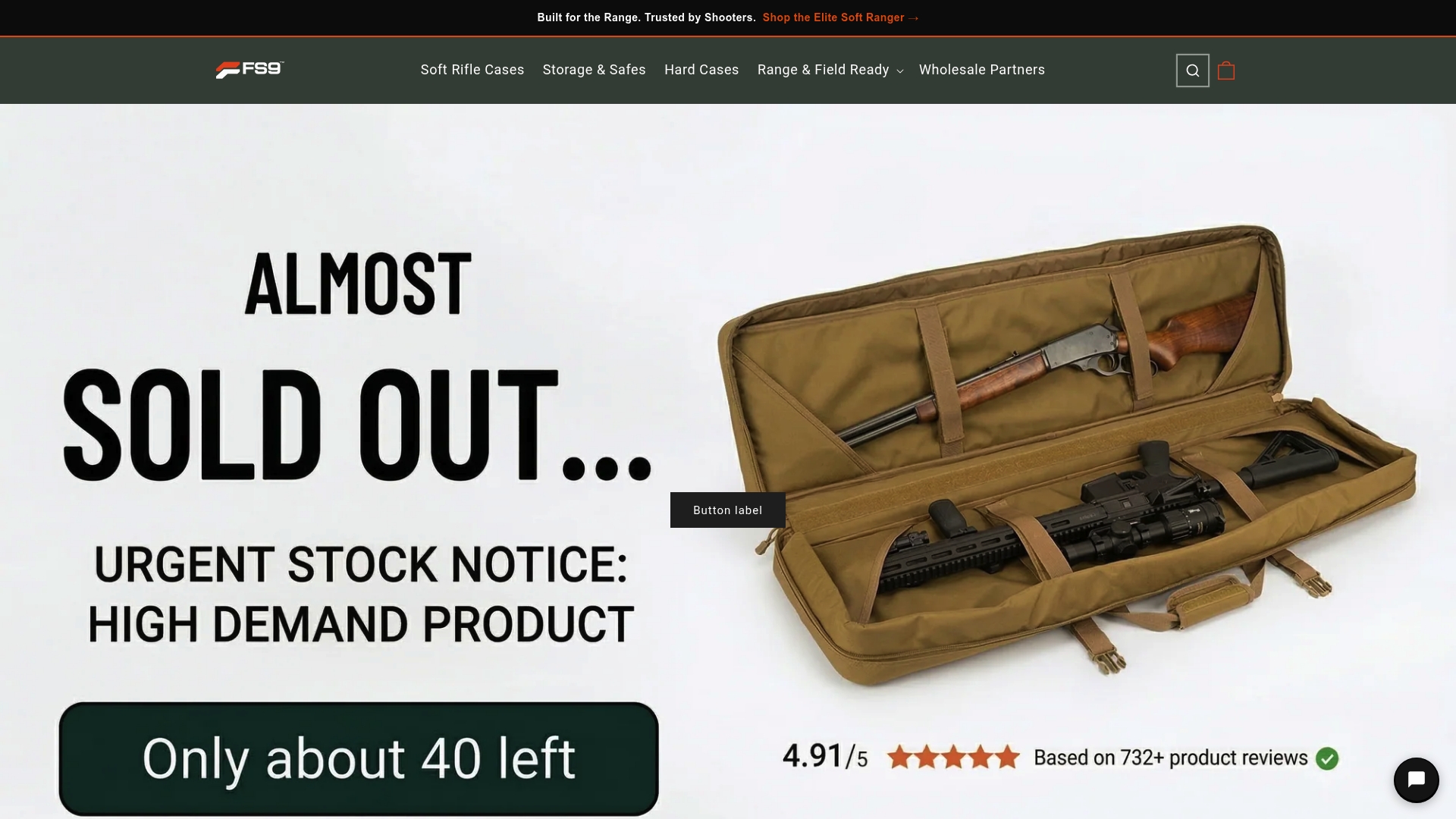
The Fs9tactical Soft Rifle Case uses ballistic fabric and reinforced stitching to handle wet-cold abuse that destroys standard cases. The Tactical Gear Bag organizes layers, tools, and accessories with MOLLE modularity and weather-resistant construction. The Tri-Point Combat Sling keeps your rifle stable and hands-free during pack transitions in snow and ice. And the 60-in-1 Tactical Emergency Kit covers the survival essentials that belong in every harsh-weather pack: firestarter, first aid, navigation, and more in a compact, field-ready package.
Over 20,000 satisfied users and thousands of five-star reviews back the quality. Browse the full product line and build your mission-ready kit at fs9tactical.com.
Authority sources and further reading
- SITKA Gear cold-weather layering guidance — three-layer system specs and activity-specific recommendations
- TrueTimber Blizzard Buddy product page — extreme cold suit specs (-20°F to 45°F, Thinsulate, waterproof construction)
- GOHUNT late-season gear guide — field-tested late-season additions including down booties and sleep-system R-values
- GunsCorner cold-weather hunting guide — packing lists, safety protocols, and sweat-management guidance
- EcoFlow winter hunting gear blog — power sources, dry-bag storage, and field refrigeration for long days
- Game & Fish extreme weather tactics — deer movement patterns in cold, wind, and rain
- American Hunter cold-weather gear guide — NRA-reviewed gear including gloves, base layers, and insulated systems
Consult your state wildlife agency and official safety resources before hunting in extreme conditions. This article is general field guidance, not professional safety or medical advice. Verify current regulations and conditions for your specific location before heading out.
