

How to Pack Tactical Accessories in a Carry-On Bag
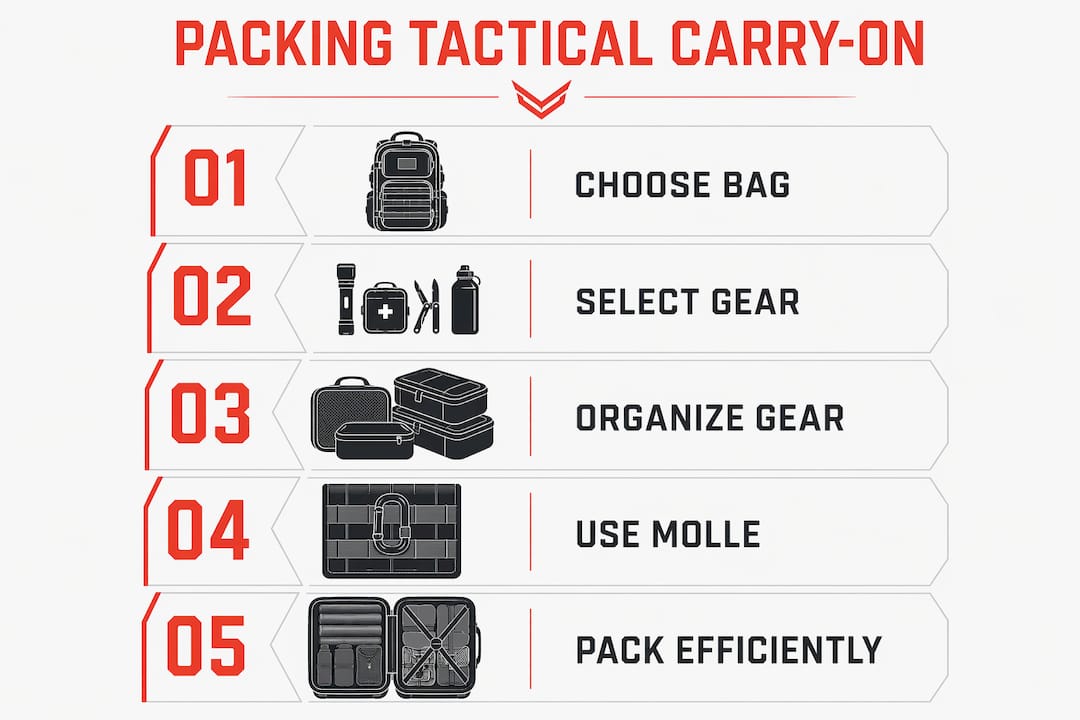
Packing tactical accessories in a carry-on bag is defined as selecting, organizing, and loading mission-ready gear into a compliant travel bag for adventure, emergency preparedness, or daily field use. The right approach combines airline-compliant dimensions, durable materials rated at 600D–1680D denier, and modular organization systems like MOLLE webbing to keep every piece of gear accessible and protected. Fs9tactical builds gear to exactly these standards, and the principles below apply whether you are heading to a remote hunting camp, catching a red-eye, or building a 72-hour bug-out kit. Get the bag selection, accessory choices, and packing sequence right, and you will never dig through a disorganized pack under pressure again.
How to pack tactical accessories in a carry-on bag: choosing the right bag first
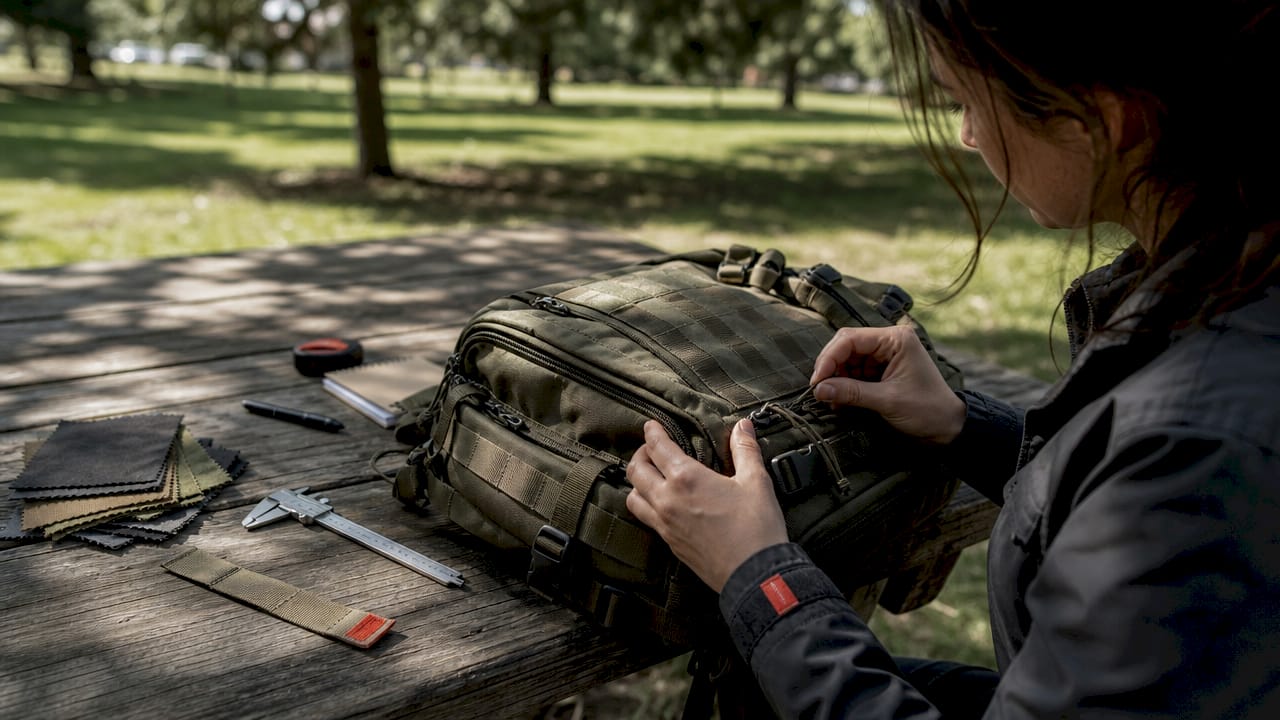
The bag you choose sets every constraint that follows. Size, material, and design features determine whether your carry-on tactical pack clears airline overhead bins, survives rough handling, and keeps gear organized under field conditions.
Size: matching capacity to your mission
A 45L capacity bag suits 2–4 day trips, balancing portability with enough tactical storage for layered clothing, tools, and accessories. A 90L bag covers roughly 80% of travel and preparedness needs for week-long scenarios. Most airlines enforce a maximum carry-on height of 22 inches, and depth under 7–9 inches is required to fit standard overhead bins when the bag is fully loaded. That depth limit is the one most travelers violate. Bulky tactical gear compresses poorly, so choose a bag with structured side panels rather than soft-sided construction that balloons outward.
Materials that hold up to real use
Durable tactical bags use 600D–1680D denier fabrics, reinforced stitching, and heavy-duty zippers. That density range matters because 600D polyester handles light daily use, while 1680D ballistic nylon resists abrasion, moisture, and the kind of rough treatment that destroys standard travel bags within a season. Look for YKK or equivalent zippers rated for repeated heavy loads. Seam reinforcement at stress points, particularly shoulder strap attachment and base corners, separates a bag that lasts years from one that fails mid-trip.
Pro Tip: Check the material standards checklist before buying any tactical bag. A bag rated below 600D denier will not survive more than a few months of field use.
Design features worth prioritizing
| Feature | Why it matters |
|---|---|
| MOLLE webbing | Attaches modular pouches without adding permanent bulk |
| Laptop sleeve (17-inch) | Meets airport security requirements and protects electronics |
| Suitcase sleeve | Slides over rolling luggage handles for airport transit |
| Suspended laptop compartment | Isolates device from impact damage when the bag is set down |
| Ergonomic shoulder straps | Distributes weight evenly on long carries |
A dedicated laptop compartment with suitcase sleeve functionality is now standard in quality tactical-hybrid bags. That combination lets you move through airport security without unpacking and stack the bag on rolling luggage without strain.
What tactical accessories should you pack in a carry-on bag?
The best tactical accessories for a carry-on pack are modular, lightweight, and multifunctional. Every item you add should serve at least two purposes or fill a gap that no other piece of gear covers.
Core accessory categories
- Multipurpose tools: A quality multitool covers cutting, prying, and fastening tasks without the weight of individual tools. Choose one rated for field use with a locking blade.
- Modular pouches: MOLLE-compatible pouches let you attach and detach storage as your mission changes. A waterproof drop leg pouch doubles as a day-carry option when you leave the main bag behind.
- Hydration carriers: A collapsible 2-liter reservoir adds minimal packed weight but covers hydration needs on long travel days or field deployments.
- Emergency kits: A compact emergency kit belongs in every carry-on tactical pack. Fs9tactical’s 60-in-1 emergency survival kit packs 60 tools into a carry-on-friendly footprint, covering first aid, fire starting, and signaling.
- Rugged chargers and cables: A compact solar or battery charger keeps devices running when outlets are unavailable. Pair it with a short braided cable to reduce tangle and bulk.
Why MOLLE modularity changes everything
Laser-cut MOLLE systems save 60% weight compared to traditional 25mm webbing while maintaining full modular attachment capability. That weight saving is critical when airlines enforce carry-on weight limits, commonly 15 lbs (7 kg). Traditional woven MOLLE adds meaningful grams across a fully loaded bag. Laser-cut panels eliminate that penalty without reducing the number of attachment points. If your bag uses traditional webbing, offset the weight by choosing lighter accessories in the pouches themselves.
Pro Tip: For adventure travel gear selection, prioritize accessories that attach to MOLLE and can be removed at security checkpoints. Detachable pouches speed up screening and reduce the chance of a secondary inspection.
Integrating tech without adding bulk
A suspended or false-bottom laptop sleeve protects electronics from impact damage, a feature not standard in everyday backpacks but critical in tactical gear designed for rugged use. Pair that sleeve with a compact rugged charger and a USB-C hub to cover all device needs in a single organized pocket. Keep cables in a zippered mesh pouch so they do not tangle with tools or emergency gear.
How do you organize tactical accessories efficiently inside a carry-on?
Disciplined internal organization with quick-access zones and mesh pockets ensures gear readiness and avoids delays during deployment or emergency scenarios. The sequence you use to load the bag determines how fast you can retrieve any item under pressure.
A packing sequence that works
- Base layer: Place the heaviest items closest to your back or at the bag’s base. Dense gear like tools, emergency kits, and hydration reservoirs go here.
- Mid layer: Clothing, soft pouches, and collapsible items fill the middle. These compress to fill gaps and cushion harder items.
- Top layer: Items you need first go on top. Rain gear, snacks, and a first-aid pouch belong here for immediate access.
- Quick-access pocket: Reserve the front or top exterior pocket for items you reach for constantly: ID, boarding pass, multitool, and phone charger.
- Hidden pockets: Use interior hidden pockets for valuables like cash, a backup card, and a USB drive. These pockets are the last place a thief or a rushed security screener will disturb.
Compartmentalization tools that actually help
| Tool | Best use |
|---|---|
| Packing cubes | Group clothing by day or function, compress soft items |
| Mesh zip pouches | Cables, small tools, and first-aid consumables |
| Modular MOLLE pouches | Attach externally for overflow gear or quick-draw items |
| Rigid organizer inserts | Protect fragile items like optics or electronics |
Packing cubes work best when you assign one cube per category, not per day. A “field tools” cube and a “clothing” cube load and unload faster than cubes sorted by date. That system also lets you pull the entire tools cube for a day trip without repacking the whole bag.
Pro Tip: Use the organization hacks from range bag packing and apply them directly to your carry-on. The same zone-based system that keeps range gear accessible works identically for travel and emergency packs.
Common mistakes when packing tactical gear in a carry-on
Most packing failures come down to three problems: ignoring depth, skipping durability checks, and underestimating how much bulk tactical gear adds when compressed.
- Ignoring bag depth: Carry-on compliance requires depth under 7–9 inches. Tactical gear does not compress the way clothing does. A bag that measures 8 inches empty can exceed 11 inches when loaded with tools, pouches, and a hydration reservoir. Test the loaded bag before you leave for the airport.
- Skipping material checks: A bag rated below 600D denier will fail under repeated field use. Check stitching at every stress point before a trip, not after a seam fails mid-mission.
- Overpacking MOLLE attachments: External pouches add depth and width. Each attachment point you use adds bulk. Keep external attachments to two or three pouches maximum for carry-on compliance.
- Ignoring moisture and dirt: Tactical gear picks up field grime fast. Use waterproof pouches for electronics and documents. A single wet item can damage everything packed near it.
- Forgetting security screening: Multitools, trauma pouches, and certain emergency kit components trigger secondary screening. Know TSA guidelines for each item before you pack. Fs9tactical’s emergency kit for tactical carry is designed with travel compliance in mind, but always verify current TSA rules for your specific items.
Carry-on tactical packs must meet dimensional limits of 22 inches in height and 7–9 inches in depth to fit airline overhead bins when fully packed with bulky gear. Checking these measurements with a loaded bag before departure prevents costly gate-check fees and delays.
Key Takeaways
Selecting the right bag, choosing modular accessories, and packing in deliberate layers are the three factors that determine whether a tactical carry-on performs under real conditions.
| Point | Details |
|---|---|
| Match capacity to mission length | A 45L bag covers 2–4 day trips; a 90L bag handles most week-long scenarios. |
| Prioritize 600D–1680D denier fabrics | Ballistic nylon and reinforced stitching prevent failure under field conditions. |
| Use laser-cut MOLLE to save weight | Laser-cut systems cut webbing weight by 60%, keeping you under airline limits. |
| Pack in deliberate layers | Heavy items at the base, quick-access items at the top, valuables in hidden pockets. |
| Check loaded dimensions before travel | A fully packed tactical bag often exceeds 7–9 inches in depth, risking overhead bin rejection. |
What field experience actually taught me about tactical carry-on packing
I have watched experienced hunters and shooters show up to a trailhead with a bag that looked perfect on paper and fell apart by day two. The failure is almost never the gear itself. It is the system, or the lack of one.
The biggest lesson I have taken from years of packing tactical gear for travel and field use is this: depth kills carry-on compliance faster than weight does. You can trim weight with laser-cut MOLLE and lightweight accessories. You cannot compress a trauma pouch or a multitool. Every external attachment adds inches, and airlines measure depth at the gate, not at home.
The second lesson is that hands-free carry matters more than most travelers realize. Rolling luggage fails on uneven terrain, gravel, and stairs. A well-fitted tactical backpack keeps both hands free for doors, gear checks, and unexpected situations. That is not a minor convenience. On a hunting trip or an emergency evacuation, it is the difference between moving fast and moving slow.
My honest recommendation: buy one bag that does both jobs. A military-style carry bag with a suitcase sleeve, MOLLE webbing, and a suspended laptop sleeve handles airport transit and field deployment without compromise. Fs9tactical’s military tactical backpack fits that profile exactly. Stop buying separate travel bags and field bags. One well-built bag, packed with discipline, outperforms two mediocre ones every time.
— Cody
Fs9tactical gear built for carry-on tactical packing
Fs9tactical designs gear for hunters, shooters, and survivalists who need equipment that performs in the field and survives the airport. The Tactical Gear Bag delivers ballistic-fabric construction, MOLLE webbing, and a layout built for organized carry-on packing. The Multi-Field Tool and Accessory Pouch attaches directly to MOLLE webbing and keeps tools, first-aid supplies, and accessories separated and instantly accessible.
For emergency preparedness, the 60-in-1 Tactical Emergency Kit packs a full 72-hour survival loadout into a carry-on-friendly footprint. Over 20,000 satisfied customers and thousands of five-star reviews back Fs9tactical’s reputation as the second-largest soft rifle case manufacturer in the U.S. That same build quality carries through every bag and accessory in the line.
FAQ
What size tactical bag works best as a carry-on?
A 45L bag fits most 2–4 day trips and stays within standard airline carry-on size limits. Keep loaded depth under 7–9 inches to guarantee overhead bin clearance.
What MOLLE system is best for carry-on weight limits?
Laser-cut MOLLE panels save 60% weight over traditional 25mm webbing without reducing modular attachment points. That weight reduction helps you stay under the typical 15 lb airline carry-on limit.
What accessories are must-haves for a tactical carry-on pack?
A multitool, modular MOLLE pouches, a compact emergency kit, and a rugged charger cover the core needs for travel, adventure, and emergency preparedness in a single carry-on bag.
How do I keep tactical gear organized for quick access?
Pack heavy items at the base, frequently used items at the top, and valuables in hidden interior pockets. Use zone-based organization with mesh pouches and packing cubes to separate gear by function.
Can tactical accessories pass TSA screening in a carry-on?
Most tactical accessories pass TSA screening when packed correctly. Multitools with blades over 2.36 inches and certain trauma kit components require checked baggage. Always verify current TSA rules for each specific item before departure.
