

Build a Minimalist Tactical Kit for Travel That Lasts
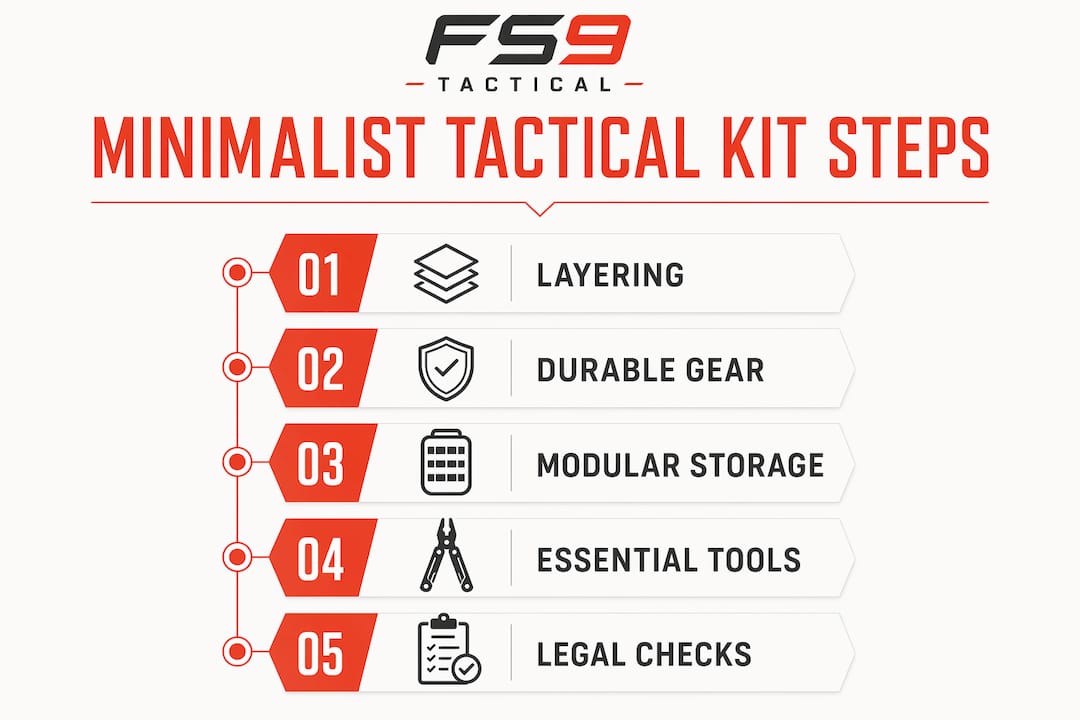
A minimalist tactical travel kit is a compact, modular system built around gear that earns its place every single day, not just during emergencies. The core idea is simple: every item serves multiple functions, nothing rides along “just in case,” and the whole kit fits in a carry-on. Done right, you get intentional gear selection that cuts bulk without cutting capability.
The design principles that hold a good kit together:
- Modularity: gear that reconfigures for different missions or environments
- Durability: materials that survive hard use without constant replacement
- Multifunctionality: each item covers at least two roles
- Discretion: nothing that draws unnecessary attention in urban or transit settings
Table of Contents
- Why tactical gear gives you a real edge when you travel light
- How to choose clothing and footwear for a tactical travel kit
- Picking the right bag and modular storage for tactical travel
- Essential knives, multi-tools, and survival gear for your kit
- What Fs9tactical’s material expertise tells you about building a durable kit
- Legal considerations for carrying tactical gear when you travel
- Fs9tactical gear built for the traveler who takes preparedness seriously
- Key Takeaways
Why tactical gear gives you a real edge when you travel light
Tactical gear was engineered for field conditions, which means it handles travel abuse better than most consumer alternatives. YKK zippers paired with silent 550 cord pulls resist corrosion and repeated cycling. Fabrics like Cordura ballistic nylon and X-Pac VX21 deliver abrasion resistance and water repellency that standard luggage materials simply cannot match.
The MOLLE (Modular Lightweight Load-carrying Equipment) attachment system is what separates tactical gear from ordinary travel bags. It lets you add, remove, or reposition pouches based on the trip, so the same bag works for a three-day city run and a two-week backcountry push. Tactical gear also tends to blend function with a low profile when you choose the right pieces, which matters at airports and in crowded urban environments.
Pro Tip: Check the durable tactical gear materials your kit relies on before every trip. Cordura and X-Pac both hold up under hard use, but seams and zipper pulls are the first points to inspect.
How to choose clothing and footwear for a tactical travel kit
Clothing selection is where most travelers waste weight. The fix is a three-layer system: a moisture-wicking base layer (merino wool or synthetic), a mid-layer (fleece or a packable insulated piece), and a shell jacket that compresses into its own pocket. This covers temperature swings from cold mountain mornings to warm city afternoons without packing separate outfits for each climate.
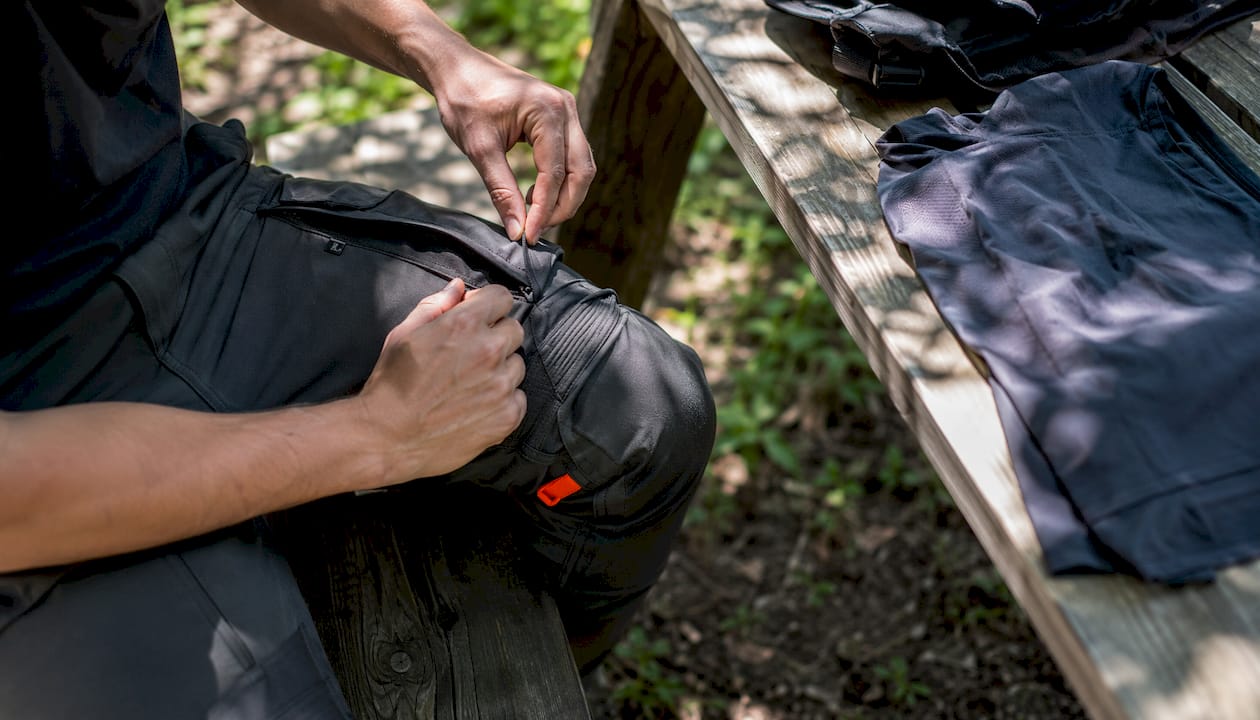
For tactical travel specifically, look for pants and shirts with reinforced knees and elbows, articulated cuts for full range of motion, and quick-dry fabrics. Avoid cotton entirely. It holds moisture, dries slowly, and adds weight with no performance payoff.
Footwear comes down to one honest question: can a single pair handle every activity on this trip? A low-profile trail runner with a grippy outsole and water-resistant upper covers city walking, light hiking, and airport sprints. Pack a second pair only when the itinerary genuinely demands it, such as a formal event or technical terrain that requires a dedicated boot.
Picking the right bag and modular storage for tactical travel
Bag selection sets the ceiling for everything else. A moderate capacity pack is suitable for trips under two weeks while aiming to stay TSA carry-on compliant. Larger bags may risk exceeding overhead bin limits on regional carriers.
Key features to prioritize:
- Internal MOLLE webbing: keeps the exterior profile clean while allowing customizable organization inside
- Waterproof or water-resistant shell: X-Pac VX21 and similar fabrics protect gear in rain, humidity, and wet transit
- Reinforced laptop compartment with YKK AquaGuard zippers: protects electronics from impacts and moisture
- Flat-open design: makes packing and finding items faster, especially mid-trip
Consistent pocket assignments are the organizational habit that makes a modular bag actually work. Assign specific items to specific pockets and never deviate. You build muscle memory, you stop losing things, and you move through security without digging.
Essential knives, multi-tools, and survival gear for your kit
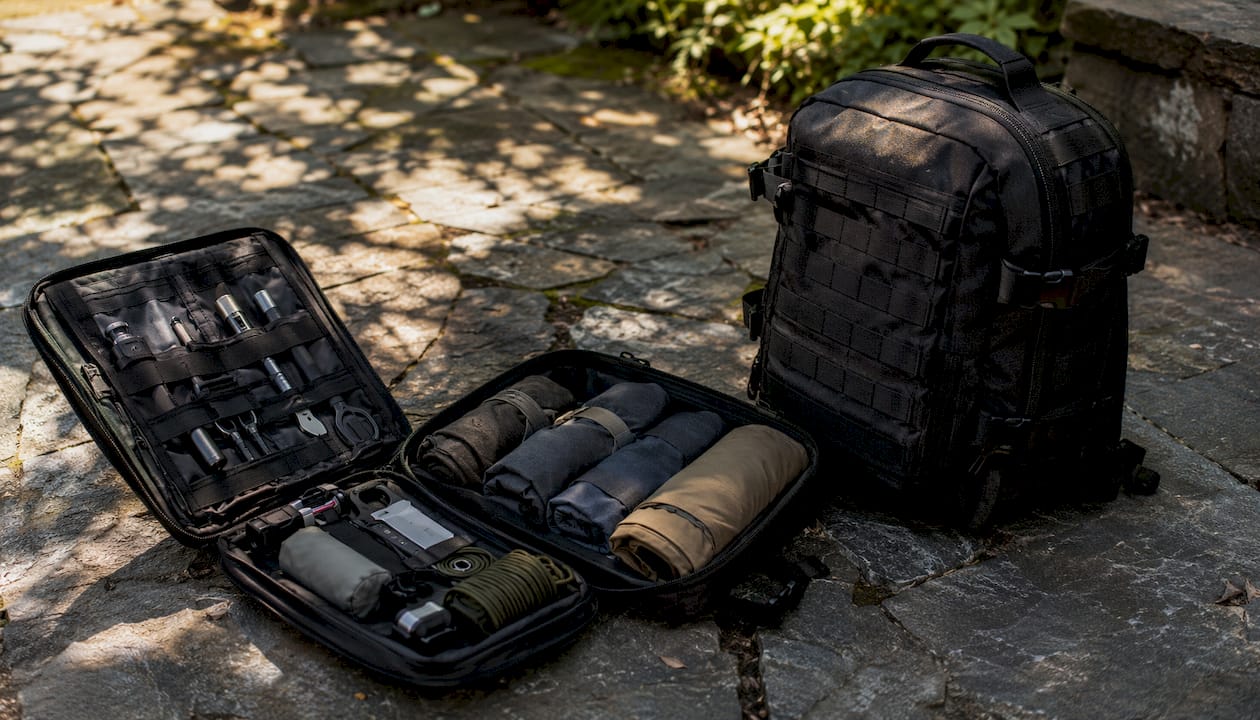
The golden rule for tools on a minimalist tactical travel kit: if it can’t clear airport security, it doesn’t belong in your carry-on — check out this guide to Injury Prevention Habits for Tactical Athletes for tips on training and gear strategies. A TSA-compliant multi-tool with scissors, tweezers, a nail file, and a bottle opener handles the vast majority of travel tasks without triggering a secondary screening. Leave any multi-tool with a blade longer than 2.36 inches in checked luggage or at home.
A tactical pen is the most underrated item in a travel kit. It writes on airline forms, customs paperwork, and damp surfaces where a standard ballpoint fails. Its aircraft-grade aluminum construction also makes it a discreet last-resort self-defense option in jurisdictions where dedicated defensive tools are restricted.
For survival gear, keep it compact and purposeful:
- A compact LED flashlight or keychain light for low-visibility navigation
- A micro first-aid kit covering adhesive bandages, antiseptic wipes, blister treatment, pain relievers, and antihistamines
- A flat or collapsible water bottle that fits in a bag side pocket without hogging space
- A small amount of cash in local currency, stored separately from your cards
Pro Tip: Build your kit for everyday carry, not just travel. A kit you use daily is a kit you’ll actually refine and trust when it counts.
What Fs9tactical’s material expertise tells you about building a durable kit
Gear fails at the weakest point, and in tactical travel kits that is almost always the zipper or the fabric seam under load. Fs9tactical builds around ballistic fabrics and reinforced stitching precisely because those are the failure points that matter in the field. With over 20,000 satisfied users and thousands of five-star reviews, the brand’s reputation is grounded in gear that performs under real conditions, not just in product photos.
The best tactical travel kit is the one you’ve already used a hundred times before you actually need it. Daily use reveals weak points, builds familiarity, and turns gear selection from guesswork into certainty. Gear that sits in a closet until a trip is gear you don’t actually trust.
Fs9tactical’s approach to choosing tactical gear for travel centers on three material priorities: abrasion resistance for hard-use surfaces, water resistance for unpredictable weather, and weight discipline so the kit stays mobile. Internal MOLLE organization preserves a clean exterior while giving you the flexibility to reconfigure storage for different trip types without buying a new bag.
Legal considerations for carrying tactical gear when you travel
Laws governing knives, multi-tools, and defensive items vary sharply by jurisdiction, and ignorance is not a defense. In the United States, TSA prohibits knives with blades of any length in carry-on bags. Checked luggage rules are more permissive, but destination-country laws apply the moment you land.
A few practical rules that hold across most travel scenarios:
- Research knife and multi-tool laws for every country and state on your itinerary before you pack
- Carry a tactical pen rather than a blade when traveling internationally; it faces far fewer legal restrictions
- Use TSA-approved locks on checked bags containing any tactical items
- Keep prescription medications in original containers with documentation, especially when crossing international borders
When in doubt, ship restricted items ahead or leave them home. No piece of gear is worth a confiscation, a fine, or a missed flight.
Fs9tactical gear built for the traveler who takes preparedness seriously
Travelers who want mission-ready gear without the bulk have a direct path with Fs9tactical. The brand’s 60-in-1 Lifeline Emergency Survival Kit packs a full range of survival essentials into a compact, travel-ready format built from the same ballistic fabrics and reinforced construction that define the brand’s field reputation. It covers the survival gear layer of your kit without requiring you to source and test individual components.
For travelers who need a dedicated carry solution, the Fs9tactical gear bag delivers modular organization and rugged materials in a low-profile design that works in transit and in the field. Visit Fs9tactical.com to browse the full lineup and build your kit around gear that has already earned the trust of serious outdoor users across the country.
Key Takeaways
A minimalist tactical travel kit works because every item serves multiple roles, materials hold up under real conditions, and organization runs on consistent habits rather than luck.
| Point | Details |
|---|---|
| Reject “just in case” gear | Every item must serve multiple functions or daily use; surplus gear kills mobility. |
| Prioritize proven materials | Cordura ballistic nylon and X-Pac VX21 deliver abrasion resistance and water repellency that standard luggage cannot match. |
| Use internal MOLLE for discretion | Internal MOLLE webbing customizes organization while keeping the exterior profile clean and non-tactical in urban settings. |
| Assign pockets and never deviate | Consistent pocket assignments build muscle memory and prevent items from being left behind during transit. |
| Fs9tactical for field-tested durability | Fs9tactical’s ballistic fabric construction and 60-in-1 survival kit give travelers a compact, proven foundation for any minimalist tactical kit. |
