

Duty Belt Tactical Accessories: What They Are and Why They Matter
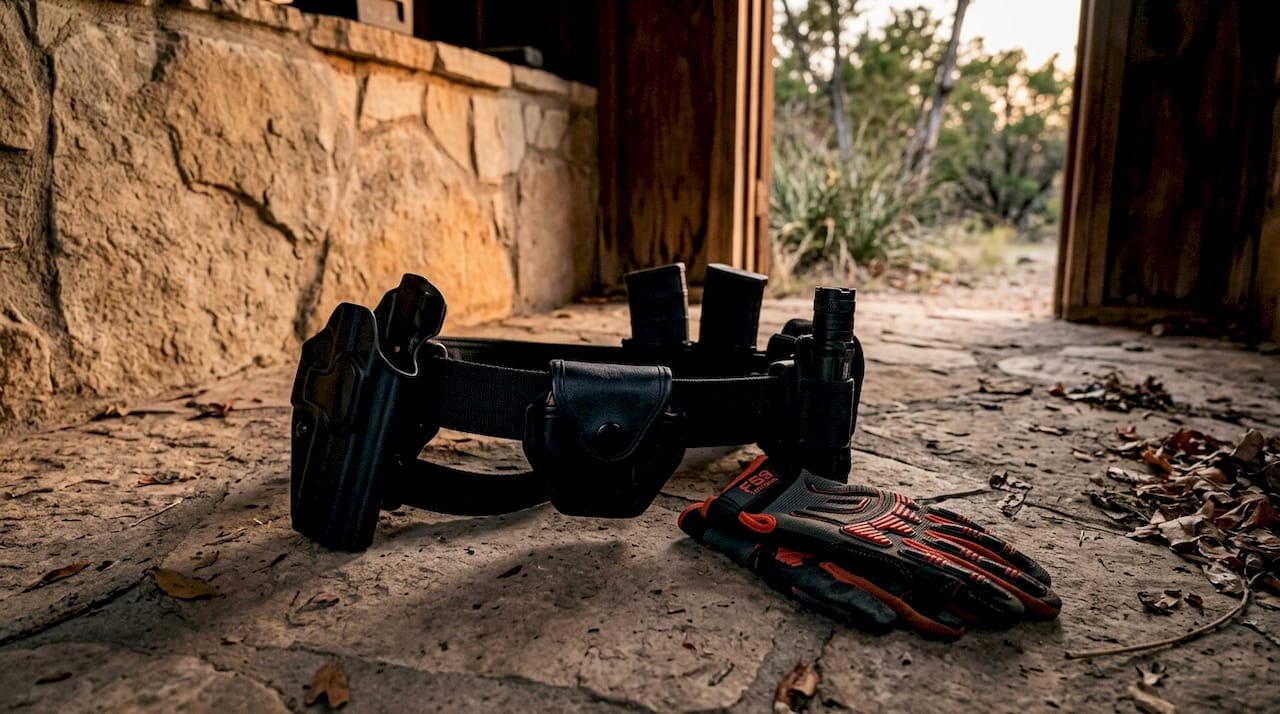
Duty belt tactical accessories are specialized items designed to secure, organize, and provide fast access to essential gear mounted on a duty or tactical belt. Law enforcement officers, military personnel, and outdoor enthusiasts all rely on these accessories to keep critical equipment within reach during high-pressure situations. A standard duty belt carries 10 to 20 pieces of equipment, from firearms and handcuffs to medical tools and flashlights. That range alone shows why proper accessory selection and placement matter as much as the belt itself.
What are the common duty belt tactical accessories and their functions?
Duty belt tactical accessories fall into distinct categories, each serving a specific operational role. Understanding what each item does helps you build a setup that works for your mission, not just one that looks the part.
The core accessories found on most duty belt setups include:
- Holster: Secures the primary firearm. Retention level (Level I, II, or III) determines how many deliberate movements are required to draw the weapon, balancing speed with security.
- Magazine pouches: Hold spare ammunition for fast reloads. Single or double configurations depend on the expected engagement duration and agency policy.
- Handcuff case: Keeps restraints accessible without rattling loose. A MOLLE handcuff pouch allows secure attachment to both belts and vests.
- Flashlight holder: Positions a light source for immediate use without digging through pockets. Rotating holders let the user adjust beam angle without removing the light.
- Radio pouch: Keeps the communication device stable and protected. A loose radio bouncing during a foot pursuit is a liability, not just an inconvenience.
- Belt keepers: These small but critical clips lock the outer belt to the inner belt. Belt keepers prevent gear creep, the gradual shifting of pouches during intense movement that disrupts muscle memory and slows access.
- Medical or trauma pouch: Carries tourniquets, gloves, or basic first aid supplies. Placement near the dominant hand allows self-treatment under stress.
Pro Tip: Build your belt around your most-used tools first. Place the firearm and spare magazines before adding secondary gear. Every accessory added after that should earn its spot by frequency of use.
Accessory choices shift significantly by role. A patrol officer prioritizes a retention holster and handcuff case. A military operator may swap the handcuff case for a dump pouch and add a tourniquet holder. A hunter or survivalist might skip the radio pouch entirely and add a multi-field tool pouch for a knife and fire starter.
How do materials and construction affect duty belt accessory performance?
The material a duty belt accessory is made from directly determines how long it lasts and how well it performs in the field. Three materials dominate the market: leather, ballistic nylon, and polymer composites.
| Material | Weight | Weather resistance | Maintenance | Best use case |
|---|---|---|---|---|
| Leather | Heavy | Low (absorbs moisture) | Regular conditioning required | Dress uniforms, traditional setups |
| Ballistic nylon | Light | High (repels water) | Wipe clean | Field operations, daily patrol |
| Polymer composite | Very light | Very high | Minimal | Active duty, extreme conditions |
Modern agencies favor synthetic materials over leather for their lighter weight and weather resistance. That shift is practical. A leather holster soaked in rain becomes stiff and slow. A ballistic nylon or polymer holster performs the same wet or dry.
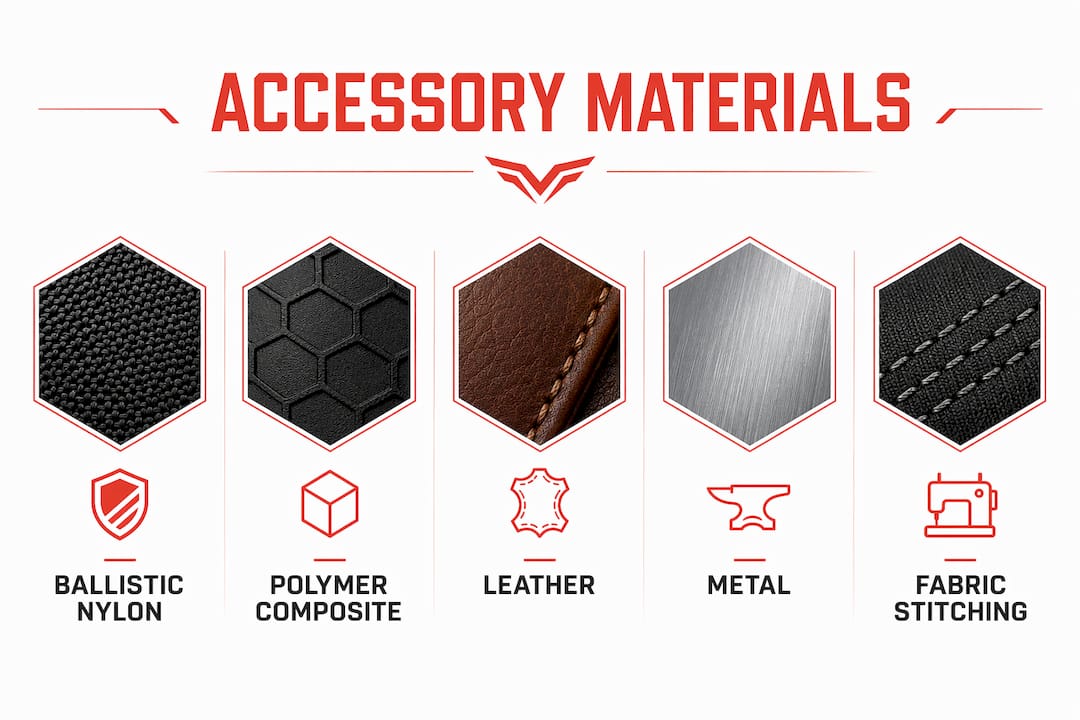
Ballistic nylon, the same fabric used in body armor carriers and rifle cases, resists abrasion and tearing under sustained use. Polymer composites add rigidity without adding weight, which matters when a fully loaded belt already weighs between 15 and 25 pounds. That weight range puts real strain on the hips and lower back over an eight-hour shift.
Construction quality separates reliable accessories from ones that fail at the worst moment. Reinforced stitching at stress points, double-layered backing on pouches, and corrosion-resistant hardware all extend the service life of an accessory. Fs9tactical builds its tactical pouches and belts with ballistic fabrics and reinforced stitching specifically to meet the demands of hunters, shooters, and field operators who cannot afford gear failure.
What ergonomic factors influence duty belt setup and placement?
A well-configured duty belt is not just about carrying gear. It is about carrying it in a way that your body can sustain for hours without injury or fatigue.
-
Use a two-part belt system. The inner belt threads through trouser loops and anchors the outer belt in place. This prevents the entire rig from sagging or rotating during movement. Without an inner belt, even the best accessories will shift out of position.
-
Practice gear indexing. Gear indexing means placing each item in a fixed, deliberate location so you can retrieve it by touch alone. Life-saving tools like firearms and spare magazines belong in the 10 to 2 o’clock position for fastest access. Consistent placement builds muscle memory that functions even under extreme stress.
-
Distribute weight evenly. Heavy items placed entirely on one side cause the belt to tilt, which strains the opposite hip. Alternate heavier accessories (holster, radio) with lighter ones (keepers, gloves pouch) around the belt’s circumference.
-
Use belt keepers at regular intervals. Four to six keepers spaced evenly around the belt prevent gear creep. Without them, pouches migrate during running or ground work, breaking the muscle memory you built in training.
-
Audit your setup regularly. Gear you never reach for wastes space and adds weight. Remove anything you have not used in 30 days of active duty and reassess whether it belongs on the belt or in a bag.
Pro Tip: Simulate your draw stroke and radio reach while seated in a vehicle before finalizing your belt layout. Most officers spend significant time in a car, and a holster that works standing may bind against the seat or door panel when seated.
Some agencies now move heavy equipment like radios and medical kits off the belt entirely, shifting them to load-bearing vests to reduce back strain during long shifts. This trend reflects a growing understanding that the duty belt has physical limits, and exceeding them causes chronic injury over time.
How do duty belt accessories differ across law enforcement, military, and outdoor use?
The core concept of a duty belt stays constant across roles. The specific accessories, load weights, and configurations change significantly based on mission requirements.
| User group | Typical accessories | Load priority | Key difference |
|---|---|---|---|
| Law enforcement | Holster, handcuffs, radio, TASER, pepper spray, medical pouch | Restraint and communication tools | Agency mandates govern most placements |
| Military | Holster, magazine pouches, dump pouch, tourniquet, utility pouch | Ammunition and medical readiness | Higher ammunition load, less restraint gear |
| Outdoor/hunting | Knife sheath, utility pouch, first aid kit, hydration clip | Tool access and survival readiness | Lighter overall load, more flexible configuration |
Law enforcement setups follow agency policy closely. Officers carry a mandated list of tools, and placement often follows department training standards. The result is a belt that prioritizes restraint tools, communication, and less-lethal options alongside the primary firearm.
Military configurations shift the balance toward ammunition and medical gear. A soldier may carry four or more magazine pouches and a dedicated tourniquet holder, while dropping handcuffs entirely. The MOLLE system (Modular Lightweight Load-carrying Equipment) dominates military and tactical setups because it allows pouches to attach anywhere on a grid of webbing, giving the operator full control over placement.
Outdoor users, including hunters and survivalists, operate with the most flexibility. There are no agency mandates and no standard load. A hunter’s belt might carry a fixed-blade knife, a MOLLE waist bag for calls and rangefinders, and a compact first aid kit. The goal is utility and comfort over a full day in the field, not rapid deployment under fire.
Key Takeaways
A properly configured duty belt, built with quality materials and ergonomically placed accessories, is the single most important factor in operational readiness for law enforcement, military, and outdoor users alike.
| Point | Details |
|---|---|
| Accessory function drives selection | Choose each accessory based on how often you use it and what role it serves in your specific mission. |
| Materials determine durability | Ballistic nylon and polymer composites outperform leather in weather resistance, weight, and long-term maintenance. |
| Gear indexing builds muscle memory | Place critical tools in fixed positions between 10 and 2 o’clock for fast, instinctive access under stress. |
| Belt keepers prevent gear creep | Use four to six keepers evenly spaced to lock pouches in place during dynamic movement. |
| Role shapes configuration | Law enforcement, military, and outdoor users carry different tools and should configure their belts accordingly. |
Why your belt setup is more personal than any gear list suggests
I have seen operators with textbook belt setups freeze during a draw because the holster sat a half-inch too far back. I have also seen minimalist setups, just a holster and two pouches, outperform loaded-down rigs because the person wearing it knew exactly where everything was.
The gear lists in training manuals are starting points, not final answers. Your dominant hand, your hip width, how you sit in a vehicle, and how you move under load all affect where each accessory should live. No two people should have identical belt setups, even if they carry identical gear.
Quality matters more than quantity. One well-made holster with a solid retention mechanism beats three cheap alternatives that loosen over time. The same logic applies to every pouch and keeper on the belt. Gear that fails during training is frustrating. Gear that fails in the field is dangerous.
Audit your setup every few months. Your role changes, your fitness changes, and your mission profile changes. A belt configured for foot patrol may not work for a vehicle-heavy assignment. Treat your belt as a living system, not a one-time purchase.
— Cody
Gear built to hold up when it counts
Fs9tactical designs tactical accessories for people who cannot afford gear failure. Whether you are building a duty belt for law enforcement, configuring a field rig for hunting season, or setting up a survival kit for extended outdoor use, the right pouches and belt system make the difference between gear that works and gear that gets in the way.
The VOTAGOO MOLLE Battle Belt from Fs9tactical pairs a quick-release buckle with an anti-slip inner belt pad, addressing the two most common complaints about duty belt setups: slow emergency removal and gear rotation. For accessory storage, the MOLLE EDC pouch organizer keeps tools sorted and accessible without adding bulk. Fs9tactical backs every product with the same ballistic fabric construction and reinforced stitching that has earned over 20,000 satisfied users across the U.S.
FAQ
What is a duty belt tactical accessory?
A duty belt tactical accessory is any item designed to attach to a duty belt and secure, organize, or provide fast access to essential gear. Common examples include holsters, magazine pouches, handcuff cases, and belt keepers.
How much does a fully loaded duty belt weigh?
A fully equipped duty belt typically weighs between 15 and 25 pounds, depending on the number of tools carried and agency requirements. That weight range makes ergonomic placement and a two-part belt system critical for long-shift comfort.
What is gear indexing on a duty belt?
Gear indexing is the practice of placing each belt accessory in a fixed, consistent location so you can retrieve it by touch without looking. Life-saving tools like firearms and spare magazines are typically placed between the 10 and 2 o’clock positions for fastest access.
What materials are best for duty belt accessories?
Ballistic nylon and polymer composites are the best materials for most operational duty belt accessories. They are lighter than leather, resist moisture, and require minimal maintenance compared to traditional leather options.
What is the MOLLE system and why does it matter for duty belts?
MOLLE (Modular Lightweight Load-carrying Equipment) is a webbing attachment system that lets users position pouches and accessories anywhere on a compatible belt or vest. It gives operators full control over gear placement without being locked into fixed attachment points.
