

What Is a Self-Defense Tier Preparedness Kit?
A self-defense tier preparedness kit is a set of prioritized supplies organized by time horizon, EDC, 72-hour bug-out, home/vehicle, and long-term, so you buy and pack what actually matters first instead of hoarding gear. If you had to grab three things right now, they’d be a whistle or personal alarm, a compact first-aid kit with a tourniquet, and a reliable flashlight. Water and a charged phone with backup power round out the mission-essential shortlist.
- Tier 1 (EDC): whistle, mini first-aid kit, flashlight
- Tier 2 (72-hour): water, food, expanded medical supplies
- Tier 3 (home/vehicle and beyond): two-week reserves, filtration, backup power
FEMA and the American Red Cross recommend at least 1 gallon of water per person per day, with a 3-day supply for evacuation and a 2-week supply for sheltering at home. That single number is the backbone every tier below builds on.
Key Takeaways
A reliable self-defense preparedness kit is built in tiers, EDC, 72-hour, home/vehicle, and long-term, with mission-essential items purchased and practiced before anything else.
| Point | Details |
|---|---|
| Start with EDC | Build a sub-2-pound kit with a whistle, first aid, tourniquet, and flashlight first. |
| Follow FEMA minimums | Plan 1 gallon of water per person per day and a 3-day food supply for your bug-out tier. |
| Rotate on a schedule | Refresh water, food, and batteries every six months and run one full drill a year. |
| Delay enhancing gear | Buy mission-critical items before tactical extras you haven’t trained with. |
| Consider a ready-built kit | Fs9tactical’s 60-in-1 survival kits and gear bags cover 72-hour essentials with reinforced, durable construction. |
Where to Verify Official Preparedness Minimums
- Ready: official water, food, and supply minimums
- FEMA family disaster supplies brochure: home rotation schedules
- Your state’s preparedness page for local, regionally specific checklists
Table of Contents
- Why Build Tiered Kits Instead of One Big Gear Pile?
- What Goes in Each Tier of a Self-Defense Preparedness Kit?
- How Do You Prioritize and Customize a Kit for Your Household?
- How Should You Pack and Maintain a Tiered Kit?
- What Makes Gear Reliable Enough to Trust in an Emergency?
- What to Look for When Buying a Ready-Made Kit
- Frequently Asked Questions
- Sources
Why Build Tiered Kits Instead of One Big Gear Pile?
Needs change fast depending on how long you’re stuck. A blackout that lasts twenty minutes calls for a flashlight, not a water filtration system. A three-day grid failure calls for food, meds, and a way to signal for help. Building one giant bin for everything means you’re either underprepared for a short event or dragging 40 pounds to check the mail.
Tiering by time horizon, minutes, 72 hours, two weeks or longer, solves both problems. It keeps your grab-and-go bag light, makes budgeting predictable since you buy in stages, and turns training into small manageable drills instead of one overwhelming project. Experts who study mission readiness sort gear into mission-essential, mission-critical, and mission-enhancing categories, and that framework keeps you from buying a $200 gadget before you own a working tourniquet.
- Faster to grab in an actual emergency
- Lighter, more portable at every level
- Easier to budget and rotate over time
- Simpler to train with in short sessions
Pro Tip: Buy mission-enhancing gear last, or not at all. If you haven’t practiced deploying your tourniquet or finding your flashlight in the dark, a solar charger or tactical multitool won’t save you.
What Goes in Each Tier of a Self-Defense Preparedness Kit?
EDC: what you carry every day
Your everyday carry tier should weigh under 2 pounds and fit in a pocket, purse, or small bag. This is the layer that handles the first ten minutes of a bad situation, before you can even reach your car or your house.
- Whistle or personal alarm for signaling and de-escalation
- Compact first-aid kit (bandages, gauze, gloves)
- Small tourniquet rated for one-hand application
- Bright flashlight (100+ lumens)
- Compact multi-tool
- Phone with a charged backup battery
72-hour bug-out kit
This is the tier FEMA and the Ready Campaign built their guidance around: enough supplies to survive three days without outside help. Expect total weight of 20 to 35 pounds including water, which is why a dedicated backpack matters more here than anywhere else.
- Water: 1 gallon per person per day (3-day minimum)
- Non-perishable food, roughly 2,000 to 2,500 calories per person per day
- Expanded medical kit: tourniquet, Israeli bandage, hemostatic gauze, over-the-counter meds
- Shelter: emergency blanket, poncho, or bivy
- Battery-powered or hand-crank radio
- Hygiene basics: wipes, hand sanitizer, small towel
- Backup communication and power (radio, charger, spare batteries)
Home and vehicle kits
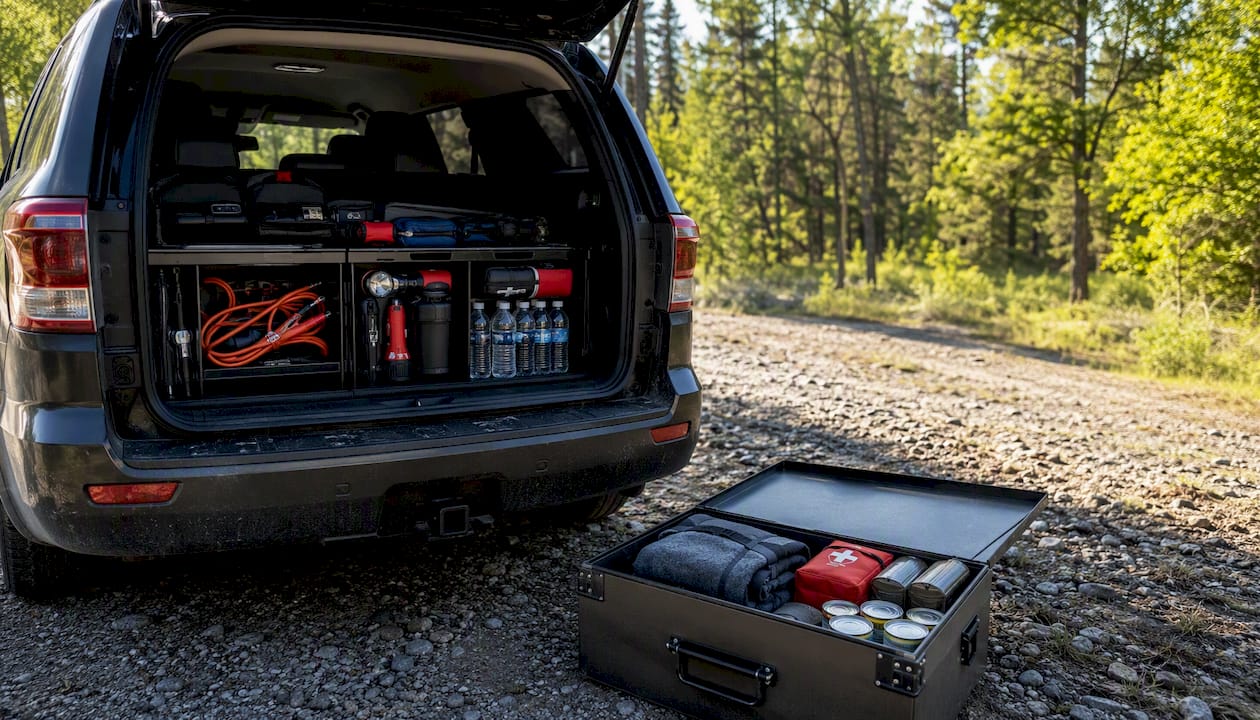
Home kits scale up to two weeks of supplies for sheltering in place, following the six basics FEMA outlines: water, food, first aid, clothing and bedding, tools, and special items. Vehicle kits are a scaled-down evacuation version, jumper cables, a small tool kit, a blanket, extra water, and a flashlight, stored somewhere you can reach it without unpacking your trunk.
Advanced and long-term
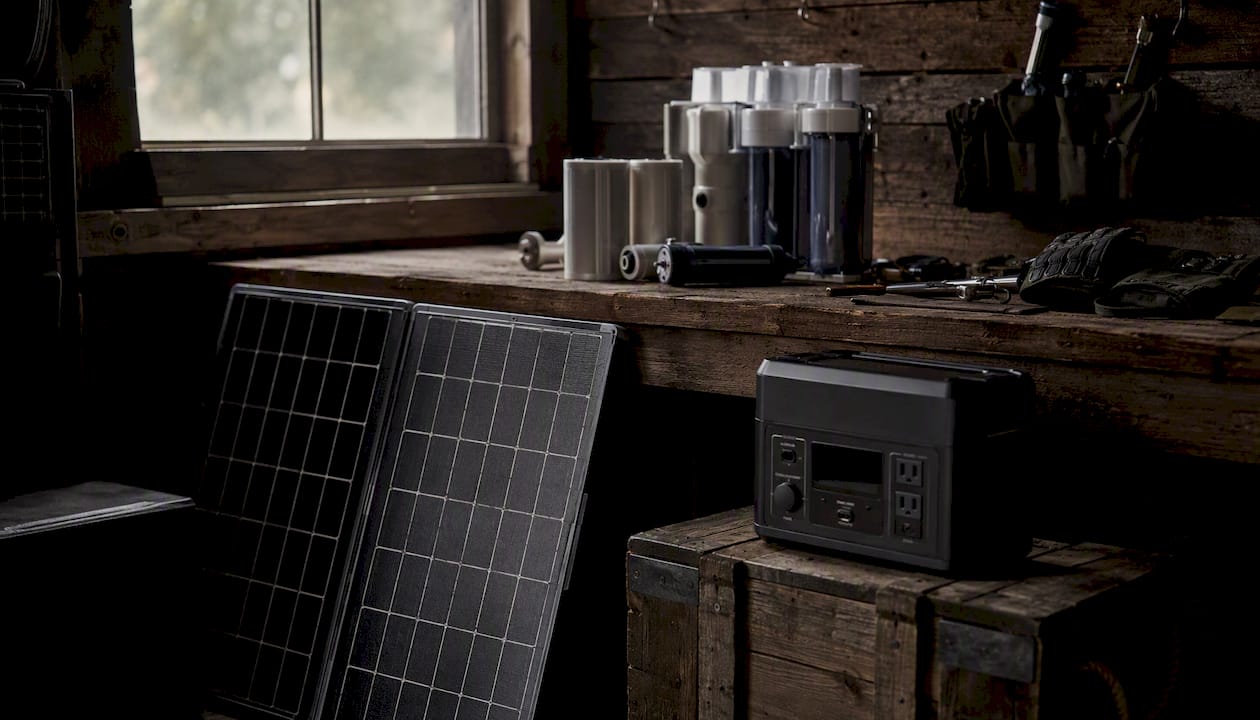
This tier is optional for most households: water filtration systems, solar or battery backup power stations, and stockpiled consumables for weeks rather than days. Treat it as a roadmap, not a requirement, and only build toward it once your first three tiers are solid.
Before adding any defensive tool, tourniquet kits, pepper spray, or a fixed-blade knife, check your state and local regulations. Legal carry rules vary widely, and a tool that’s fine in one kit can be a liability in another location.
How Do You Prioritize and Customize a Kit for Your Household?
Start with a decision tree, not a shopping cart.
- Identify your top regional risks (storms, wildfire, earthquake, urban unrest).
- Fill mission-essential items in every tier first: water, light, first aid, signaling.
- Add mission-critical items next: expanded medical, shelter, communications.
- Delay mission-enhancing purchases, solar chargers, tactical vests, until the basics are solid.
Spread purchases over several months instead of one big order. It’s easier on your wallet and gives you time to actually test each item.
- Red flag: a 60-pound bag nobody in the family can carry
- Red flag: a $40 “complete kit” with unlabeled, untested contents
- Red flag: gear nobody has practiced using
Ask yourself directly: how long could you realistically be isolated? Does anyone in your household have mobility limits, medications, or a pet that changes what “essential” means for you? Local pages like Texas Ready’s supply checklist are useful for tailoring lists around medications, sanitation, and special-needs items.
How Should You Pack and Maintain a Tiered Kit?
Containers matter almost as much as contents. Use a slim pouch for EDC, a dedicated backpack for your 72-hour kit, a waterproof bin for home supplies, and a trunk-mounted bag for the vehicle tier. Our guide on packing the ultimate range bag walks through organizing medical supplies and tools for fast access under stress.
- Group items into labeled modular compartments (medical, light, water, tools).
- Tape a checklist inside the lid or front pocket of every kit.
- Store bags near an exit door or in the vehicle, not in a closet upstairs.
- Rotate water and food every six months
- Check batteries and flashlight bulbs twice a year
- Do a full kit review and one training drill annually
FEMA’s own guidance backs the six-month rotation cycle for water and food supplies, so it’s not overkill, it’s the same schedule agencies use for their own stockpiles.
What Makes Gear Reliable Enough to Trust in an Emergency?
Look for ballistic fabrics, reinforced stitching, and water resistance ratings on anything electronic. A flashlight with an IPX rating survives a downpour; a cheap one from a dollar bin doesn’t. Simple, low-tech tools often beat gadgets when conditions turn ugly: a solid fixed-blade knife and reliable fire starter are harder to improvise than almost anything else in a bag.
- Check zipper and stitching integrity before you need it
- Test tourniquet straps for full range of motion
- Swap flashlight batteries every six months, not when they die
Pro Tip: Test every tourniquet and flashlight in the dark, in your driveway, once a year. Gear that works in daylight on your kitchen table sometimes fails in the exact conditions it was bought for.
A quick note on getting this right
Building these kits over several years taught me one thing clearly: the gear rarely fails first, the training does. A tourniquet you’ve never applied under pressure is just fabric until you practice with it. Start with your EDC tier and injury prevention habits this weekend and build outward from there.
What to Look for When Buying a Ready-Made Kit
If assembling every tier from scratch feels like too much right now, a pre-built option can cover your 72-hour needs while you build out the rest at your own pace. Fs9tactical’s ready-made kits are built with the same ballistic fabrics and reinforced stitching the brand uses across its rifle cases and range bags, so you’re not trading durability for convenience.
Before you buy any kit, whether from Fs9tactical or elsewhere, check the product page for three things: what materials the bag itself is made from, whether medical items meet FEMA-aligned minimums, and the total packed weight. The FS9 60-in-1 Lifeline Emergency Survival Kit and the 60-in-1 Tactical Emergency Kit both map closely to the 72-hour tier outlined above, water, food prep tools, first aid, and signaling items in one container. If you’d rather build your own bag from a durable shell, the Tactical Gear Bag holds up to daily EDC use and doubles as a staging container for a 72-hour kit. Compare any option against your own mission-essential list first, then fill in the gaps from there.
Frequently Asked Questions
What is a self-defense tier preparedness kit exactly? It’s a set of prioritized emergency and defensive supplies organized by time horizon, everyday carry, 72-hour, home/vehicle, and long-term, so you address the most urgent needs first instead of buying gear randomly.
How much water should a 72-hour kit hold? FEMA recommends 1 gallon per person per day, so a family of four needs roughly 12 gallons for a three-day evacuation kit.
Do I need defensive tools like pepper spray or a knife in every tier? Only if local law allows it and you’ve trained with the tool. Check your state’s regulations before adding anything defensive, since rules vary by location and by tool type.
How often should I check my kit? Rotate water and food every six months, test batteries and flashlights on the same schedule, and do a full review plus one training drill once a year.
Is a pre-made kit as good as building my own? A quality pre-made kit, checked against FEMA’s minimums for water, food, and medical supplies, covers your 72-hour tier well. Building your own EDC and home tiers around it still matters.
Sources
- Ready
- FEMA — Family Disaster Supplies Kit (FD-SK brochure)
- Shooting Illustrated — The importance of mission readiness
