

Why Emergency Preparedness Gear Matters for Families
Emergency preparedness gear is the equipment and supplies that allow individuals and families to survive independently and safely during emergencies and disasters. FEMA recommends a minimum 72-hour self-sufficiency period, meaning your gear must carry you through at least three days without outside help. That standard is not theoretical. Nearly one in three adults have experienced a major weather-related emergency or disaster. Understanding why emergency preparedness gear matters starts with accepting that emergencies are not rare events reserved for other people.
What critical items make up emergency preparedness gear?
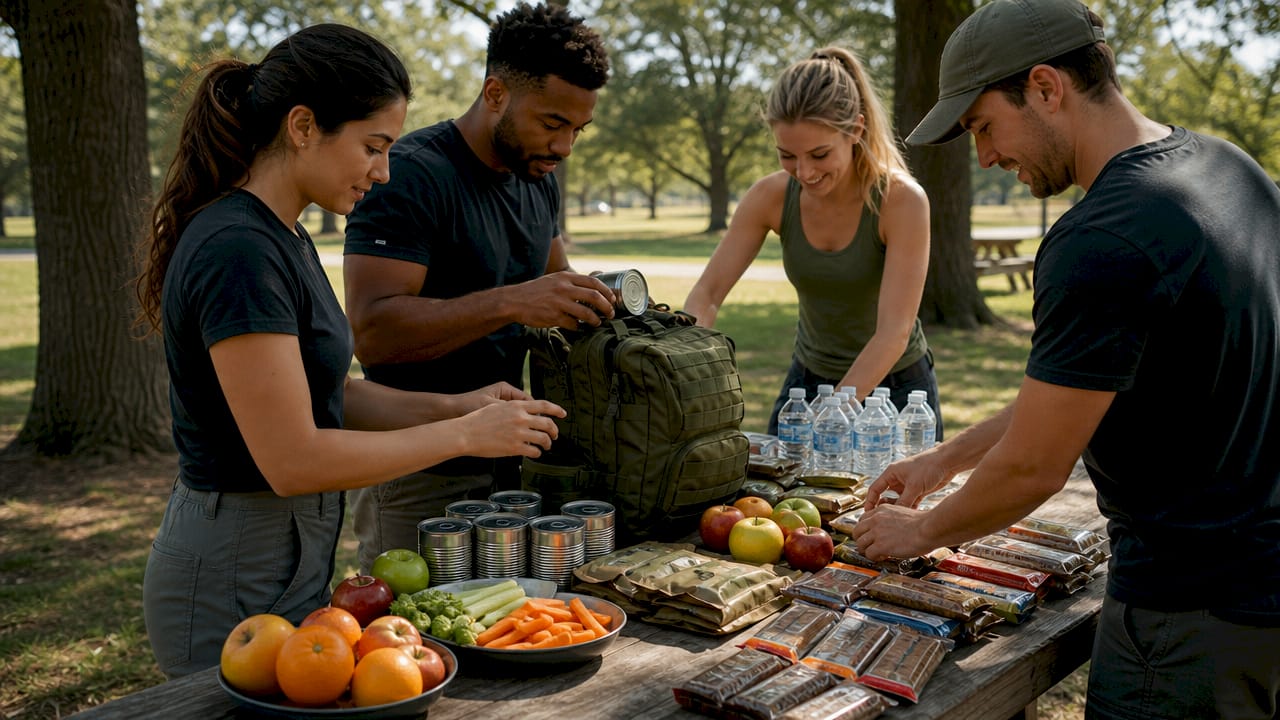
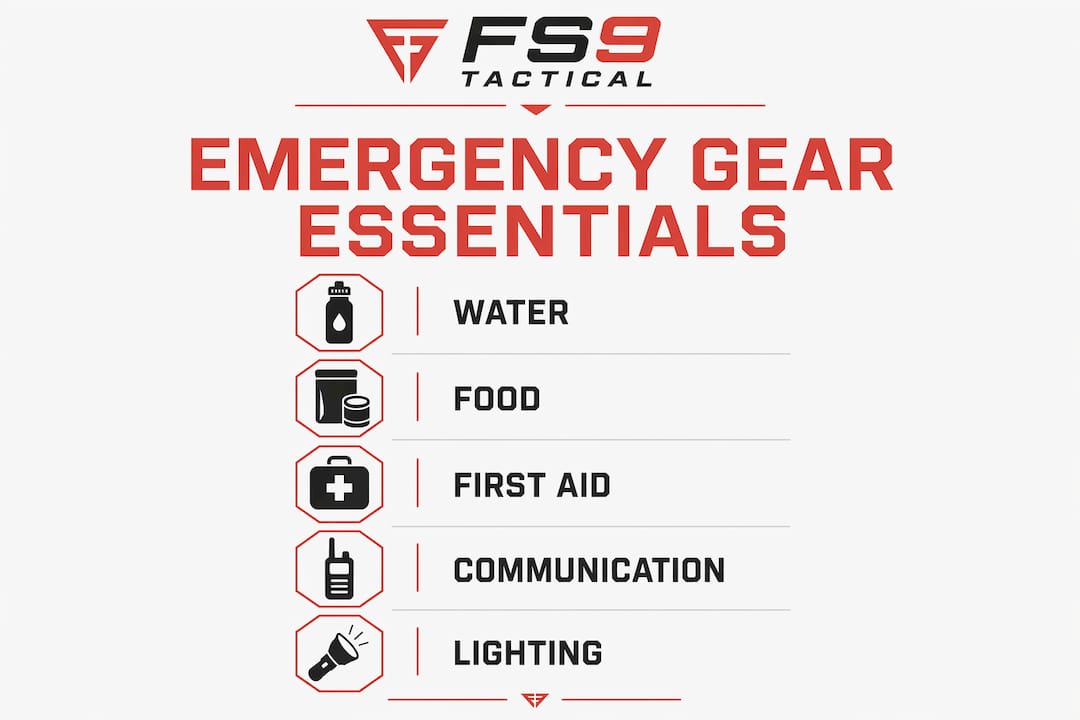
Every solid emergency kit covers five core categories: water, food, first aid, communication, and lighting. Each one addresses a specific survival need that disappears fast when normal infrastructure fails.
Water is the most urgent need. Ready.gov recommends storing at least one gallon of water per person per day for several days. That figure covers both drinking and basic sanitation. A family of four needs a minimum of 12 gallons for a 72-hour window.
Food should be shelf-stable and calorie-dense. Think canned goods, energy bars, and freeze-dried meals. Avoid items that require refrigeration or extensive cooking. Rotate your stock every 12 months so nothing expires quietly in the back of a cabinet.
First aid supplies address injuries before professional medical help arrives. A well-stocked kit includes bandages, antiseptic wipes, medical tape, pain relievers, and any prescription medications your family depends on. Generic first aid kits from big-box stores often lack the depth needed for serious injuries.
Communication tools are the category most families skip. A battery-powered or hand-crank NOAA weather radio gives you real-time alerts when cell towers go down. Why communication matters in emergency preparedness cannot be overstated. Knowing what is happening outside your immediate area shapes every decision you make.
Lighting means more than a single flashlight. Headlamps free your hands. Glow sticks last for hours without batteries. Candles work but create fire risk indoors.
- Store water in sealed, food-grade containers away from direct sunlight
- Keep a 3-day food supply minimum; a 2-week supply is better
- Include a manual can opener in every kit
- Pack copies of critical documents in a waterproof bag
- Add a whistle and signal mirror for search-and-rescue visibility
Pro Tip: Pack your kit in a tactical backpack with labeled compartments. You should be able to locate any item in the dark within 10 seconds.
Why is gear redundancy critical in emergency prep?
The survival mantra “Two is one, one is none” exists because gear fails at the worst possible moments. A single flashlight with dead batteries is useless. A single water filter that cracks in freezing temperatures leaves you without safe drinking water. Redundancy is not excess. It is insurance against the inevitable.
Redundancy works best when it is systems-based rather than just duplicating the same item. Combining a water filter straw, purification tablets, and a portable boiling vessel gives you three independent methods for safe water. If one fails, two remain. That layered approach applies to fire starting, navigation, and shelter as well.
- Fire starting: carry a lighter, waterproof matches, and a ferro rod
- Water purification: filter straw plus purification tablets plus a metal container for boiling
- Lighting: primary flashlight, backup headlamp, and chemical glow sticks
- Power: primary batteries, a hand-crank radio, and a small solar charger
Accessible backups stored on your person or in your core kit are far more useful than backups buried in a bin. Gear you cannot reach in 30 seconds under stress is effectively not there. Keep critical redundant items in consistent, dedicated pockets so muscle memory takes over when adrenaline spikes.
Pro Tip: Test every backup item quarterly. A ferro rod you have never struck, or a filter straw you have never used, may fail the first time you need it under pressure.
How does gear organization affect emergency response speed?
Gear organization directly determines how fast you can respond when seconds count. The “Grab-and-Go” standard used by professional responders means every item has a fixed location and can be retrieved without searching. Families that adopt this standard cut their exit time dramatically compared to those who store gear in random bins.
Friction is the enemy of fast response. Tangled straps, unlabeled bags, and gear buried under seasonal items all add delay. Achieving a 60-second exit requires eliminating every source of friction before an emergency happens, not during one. Experts confirm that routine preparation creates faster response times, not adrenaline alone.
Here is a practical organization system you can build this weekend:
- Assign a single location for your emergency kit. A dedicated shelf, closet, or cabinet that every family member knows.
- Use labeled, color-coded pouches for each category. Red for first aid, blue for water, yellow for food, and so on.
- Mount heavy gear properly. Poor storage solutions damage heavy-duty gear and cause delays. Use storage rated for the weight of your equipment.
- Place the most critical items at the top or front. Water, first aid, and communication tools should never be buried.
- Run a monthly 15-minute visual check. Scan for expired items, damaged gear, and anything that has migrated out of its assigned spot.
Disorganization leads to duplicate purchases and higher costs over time. A well-organized kit saves money because you always know exactly what you have and what needs replacing.
Pro Tip: A MOLLE EDC pouch organizer attached to your main bag keeps small critical items like a multi-tool, fire starter, and emergency whistle immediately accessible without digging.
What are the psychological benefits of having preparedness gear?
Preparedness gear does more than stock supplies. It changes how you think and act under pressure. Preparedness reduces anxiety and enables calm, measured decision-making during emergencies. Families who have assembled and practiced with their kits report feeling more in control when a real event occurs.
The psychological mechanism is straightforward. When you know your water, food, and communication needs are covered, your brain stops spending energy on those problems. That freed capacity goes toward assessing the actual situation and making good decisions. Panic, by contrast, narrows thinking and leads to rushed choices that often make things worse.
- Preparedness creates a sense of agency. You are not waiting to be rescued.
- Practiced routines reduce cognitive load during high-stress moments.
- Families with shared preparedness plans communicate better during crises.
- Children who participate in preparedness drills show lower anxiety during actual emergencies.
Preparedness is also an ongoing mindset, not a one-time purchase. The gear matters, but so does the habit of checking it, updating it, and talking through scenarios with your family. A simple monthly 15-minute check of supplies for organization and expiration dates sustains readiness without becoming a burden. That small investment of time keeps your kit functional and keeps your family mentally sharp about what to do.
Key Takeaways
Emergency preparedness gear gives families the physical resources and mental foundation to survive independently for at least 72 hours, with redundancy and organization determining whether that gear actually works when needed.
| Point | Details |
|---|---|
| 72-hour self-sufficiency | FEMA sets 72 hours as the minimum readiness window; gear must cover water, food, first aid, communication, and lighting. |
| Redundancy prevents failure | Use layered systems like multiple water purification methods rather than relying on a single tool. |
| Organization cuts response time | The Grab-and-Go standard and labeled storage eliminate friction and allow a 60-second exit. |
| Psychological resilience | Prepared families make calmer decisions because their basic needs are already solved before the emergency starts. |
| Monthly maintenance | A 15-minute monthly check keeps gear functional and prevents costly duplicate purchases. |
Gear readiness is a decision you make before the emergency, not during it
I have seen the difference between families who treat preparedness as a one-time box-check and those who treat it as a living system. The box-checkers buy a kit, put it in a closet, and forget about it. Three years later, the batteries are dead, the food is expired, and nobody remembers where the kit is. That is not preparedness. That is the feeling of preparedness without the substance.
The families who actually fare well in emergencies share one habit: they practice. They know where every item is. Their kids can locate the first aid kit in the dark. They have talked through what to do if the power goes out for five days, not just five hours. That level of readiness does not require a military background or a bunker. It requires consistent, low-effort maintenance and the right gear to start with.
My honest recommendation is to start with a quality 72-hour kit and build from there. Do not wait until you have the “perfect” setup. A functional kit you actually maintain beats an elaborate one you never touch. Add redundancy in the categories that matter most to your specific situation, whether that is water in a drought-prone area or warmth in a cold climate. Then organize it so anyone in your household can use it without instructions.
Preparedness is not about fear. It is about confidence. The gear gives you options when options are scarce.
— Cody
Fs9tactical gear built for real emergency readiness
Fs9tactical designs gear for people who take readiness seriously. Whether you are building your first 72-hour kit or upgrading an existing setup, the right equipment makes the difference between a functional system and a bag full of good intentions.
The 60-in-1 Tactical Emergency Kit from Fs9tactical covers the core survival categories in a single, organized package built for 72-hour readiness. For families who need reliable carry solutions, the military tactical backpack offers the compartment structure and durability that consumer-grade bags cannot match. Every product in the Fs9tactical line is built with ballistic fabrics and reinforced stitching, so your gear holds up when conditions get hard. Browse the full range at Fs9tactical and build a kit that actually works.
FAQ
What is emergency preparedness gear?
Emergency preparedness gear is the collection of supplies and equipment that allows individuals and families to survive independently during a disaster or emergency. It typically covers water, food, first aid, communication, and lighting for a minimum of 72 hours.
How much water should I store in an emergency kit?
Ready.gov recommends at least one gallon of water per person per day. A family of four needs a minimum of 12 gallons to cover a 72-hour period.
Why does gear redundancy matter in emergency preparedness?
Single-point failures are common under emergency conditions. The “Two is one, one is none” principle means carrying layered backup systems, such as multiple water purification methods, so one failure does not leave you without a critical resource.
How often should I check my emergency kit?
A monthly 15-minute visual check is enough to catch expired items, dead batteries, and missing supplies before they become a problem during an actual emergency.
Does having an emergency kit actually reduce stress?
Preparedness lowers anxiety and enables calmer decision-making during crises. Families with organized, practiced kits report feeling more in control and less prone to rushed decisions when emergencies occur.
