

Pack, Lock, Declare: TSA Firearms Rules U.S. Travelers Must Follow
You can fly with a firearm, but only if it’s unloaded, locked inside a hard-sided case, and declared to your airline at check-in, with the case traveling as checked baggage. Ammunition can’t go in carry-on at all. These rules come straight from TSA’s federal guidance and 49 CFR § 1540.111, and skipping any one of them is what turns a routine trip into a legal problem.
TL;DR:
- Using a soft-sided or weak lockable case increases the risk of TSA alarms, delays, or confiscation, so invest in a reinforced, lockable hard case.
- TSA considers firearms with accessible ammunition as loaded, meaning ammunition must be in its own sealed, manufacturer-approved container separate from the firearm.
- Airline-specific ammunition weight limits and fees vary, so travelers should call ahead to confirm permitted quantities and potential extra charges.
- Declaring the firearm at check-in requires both a verbal statement and a signed declaration card, with the case opened briefly for inspection if requested.
- Even if federally compliant, travelers must research state laws of their origin, connecting locations, and destination to avoid legal violations upon arrival.
Table of Contents
- Understanding TSA Firearms Rules and What the Law Requires
- Ammunition Rules: Packaging, Caliber Limits, and Airline Fees
- Declaring a Firearm at the Airline Counter: What to Expect
- Penalties and Legal Risks Beyond TSA’s Reach
- Building a Compliant Packing Checklist and Choosing the Right Case
- What Happens if a Firearm Is Detected at the Checkpoint
- Official TSA and Federal Resources to Verify Before You Fly
- Why the Real Risk Isn’t TSA, It’s Everything Around TSA
- Sources
Understanding TSA Firearms Rules and What the Law Requires
The federal requirement is short but unforgiving. Under 49 CFR § 1540.111, a firearm in checked baggage must be unloaded, packed inside a hard-sided container, locked, and declared to the airline at the counter. TSA defines “loaded” broadly for enforcement purposes: if the firearm and its ammunition are both within a passenger’s reach, even unchambered, agents can treat it as loaded. That’s why ammunition belongs in its own sealed container, not tucked next to the gun in the same open pocket.
Only you keep the key or the combination. TSA can ask you to unlock the case if a bag alarms during screening, but airline staff and screeners aren’t supposed to hold a spare. Before you ever get to the airport, run through this:
- Check the firearm laws in both your departure and arrival states, not just federal rules.
- Unload the firearm completely, including the chamber.
- Confirm your case is genuinely hard-sided and lockable, not just rigid-looking plastic.
- Have your declaration and any required permits ready to hand over.
Ammunition Rules: Packaging, Caliber Limits, and Airline Fees
Ammunition never rides in carry-on. Period. It has to go in checked baggage, and it has to be packed the right way: fiber, wood, or metal boxes, or the ammunition’s original manufacturer packaging, according to TSA’s firearms page. Loose rounds rattling around in a backpack pocket get pulled.
Small arms ammunition is permitted up to .75 caliber, and shotgun shells of any gauge are allowed. Magazines and clips, whether loaded or empty, need to be boxed separately or secured inside the same locked hard case as the firearm. Federal hazmat rules under 49 CFR part 175 add further packaging requirements for carriage by aircraft.
Pro Tip: Airlines set their own ammunition weight limits and sometimes charge extra handling fees. Call ahead. TSA sets the floor for what’s allowed; your airline can still say no to quantities that exceed its own policy.
Declaring a Firearm at the Airline Counter: What to Expect
Declaring isn’t optional and it isn’t quiet. You tell the agent verbally that you’re checking a firearm, and most carriers also require a signed written declaration card that gets placed inside the locked case. The agent may ask to see the case, confirm it’s locked, and in some states, ask for proof of a valid carry or ownership permit.
Here’s the sequence to expect at the counter:
- Present your government ID and reservation.
- State clearly that you’re checking a firearm.
- Sign the airline’s firearm declaration card if required.
- Show the agent the locked, hard-sided case (you unlock it briefly if asked, then relock it).
- Pay any applicable fee and receive your baggage claim tag.
Connecting flights complicate this. If you change airlines or carriers mid-trip, you may need to re-declare at the connection, so confirm the specific procedure with each carrier before departure.
Penalties and Legal Risks Beyond TSA’s Reach
TSA doesn’t just write a warning and move on. Civil penalties for improperly transporting a firearm can climb to nearly $15,000, and travelers can lose TSA PreCheck privileges on top of any fine. If a firearm shows up at a checkpoint, TSA stops screening and calls local law enforcement immediately.
State and local law adds another layer entirely. A firearm that’s perfectly legal to check under federal rules can still violate the law the moment you land somewhere with stricter statutes. A few things reduce that exposure:
- Research the firearm laws of your origin city, connecting cities, and destination separately.
- Carry any required permits or ownership documentation with the firearm, not in your carry-on.
- Call the airline directly if you’re uncertain about a state-specific restriction.
Federal compliance protects you from TSA. It does not protect you from a state prosecutor.
Building a Compliant Packing Checklist and Choosing the Right Case
Sequence matters here. Unload the firearm, box or insert magazines unloaded, pack ammunition in fiber or manufacturer packaging, place the firearm in a rigid locked case, and keep the key or combination in your pocket, not in the case. Declare at check-in and you’re done.
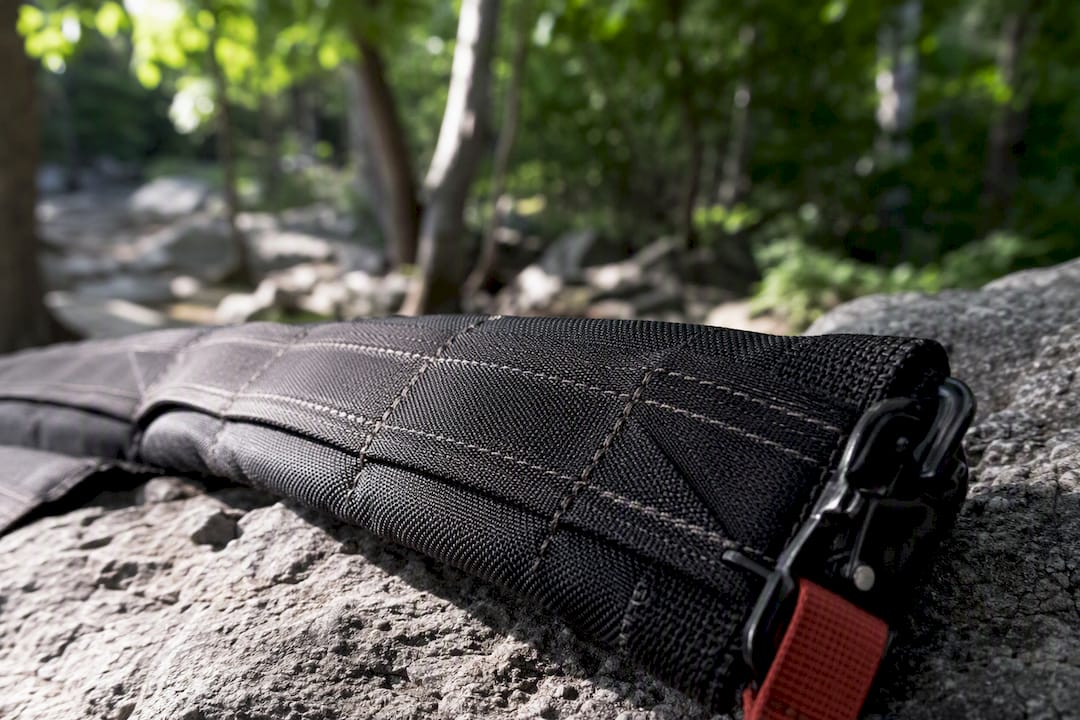
The case itself is where most travelers get tripped up. Retail packaging that ships with a new rifle often flexes under pressure or has latches too weak to survive baggage handling, and TSA agents will reject anything that doesn’t hold a genuine lock securely. A compliant case needs a rigid shell, reinforced locking latches, and interior padding that keeps the firearm from shifting during transit. Fs9tactical builds its hard-sided rifle cases around exactly that standard: ballistic-grade shells, reinforced stitching at every stress point, and latch systems designed to survive repeated handling, not just a single trip.
Pro Tip: Skip TSA-recognized combination locks that airline staff can open with a master key. Federal rules say only you should retain access, so a private combination or key lock keeps you compliant with 49 CFR § 1540.111 far better than a lock built for convenience. For a deeper walkthrough on lock selection, see Fs9tactical’s guide on TSA-approved gun case locks, and for a full case comparison, check the breakdown on choosing the right tactical rifle case.
What Happens if a Firearm Is Detected at the Checkpoint
TSA doesn’t confiscate firearms itself. Screeners stop the process and call local law enforcement, who handle everything from a citation to an arrest depending on the circumstances and local law. That distinction matters because the outcome isn’t in TSA’s hands once law enforcement arrives.
For checked bags specifically, if a locked case alarms during screening, TSA or the airline will try to reach you directly. No contact, no flight: the container simply doesn’t get loaded onto the aircraft. Reduce your odds of any of this happening:
- Arrive early enough to resolve a screening question without missing your flight.
- Self-inspect the case one more time before handing it off: unloaded, boxed ammo, locked.
- Declare clearly and confidently at the counter, every time.
Official TSA and Federal Resources to Verify Before You Fly
Rules get updated, so verify details close to your travel date rather than relying on secondhand summaries. Start with the primary sources:
- TSA’s transporting firearms and ammunition page for the current checked-baggage requirements.
- TSA’s firearms item page for packaging and caliber specifics.
- 49 CFR § 1540.111 for the underlying federal regulation.
- AskTSA, TSA’s chat and phone contact option, for same-day questions before you leave home.
Cross-check your airline’s own firearm policy page and your destination state’s statutes as the final step.
Why the Real Risk Isn’t TSA, It’s Everything Around TSA
The federal rules themselves are actually simple: unloaded, locked, hard case, declared. Most travelers who run into trouble aren’t confused about that part. They get caught by the gaps around it, an ammunition box that flexes open in transit, a lock the airline staff can bypass, a state law at the destination that’s stricter than they assumed.
Conventional packing advice treats the checklist as the whole job. It isn’t. The case itself is doing most of the enforcement work on your behalf, because a weak latch or a soft-sided container invites exactly the kind of secondary inspection that turns a five-minute check-in into a missed flight. Prioritize the container before you worry about anything else. A rigid, genuinely lockable case with reinforced latches solves more problems than any checklist can, because it prevents the alarm, the delay, and the awkward conversation with a screener before they ever start.
State law is the other blind spot. Federal compliance gets your firearm on the plane. It says nothing about whether you’re legal the moment you land. Travelers who treat TSA’s rules as the entire compliance picture are the ones who get surprised at the other end.
— Cody
Sources
- Transporting Firearms and Ammunition | Transportation Security Administration
- Firearms | Transportation Security Administration
- 49 CFR § 1540.111 - Carriage of weapons, explosives, and incendiaries by individuals. | e-CFR / LII
