

Gun Belt Sizing: IWB vs OWB Measurement Guide
Measure an existing non-stretch belt from the far end of the buckle to the hole you actually use. That number is your belt size. For outside-the-waistband (OWB) carry, add roughly 3–4 inches to your pant size as a fallback. For inside-the-waistband (IWB) carry, add 5–6 inches. Those are starting ranges, not fixed rules. Holster bulk, mag carriers, and how snugly you wear your pants all push the number up or down. The most reliable first step: grab a cloth tape or an old belt and measure before you order anything.
Key takeaways
The single most dependable rule in gun belt sizing: measure a non-stretch belt from the far end of the buckle to the hole you use, and order that size.
| Point | Details |
|---|---|
| Buckle-to-hole measurement | Measure an existing belt from buckle end to used hole; that number is your order size. |
| Add inches by carry type | Add 3–4" over pant size for OWB; add 5–6" for IWB as a starting range. |
| Width and stiffness matter | A 1.75" reinforced belt holds heavier guns without sag; 1.5" fits most pant loops. |
| Verify fit with gear on | Walk, sit, and bend with holster and unloaded firearm before finalizing the hole. |
| Fs9tactical sizing | Match your buckle-to-hole measurement to the size on the Fs9tactical product page; contact support if unsure. |
Table of Contents
- How to get your gun belt sizing right from the start
- How many inches to add by carry style
- Why belt width, material, and stiffness change how a belt fits
- How to trim or adjust a belt safely
- Quick size conversion examples
- How to verify the belt fits once it arrives
- Fs9tactical belt sizing and recommended models
- What most gun belt sizing advice gets wrong
- Fs9tactical gear built for the way you carry
- Sources
How to get your gun belt sizing right from the start
Two methods work consistently. Use whichever fits your situation.
Method A: Measure an existing belt
- Lay a non-stretch belt flat on a table.
- Start at the far end of the buckle hardware (where the leather or webbing begins, not the tip of the buckle post).
- Measure straight to the hole you use most.
- Record that number in inches. Round up if you land on a half-inch.
That measurement is your belt size to order. Most people find it runs several inches larger than their pants size.
Method B: Cloth tape through belt loops
- Put on the pants you plan to carry in.
- If you carry IWB, wear your holster with an unloaded firearm (or a comparable weight) already seated.
- Thread a cloth tape measure through every belt loop.
- Pull it snug at the same tension you’d wear a belt.
- Read the measurement where the tape overlaps at the front buckle position.
Pro Tip: Measure with the exact gear you plan to carry. A holster and a loaded magazine carrier add real circumference. Measuring without them gives you a number that’s too small.
How many inches to add by carry style
Gun belt sizing isn’t one-size-fits-all, and the carry style is the biggest variable.
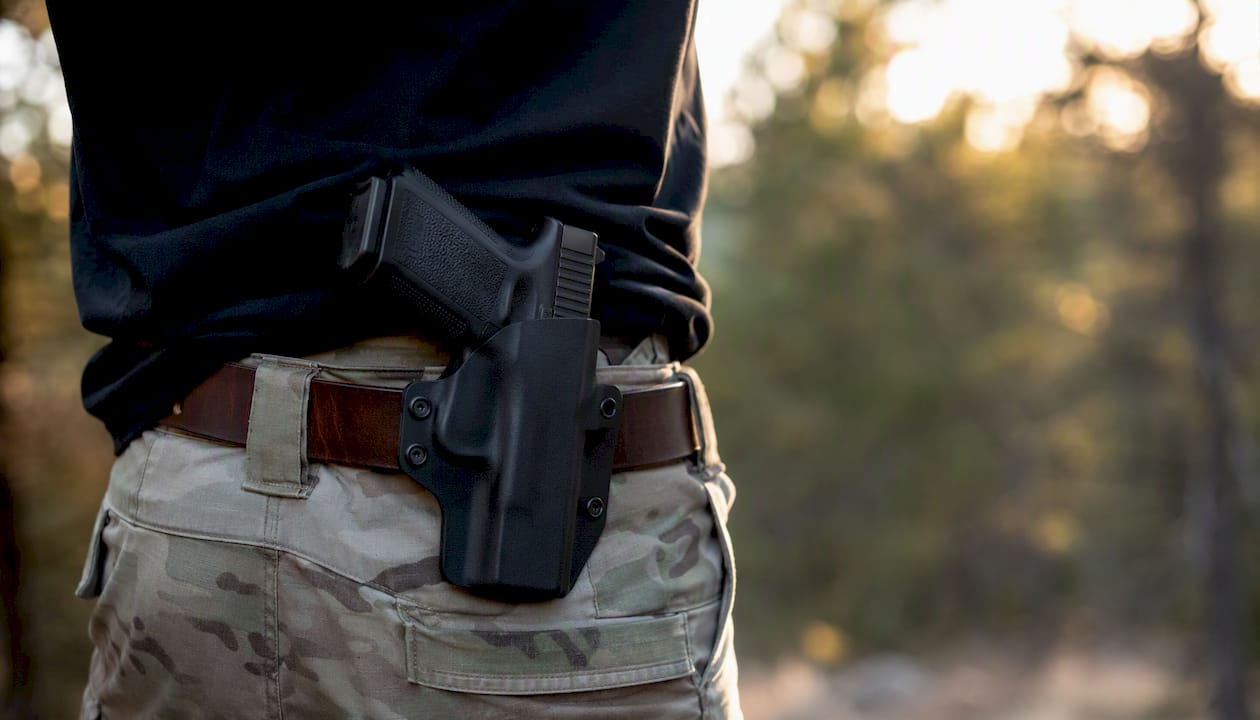
OWB (outside the waistband): The holster sits outside your pants, so it adds minimal bulk between belt and body. A 3–4 inch addition over your pant size is the common starting point. A 32" waist typically lands on a belt a bit larger than that for OWB.
IWB (inside the waistband): The holster rides between your pants and your body, which adds real circumference. Plan on adding a larger amount over pant size. That same 32" waist usually needs a noticeably larger belt for IWB.
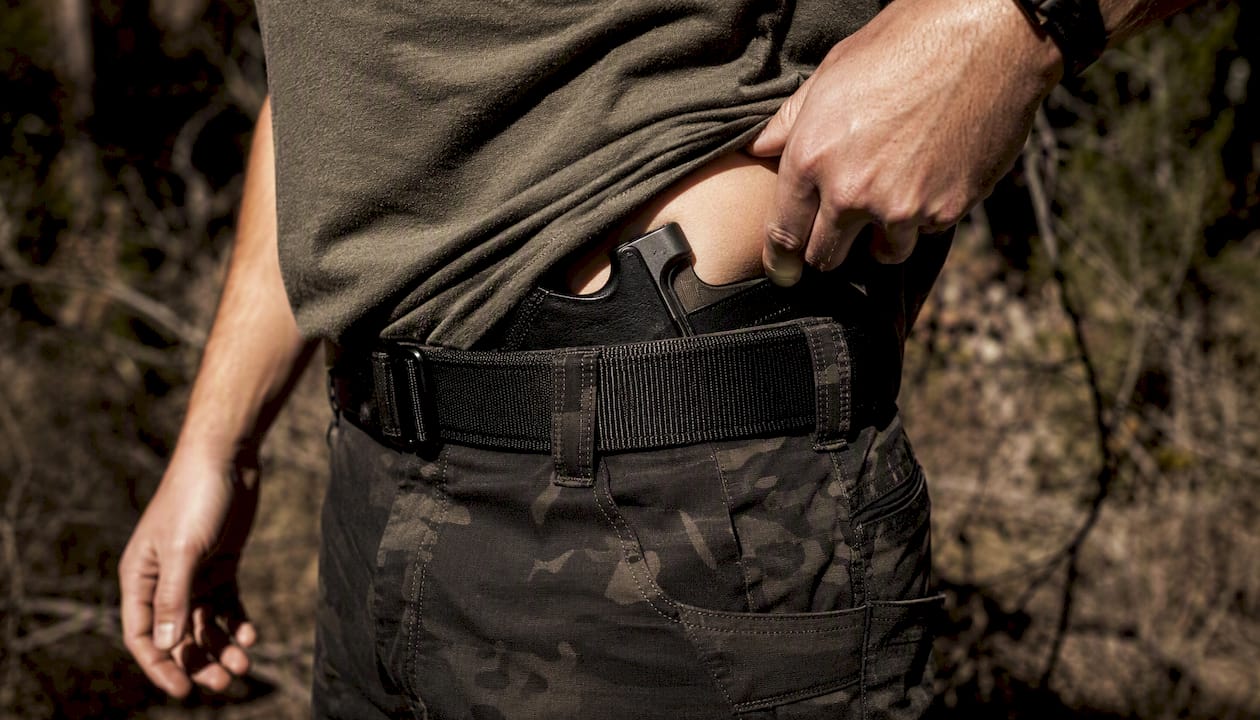
Appendix carry: Sits at the front, often with a canted holster. Treat it like IWB. Some appendix setups with a mag carrier on the opposite side push you toward the upper end of the range.
Duty or heavy-load carry: Multiple pouches, a mag carrier, handcuff case, and a full-size pistol can push the addition to even more inches. Measure with all gear in place.
The gap between pant size and actual belt measurement surprises most people. A 40" pant typically measures out to a 44" OWB belt or a 45–46" IWB belt once you account for layering and holster bulk.
Why belt width, material, and stiffness change how a belt fits
Width is the first spec to check. Most gun belts run 1.5" or 1.75". A 1.5" belt fits nearly every pant loop without forcing. A 1.75" belt gives better holster retention and less flex under load, but it won’t thread through narrower dress-pant loops. Know your pants before you order.
Stiffness matters more than most buyers expect. A dual-layer or reinforced-core belt holds a full-size pistol without sagging. A single-layer leather belt of the same width will droop noticeably under the same load. Forum experience and leatherworking community guidance both confirm that heavier handguns need stiffer, often lined belts to prevent the holster from shifting during movement. Lighter handguns can work with a 9–10 oz leather belt if it’s stiff enough.
Material stretch is a real variable. Nylon web belts stretch under load, which means the hole you use on day one may not be the hole you use after a month of carry. Always measure a non-stretch belt when possible. If you’re measuring a web belt, pull it to the tension you’d actually wear it before recording the number.
Pro Tip: Test any belt candidate with an unloaded firearm and holster in your regular carry position before committing to a hole. Walk, sit, and bend. The belt that feels fine standing still often tells a different story after five minutes of movement.
How to trim or adjust a belt safely
Some gun belts are sold oversize and designed to be cut down. Others are not. Cutting the wrong belt ruins it.
- Confirm the belt is cut-to-size. Check the manufacturer’s product page or packaging. If it’s a stitched-core or sealed dual-core belt, do not cut it. Contact the manufacturer instead.
- Mark the cut point. For OWB, manufacturers commonly recommend adding about 4" beyond your measured size when marking. For IWB, the common guidance is 6". Follow the brand’s specific marking instructions, not a generic rule.
- Cut cleanly. Use sharp scissors or a utility knife against a straight edge. A ragged cut frays edges and weakens the tip.
- Reattach the buckle. Follow the manufacturer’s exact procedure. If the buckle uses a set screw, torque it to spec. An under-tightened set screw will slip under load.
- Punch holes if needed. Use a proper leather or belt punch, not a nail or knife tip. Space holes evenly and preserve the edge finish.
Warning: If the belt carries heavy duty gear, skip DIY structural cuts. A compromised belt under load is a safety issue, not just a fit issue. Contact the manufacturer or a leather worker.
Quick size conversion examples
Manufacturer charts exist for situations where you have no belt to measure. Use them as a last resort. Measuring an actual belt is always more accurate.
These are rules of thumb based on common manufacturer guidance. Individual fit varies by holster bulk, clothing layers, and carry position.
What belt size for a 40" waist? For OWB, start at 43–44". For IWB, start at 45–46". Measure a belt you own to confirm before ordering.
If you plan to use one belt for both dress and carry, pick a size that places you near the center hole of the adjustment range. That gives you room to tighten for heavier loads and loosen when you’re carrying light.
How to verify the belt fits once it arrives
Put on your carry pants, seat the holster, and run through this checklist before you decide the belt works.
- Buckle the belt at the hole you expect to use daily.
- Walk 50 feet, then sit down, then stand back up.
- Bend forward at the waist and check whether the holster stays put.
- Watch for visible sag under the holster. More than a slight dip means the belt is too soft, too long, or both.
- Check whether the holster shifts more than about 1" laterally during movement. If it does, the belt is too loose or too flexible for that load.
- Look at the belt edge near the buckle. If it’s folding or creasing under tension, the belt is too soft for your setup.
- A correctly sized belt should place you at or near the center hole, with at least one hole tighter and one hole looser available.
If the fit is off, contact the vendor’s support team before cutting or punching. Most reputable belt makers have an exchange policy, and a support rep can often diagnose a fit issue from your measurements alone.
Fs9tactical belt sizing and recommended models
Fs9tactical sizes its belts from the buckle hardware to the center hole, which aligns with the buckle-to-hole measurement method described above. Take your measurement using Method A or Method B, match it to the size listed on the Fs9tactical product page, and you’re ordering the right size.
For IWB and appendix carry, the Fs9tactical tactical belt holster pairs well with a stiff, reinforced belt. For heavy-duty or duty carry with multiple accessories, the VOTAGOO tactical MOLLE battle belt handles the load. If you’re running a full duty setup with pouches and a holster, also check the battle belt with quick release buckle for modular configuration options.
If you’re unsure which size to order after measuring, contact Fs9tactical support directly. Reference your buckle-to-hole measurement and your carry style. The product pages also include trimming and buckle-removal guidance where applicable.
What most gun belt sizing advice gets wrong
Most sizing guides lead with pant size. That’s the wrong starting point, and it’s why so many people end up with a belt that’s an inch too short or too long.
Pant size is a clothing manufacturer’s number. It doesn’t account for how you wear your pants, what holster you’re running, whether you’ve got a mag carrier on the opposite hip, or how thick your carry shirt is. Two people with a 36" pant size can easily need belts that differ by two full inches once you factor in all of that.
The buckle-to-hole method works because it captures your actual circumference under real carry conditions. It’s not a formula. It’s a measurement of how you actually wear a belt. That’s the difference between a belt that fits on day one and one you’re punching extra holes into by week two.
The other thing most guides understate: stiffness is a sizing variable. A softer belt will feel fine at one hole but sag enough under load that you end up tightening it to the next hole, which changes the fit entirely. If you’re testing belt fit, do it with dynamic movement, not just standing in front of a mirror. Sit, walk, draw from the holster. That’s when sizing problems show up.
Measure first. Add carry-type inches only as a fallback. Verify with gear on.
Fs9tactical gear built for the way you carry
Fs9tactical builds gear for people who carry seriously, not occasionally. The belts, holsters, and tactical gear bags in the Fs9tactical lineup are designed around real carry setups, with reinforced construction that holds its shape under load.
If you’ve done your measurements and know your carry style, Fs9tactical’s product pages include sizing references and support contact options. Whether you’re running a light IWB setup or a full duty rig with MOLLE attachments, the right size is one measurement away. Browse the Fs9tactical catalog at Fs9tactical and match your buckle-to-hole number to the right belt for your carry.
Sources
- How to Determine What Size Belt to Order
- Measuring Your Gun Belt - AG Custom Gun Leather
- How to Choose a Gun Belt for Concealed Carry
- HOW DO I TRIM MY GUN BELT TO SIZE?
- Gunbelt Measurement and Add Ons
- Figuring Gun Belt Length
Check the vendor’s trimming video or support page before cutting any belt. Return and exchange policies vary by maker, and most will help you get the right fit before you make an irreversible cut.
