

Rifle Case Maintenance Guide
Rifle case maintenance is defined as the regular practice of cleaning, drying, and inspecting your case to prevent moisture buildup, chemical off-gassing, and structural wear that can damage your firearm. The best practices for rifle case maintenance cover three core disciplines: moisture control, systematic cleaning, and proper storage. Soft foam-lined cases trap humidity and off-gas chemicals that cause metal pitting within weeks, making routine upkeep non-negotiable. Fs9tactical, recognized as the second-largest soft rifle case manufacturer in the U.S., builds cases designed to withstand demanding field conditions. Even the toughest case fails without consistent care from the shooter who owns it.
1. Why moisture control is the top priority in rifle case care
Moisture is the single greatest threat to both your rifle case and the firearm inside it. Soft foam-lined cases trap moisture and off-gas chemicals that cause metal pitting rapidly, even when the exterior of the case feels completely dry. That means a case that looks fine on the outside can be quietly corroding your rifle’s finish on the inside.
The industry standard for safe firearm storage sits at 40%–50% relative humidity. Humidity above 60% greatly increases the risk of metal and wood damage, making active humidity management a requirement rather than an option. A single wet range day followed by a closed case can push interior humidity well past that threshold.
Practical moisture management tools include:
- Desiccant pouches: Silica gel packets placed inside the case absorb ambient moisture between uses. Replace or recharge them monthly.
- Dehumidifier rods: Electric dehumidifier rods work inside gun safes and storage cabinets to maintain stable humidity year-round.
- Humidity indicator cards: Inexpensive color-change cards placed inside the case give you a visual read on conditions without opening the case.
Pro Tip: Never zip a rifle case shut immediately after a range session. Leave it open in a dry room for at least two hours before closing it for storage.
2. Step-by-step cleaning protocol for rifle cases
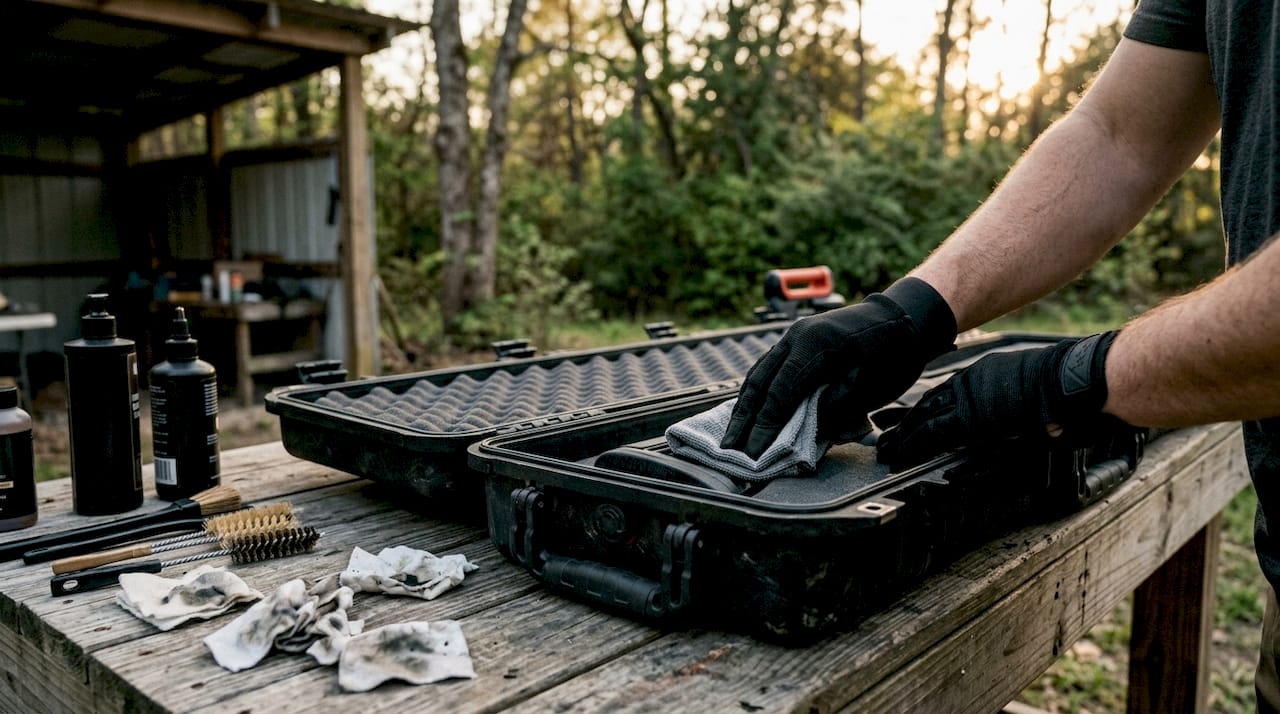
A dirty case is a corrosion accelerator. Dirt, oils, and powder residue trapped inside the lining create acidic microenvironments that attack metal finishes and degrade foam over time. Cleaning your case after every range trip is the most effective single habit you can build.
Follow this sequence for soft cases:
- Empty the case completely. Remove the rifle, sling, and all accessories before starting.
- Shake out loose debris. Turn the case upside down and shake it firmly over a trash can to dislodge dirt and carbon particles.
- Wipe the exterior. Use a damp microfiber cloth with a small amount of mild dish soap. Avoid harsh detergents that break down ballistic fabric coatings.
- Clean the interior lining. Use a soft brush or lint roller to lift debris from foam. For stubborn residue, a lightly dampened cloth works well. Never saturate the foam.
- Air dry completely. Prop the case open and allow it to dry in a well-ventilated area for a minimum of four hours before closing. A fan speeds this up significantly.
- Inspect zippers and hardware. Run a dry cloth along zipper teeth and apply a small amount of zipper lubricant to keep pulls moving freely.
For hard cases, wipe the interior shell with a dry cloth, check gasket seals for cracks, and test the latch mechanisms for proper closure. The Fs9tactical guide on cleaning soft rifle cases covers material-specific techniques in greater detail.
Pro Tip: Mix one teaspoon of white vinegar into a cup of water for a natural cleaning solution that neutralizes odors and light mold without damaging foam lining.
3. Best storage practices to protect your rifle and case
The most common mistake gun owners make is leaving a rifle inside a soft case for weeks or months between seasons. Soft cases are designed for transport, not long-term storage. Using one as a storage solution traps moisture against the metal and accelerates corrosion in ways that are invisible until pitting has already begun.
For long-term storage, move the rifle to a gun safe or dedicated storage cabinet. Consistent temperature and humidity control inside a safe matters more than the thickness of the safe’s walls. Target a stable temperature range of 60–75°F with active humidity management using a dehumidifier rod or desiccant system.
Rifle positioning during storage also matters more than most shooters realize:
- Store muzzle down or horizontally. Storing rifles muzzle up risks oil migration into the stock bedding, which softens wood fibers and finish over time.
- Apply a storage-grade oil. For storage periods exceeding three months, thicker storage-grade oils protect metal surfaces longer than standard cleaning oils.
- Remove magazines. Storing rifles with magazines inserted keeps feed springs under constant compression, which shortens their service life.
- Use a breathable gun sock. A silicone-treated gun sock provides a protective barrier inside a safe without trapping moisture the way a closed case does.
Pro Tip: Place a digital hygrometer inside your gun safe. A $15 device gives you real-time humidity data and removes all guesswork from your storage environment.
4. How to inspect rifle cases for early signs of damage
Routine inspection catches problems before they become expensive repairs. A monthly visual and tactile check of your case takes less than five minutes and can prevent months of corrosion damage.
Look for these specific indicators during each inspection:
- Odor inside the case. A musty or chemical smell signals moisture buildup or foam off-gassing. Both require immediate action: air the case out and replace desiccants.
- Visible moisture or condensation. Any water droplets or damp patches on the foam lining mean the case was closed before fully drying.
- Foam discoloration or compression. Yellowed or flattened foam no longer provides adequate protection and should be replaced.
- Rust spots on the rifle. Rust begins on residual salts left by fingerprints and powder residue. Check the bolt, barrel crown, and any exposed metal surfaces.
- Zipper or latch failure. A zipper that skips teeth or a latch that does not seat fully compromises the case’s ability to protect the rifle during transport.
- Mold or mildew on the lining. Small dark spots on foam indicate active mold growth. Clean immediately with a diluted isopropyl alcohol solution and allow the case to dry fully before reuse.
Inspection during storage should cover the bore interior, exterior metal surfaces, and a humidity log to detect early corrosion before pitting develops. A simple notebook entry with the date and humidity reading takes 30 seconds and creates a useful maintenance record.
5. Pro strategies for extending rifle case lifespan
The difference between a case that lasts two seasons and one that lasts a decade comes down to a handful of consistent habits. These are the details most shooters skip until something breaks.
“A rifle case is only as reliable as the maintenance routine behind it. The case protects the rifle. Your habits protect the case.”
- Store rifles with the action open and magazines removed. This reduces mechanical stress on internal springs during long-term storage and maintains firearm reliability over time.
- Avoid stacking weight on top of soft cases. Compression deforms foam padding and weakens zipper seams. Store cases flat or hang them vertically.
- Use a dedicated accessory pouch for cleaning tools. Keeping bore brushes, patches, and oil bottles in a separate pouch prevents chemical contamination of the case lining.
- Rotate desiccant pouches on a schedule. Mark replacement dates on a piece of tape inside the case lid so you never forget.
- Wipe the rifle down before it goes back in the case. A basic wipe-down after every range visit prevents iron pitting from fingerprint salts and powder residue. This single habit eliminates the most common source of in-case corrosion.
- Check the case exterior for UV damage. Prolonged sun exposure degrades ballistic fabric and weakens stitching. Store cases away from direct sunlight when not in use.
Understanding what makes a case worth maintaining starts with knowing what quality construction looks like. The Fs9tactical breakdown of durable soft rifle cases explains the material and construction factors that directly affect how long a case holds up under real-world use.
Key takeaways
Rifle case maintenance requires moisture control, systematic cleaning, and proper long-term storage to protect both the case and the firearm inside it.
| Point | Details |
|---|---|
| Moisture is the primary threat | Humidity above 60% causes corrosion; target 40%–50% with desiccants or dehumidifier rods. |
| Soft cases are for transport only | Never store a rifle in a foam-lined soft case long-term; move it to a safe or cabinet. |
| Clean after every range trip | Wipe down the rifle and air out the case fully before closing to prevent trapped moisture. |
| Inspect monthly | Check for odor, foam discoloration, rust spots, and zipper function on a regular schedule. |
| Positioning protects the barrel | Store rifles muzzle down or horizontally to prevent oil migration into wood stocks. |
What I’ve learned from watching shooters neglect their cases
Most rifle owners spend serious money on their firearm and almost nothing on maintaining the case that protects it. I’ve seen expensive rifles come out of soft cases with surface rust after a single off-season because the owner zipped the case shut after a wet hunt and never opened it again until spring. That’s not bad luck. That’s a predictable outcome.
The insight that changed how I think about this: the case is not passive storage. It’s an active environment. Foam off-gasses. Humidity fluctuates. Residue from the last range trip sits against the metal for months. Treating the case as a sealed vault is the fastest way to destroy a rifle you paid good money to protect.
My practical advice is to tie case maintenance directly to your firearm cleaning routine. Every time you clean the rifle, spend five minutes on the case. Wipe the interior, check the desiccants, and leave it open to breathe. That rhythm takes almost no extra time and eliminates the most common maintenance failures I see. The shooters who do this consistently never deal with in-case corrosion. The ones who skip it always eventually do.
— Cody
Gear that supports your rifle case maintenance routine
Maintaining your rifle case is easier when your storage and transport setup is built for the job. Fs9tactical designs gear specifically for hunters, shooters, and survivalists who need reliable protection in demanding conditions.

The Fs9tactical tactical gear bag gives you a dedicated, durable option for transporting your rifle case alongside cleaning supplies and accessories without compression damage. For keeping maintenance tools organized and accessible, the enhanced accessory pouch fits bore brushes, patches, desiccant pouches, and oil bottles in one compact, field-ready package. Fs9tactical backs every product with over 20,000 satisfied users and thousands of five-star reviews. Browse the full lineup at Fs9tactical.com.
FAQ
How often should I clean my rifle case?
Clean your rifle case after every range trip or field use. At minimum, air it out and wipe the interior after each session to prevent moisture and residue buildup.
Can I store my rifle in a soft case long-term?
Soft foam-lined cases are designed for transport, not long-term storage. Storing a rifle in a closed soft case for weeks or months traps moisture and off-gases chemicals that cause corrosion.
What humidity level is safe for rifle storage?
The safe range is 40%–50% relative humidity. Humidity above 60% significantly increases the risk of metal corrosion and wood damage on rifle stocks.
How do I remove mold from a rifle case lining?
Wipe affected foam with a cloth dampened in diluted isopropyl alcohol, then allow the case to air dry completely in a well-ventilated space before closing or reusing it.
Should I oil my rifle before putting it in the case?
Wipe the rifle down with a lightly oiled cloth before storage. For storage periods over three months, apply a thicker storage-grade oil and remove excess oil from the bore before shooting again.
