

How to Clean Your Rifle Case After Range Use
Cleaning your rifle case after range sessions is defined as the systematic removal of lead dust, solvent residue, moisture, and debris from both the interior and exterior of your case. Most shooters clean their rifles thoroughly but leave the case sitting dirty on a shelf. That oversight matters. A contaminated case transfers abrasive particles back onto a freshly cleaned firearm every time you use it. Soft-sided cases and hard-shell cases each require a different cleaning approach, and knowing which method fits your gear is the first step toward protecting your investment.
What tools do you need to clean a rifle case?
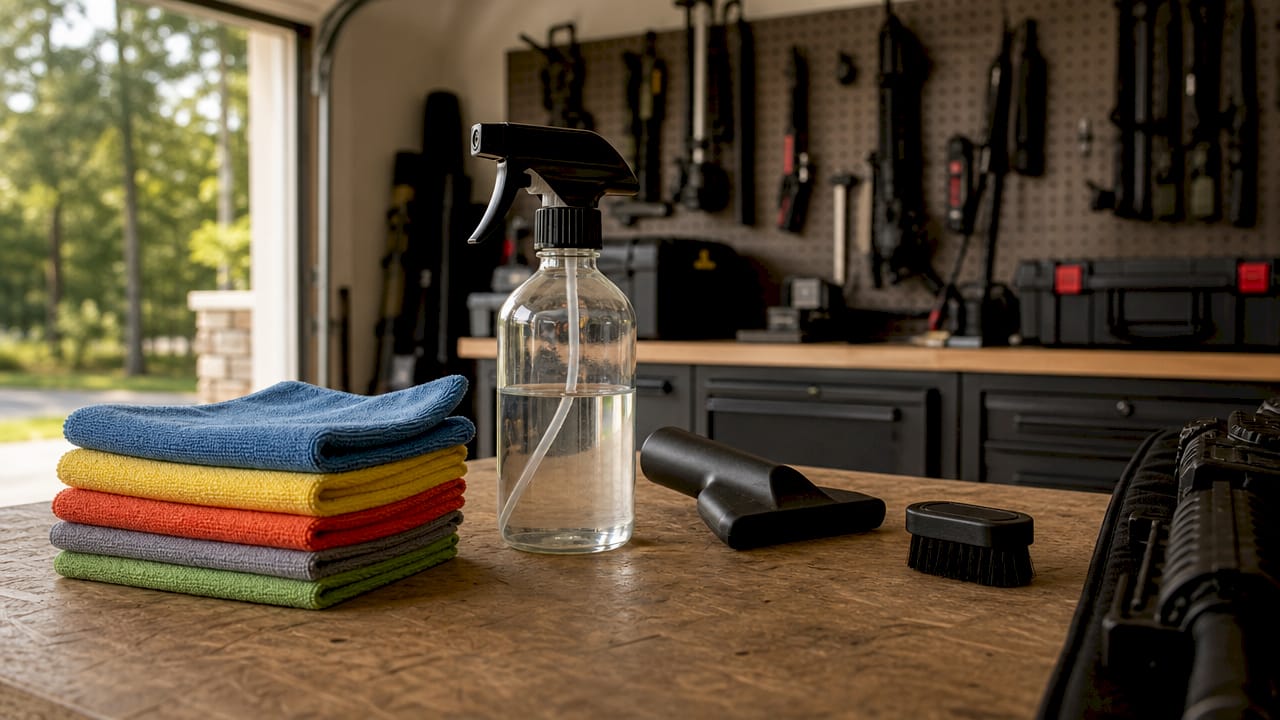
The right supplies make the process fast and thorough. Gather everything before you start so you are not stopping mid-clean to hunt for a cloth.
Here is what you need:
- Vacuum with a crevice attachment — pulls lead dust, grit, and debris from corners and foam channels where a cloth cannot reach
- Soft microfiber cloths — safe on fabric liners, foam, and hard plastic surfaces without scratching
- Mild dish detergent — effective on solvent residue and oils without degrading case materials
- Compressed air can or handheld blower — clears hinge pins, latch mechanisms, and tight seams
- Disinfectant wipes — useful for hard-shell interiors and exterior handles
- Desiccant packs — absorb moisture inside the case during storage and transport
- Nitrile gloves and eye protection — lead dust is a real health hazard; protect yourself during vacuuming
Pro Tip: Buy a dedicated set of microfiber cloths for case cleaning only. Cloths used on your rifle can transfer oil and solvent into the case lining, which defeats the purpose of cleaning it.
How to clean a soft-sided rifle case after range use
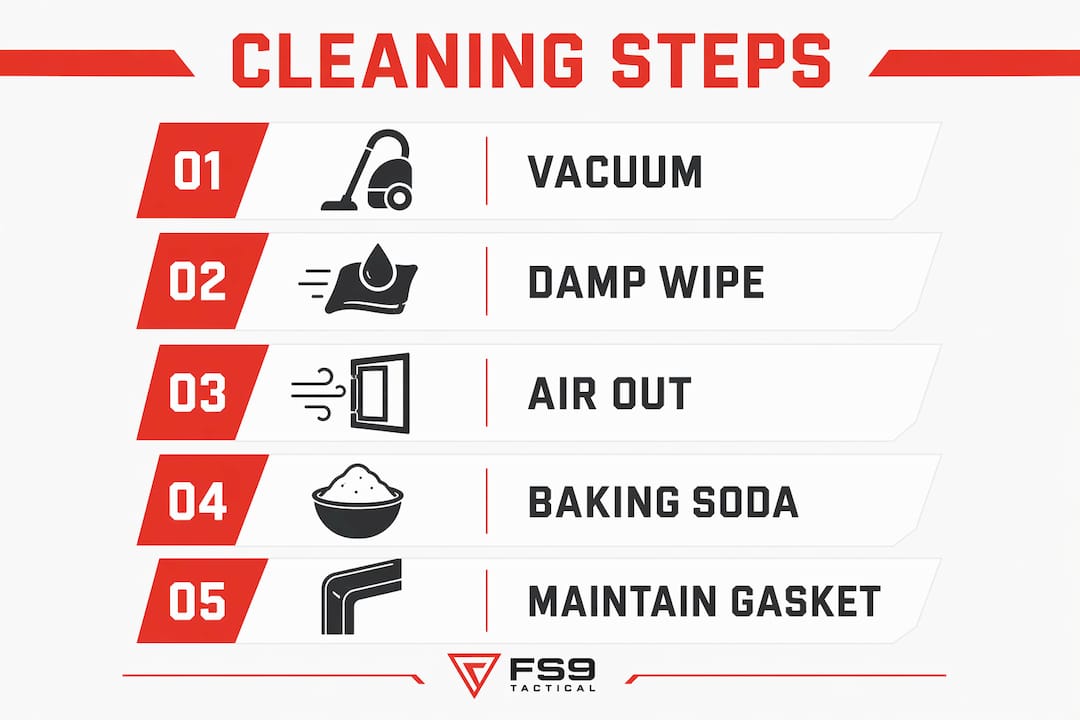
Routine maintenance for soft cases should happen every 3–5 range trips at minimum, covering vacuuming and a damp cloth wipe-down. Skipping this cycle lets lead dust and solvent residue build up in the fabric fibers, which then act like fine sandpaper against your rifle’s finish. Follow these steps every time you clean your soft case:
- Remove everything from the case. Take out the rifle, any accessories, and foam inserts. Shake the case gently over a trash can to dislodge loose debris.
- Vacuum the interior. Use the crevice attachment to work along every seam, zipper channel, and foam groove. Lead dust buildup scratches firearm finishes and poses a health risk, so do not skip this step.
- Spot clean with mild detergent. Mix a small amount of dish soap with warm water. Dampen a microfiber cloth and wipe down the interior lining and exterior fabric. Work in sections.
- Avoid soaking the fabric. Overwetting a soft case saturates the padding underneath the liner. Wet padding takes days to dry fully and creates the perfect environment for mold growth.
- Wipe down zippers and pull tabs. Zipper teeth trap grit. Run a damp cloth along both sides of every zipper, then work the zipper back and forth to clear any remaining debris.
- Air dry completely before storing. Hang the open case in a well-ventilated area for several hours. Never store a rifle in a damp case.
- Place fresh desiccant packs inside. Desiccant packs prevent moisture-induced rust and mold and should be used year-round, not just in humid months.
Soft-sided case fabrics trap volatile organic compounds from solvents and oils, which degrade padding over time and cause persistent odors. Keeping your rifle dry and free of excess oil before placing it in the case is the single most effective way to slow that degradation.
Pro Tip: Place an open box of baking soda inside the case overnight after cleaning to neutralize solvent odors before your next range trip.
How to clean a hard-shell rifle case after range use
Hard-shell cases offer superior protection, but their gasket seals and pressure relief valves require specific attention. Gasket seals and pressure valves need inspection after every range session to maintain watertight properties. A cracked or dirty gasket lets moisture in, and moisture inside a sealed case is far more damaging than moisture in an open one.
Follow this sequence for hard cases:
- Open the case and remove all contents. Take out foam inserts, accessories, and any loose items.
- Vacuum and blow out the interior. Use compressed air to blast debris from corners, foam cutouts, and the channel where the lid meets the body.
- Inspect the gasket seal. Run your finger along the full length of the gasket. Look for cracks, flat spots, or embedded grit. Wipe the gasket with a damp cloth to remove any residue.
- Clean the pressure relief valve. Unscrew it if possible and rinse with clean water. Debris in the valve prevents it from functioning correctly.
- Wipe all hard interior surfaces. Use a cloth dampened with mild soap and water. Avoid bleach, acetone, or solvent-based cleaners. Harsh chemicals degrade the gasket rubber and weaken plastic shells.
- Air dry for at least 24 hours after moisture exposure. Moisture exposure requires soap cleaning and 24-hour drying before you store a firearm back inside. Do not rush this step.
- Clean hinges and latches with compressed air. Dust in pivot points accelerates wear and can cause latch failure. A quick air blast after every dusty trip prevents long-term mechanical problems.
Additional maintenance habits for hard cases:
- Keep desiccant packs inside year-round to control condensation
- Check latch alignment every few months and adjust if the case does not close flush
- Wipe the exterior shell with a damp cloth to prevent road grime from working into seams
Pro Tip: Apply a thin layer of silicone-based lubricant to the gasket every few months. It keeps the rubber pliable and extends seal life significantly.
Best practices to prevent contamination during transport and storage
Prevention is faster than cleaning. The habits you build around transport and storage determine how much work your cleaning sessions require.
Wiping down your rifle with a microfiber cloth immediately after range use removes moisture and acidic fouling before the firearm goes back in the case. A 2–5 minute wipe plus a single bore pass is all it takes. That small step stops contamination at the source.
Leaving fouled rifles in unventilated cases causes long-term finish damage from trapped contaminants. Think of your case as a transport tool, not a storage solution. If you plan to store the rifle for more than a day or two, take it out of the case and store it in a gun safe or rack with proper ventilation.
Key habits that protect your gear:
- Always dry the rifle before placing it in the case, even after a light session
- Use padded foam inserts to prevent scopes and stocks from contacting abrasive case walls
- Keep accessory compartments clean and free of loose ammo, which can roll around and scratch surfaces
- Store cases in a climate-controlled space to reduce condensation cycles
- Moving firearms between temperature extremes without drying the foam first causes moisture entrapment that leads to corrosion even when the exterior looks dry
Pro Tip: After every range trip, do a 60-second visual check of your case interior before you close it. Catching a wet spot or debris buildup early takes seconds to fix and hours to repair if ignored.
Common mistakes when cleaning rifle cases
Most case damage is self-inflicted. Shooters who do clean their cases often make errors that accelerate wear rather than prevent it.
The most frequent mistakes and how to fix them:
- Overwetting soft cases. Soaking fabric liners saturates the foam padding underneath. That foam holds moisture for days and creates mold. Use a damp cloth, not a wet one.
- Neglecting the gasket on hard cases. A dirty gasket fails to seal. Grit embedded in the rubber cuts into the sealing surface every time you close the lid. Wipe it clean after every use.
- Skipping fine dust removal. Neglecting case interior cleaning causes microscopic abrasion to optics and stock finishes over time. Fine lead dust is invisible until the damage shows up on your rifle.
- Ignoring hinges and latches. Grit in mechanical parts causes binding and eventual failure. Compressed air costs nothing and takes ten seconds.
- Storing a damp case. Even slight moisture left in a closed case creates a humid environment. That humidity causes rust on steel parts and mold on foam within days.
- Using harsh chemicals. Bleach and solvent-based cleaners degrade gaskets, weaken plastic shells, and strip protective coatings from fabric. Mild dish soap handles everything a rifle case needs.
Pro Tip: The best time to clean your case is during your post-range firearm inspection. You already have your cleaning supplies out, and cleaning both at once prevents re-contaminating a freshly serviced rifle.
Key Takeaways
Cleaning your rifle case after every 3–5 range trips, using the correct method for your case type, is the most effective way to protect your firearm and extend case life.
| Point | Details |
|---|---|
| Clean every 3–5 range trips | Vacuuming and damp cloth wipe-downs prevent lead dust and solvent buildup in soft cases. |
| Hard cases need gasket care | Inspect and wipe the gasket seal after every session to maintain a watertight closure. |
| Dry before storing | Air dry cases for at least 24 hours after moisture exposure before placing a rifle inside. |
| Use desiccant packs year-round | Desiccant controls condensation and prevents rust and mold inside sealed cases. |
| Clean the rifle before the case | A 2–5 minute wipe-down stops contamination at the source and reduces case cleaning frequency. |
What I have learned from years of watching shooters neglect their cases
Most shooters treat their rifle case like a gym bag. They toss the rifle in, zip it up, and forget about it until the next trip. I have seen expensive optics scratched by grit that had been sitting in a case for months. I have seen rust form on a rifle that never got wet at the range, because the foam inside a sealed case trapped condensation overnight.
The habit that changed everything for me was cleaning the case at the same time as the rifle. You already have your brushes, cloths, and cleaning supplies on the table. Adding three minutes to vacuum and wipe the case interior costs almost nothing. Skipping it costs you a scratched stock or a rusted bolt carrier group.
I also stopped treating desiccant packs as optional. Temperature swings between a hot truck cab and a cool garage are enough to generate condensation inside a closed case. A two-pack of desiccant beads sitting in the case eliminates that risk entirely.
The shooters who maintain their cases consistently are the same ones whose rifles look new after years of hard use. That is not a coincidence. Case care is firearm care. If you carry a double soft rifle case or a single, the cleaning routine is the same. Build it into your post-range ritual and you will never have to think about it again.
— Cody
Fs9tactical rifle cases built for shooters who take care of their gear
Fs9tactical builds soft rifle cases with ballistic-grade fabrics and reinforced stitching that hold up to repeated range use and regular cleaning. The interiors are designed to be wiped down quickly, and the lockable zippers keep contaminants out between sessions.

The 36-inch double rifle case fits two rifles with padded separation, lockable zippers, and dedicated accessory compartments that stay organized trip after trip. Fs9tactical is recognized as the second-largest soft rifle case manufacturer in the U.S., with over 20,000 satisfied users and thousands of five-star reviews backing that reputation. If you are putting in the work to clean and maintain your gear, it makes sense to carry it in a case built to last.
FAQ
How often should I clean my rifle case?
Soft-sided cases need cleaning every 3–5 range trips, including vacuuming and a damp cloth wipe-down. Hard-shell cases require gasket and valve inspection after every session.
What is the best way to remove odors from a rifle case?
Air out the case fully after cleaning, then place an open box of baking soda or an activated charcoal pack inside overnight. Solvent vapors trapped in soft case fabric are the primary odor source, so keeping your rifle free of excess oil before storage prevents the problem from recurring.
Should I clean my rifle case if it looks clean?
Yes. Lead dust and fine grit are invisible to the naked eye but cause real damage to firearm finishes and optics over time. A quick vacuum after every trip takes less than two minutes and prevents microscopic abrasion.
Can I use bleach or disinfectant spray inside my rifle case?
Avoid bleach and solvent-based sprays. They degrade gasket rubber in hard cases and break down foam padding in soft cases. Mild dish soap and water handle all standard cleaning needs without damaging materials.
How do I prevent rust inside a sealed hard case?
Desiccant packs inside the case year-round control condensation from temperature changes. Always dry the rifle and the case foam before sealing the case for storage.
