

What Is a Tactical Carbine Case? Your 2026 Guide
A tactical carbine case is a purpose-built carrying solution engineered to protect, store, and transport carbines and tactical rifles safely. Unlike a standard gun bag, a tactical carbine case combines ballistic-grade materials, purpose-cut foam interiors, and organized accessory storage into a single system designed for shooters who need reliability every time. Whether you are heading to the range, traveling by air, or deploying in the field, understanding what is tactical carbine case design and function helps you choose the right protection for your firearm. Fs9tactical, recognized as the second-largest soft rifle case manufacturer in the U.S., builds these cases for exactly that purpose.
What is a tactical carbine case and why does it matter?
A tactical carbine case is defined as a firearm-specific enclosure built to secure carbines and short-barreled rifles during storage and transport. The industry term is “tactical rifle case,” and it covers both soft and hard shell variants sized for carbine-length platforms such as the AR-15. These cases go beyond basic gun bags by incorporating protection standards, locking hardware, and modular organization systems.
The core function is protection. A carbine case shields your firearm from impact, moisture, dust, and unauthorized access. Tactical professionals, competitive shooters, hunters, and law enforcement personnel all rely on these cases for the same reason: a damaged or unsecured firearm is a liability. The case is the first line of defense between your investment and the environment.
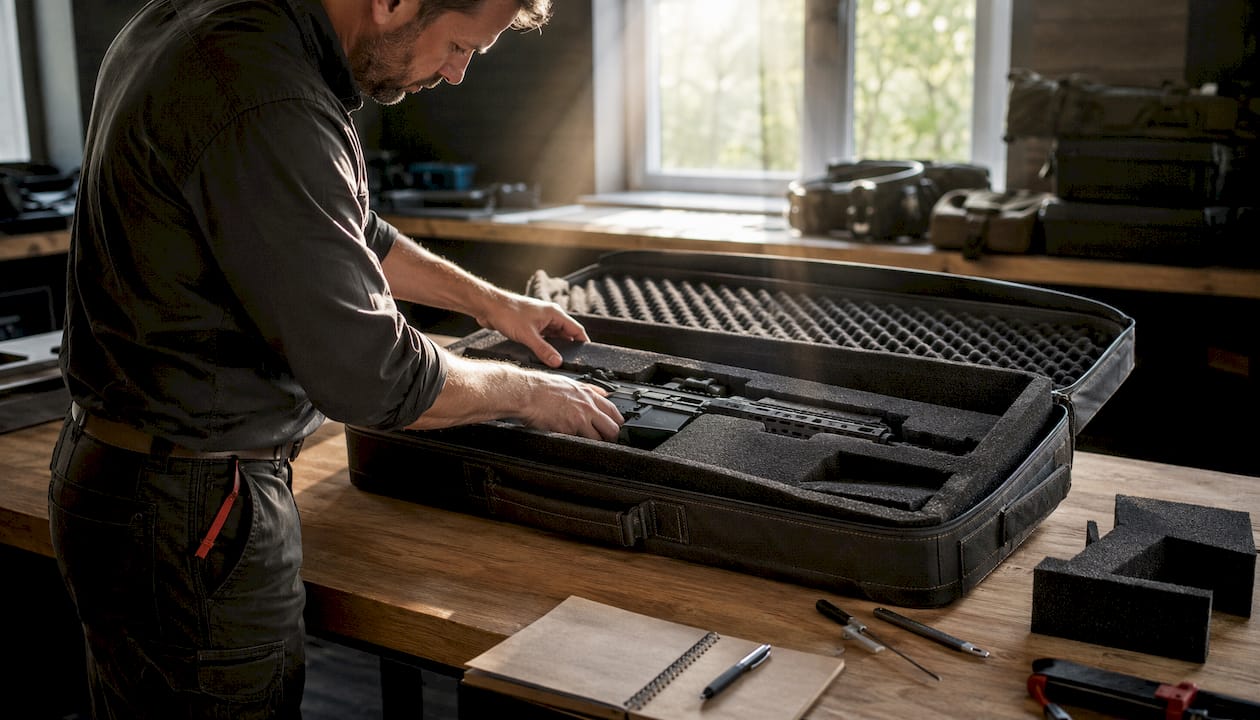
Carbine cases are sized specifically for firearms in the 36"–42" range, which covers most AR-15 and AK-pattern carbines. That sizing distinction matters because a case built for a full-length rifle will allow a carbine to shift and sustain damage in transit. Proper fit is not optional. It is the foundation of effective tactical carbine storage.
Key features that define a quality carbine case
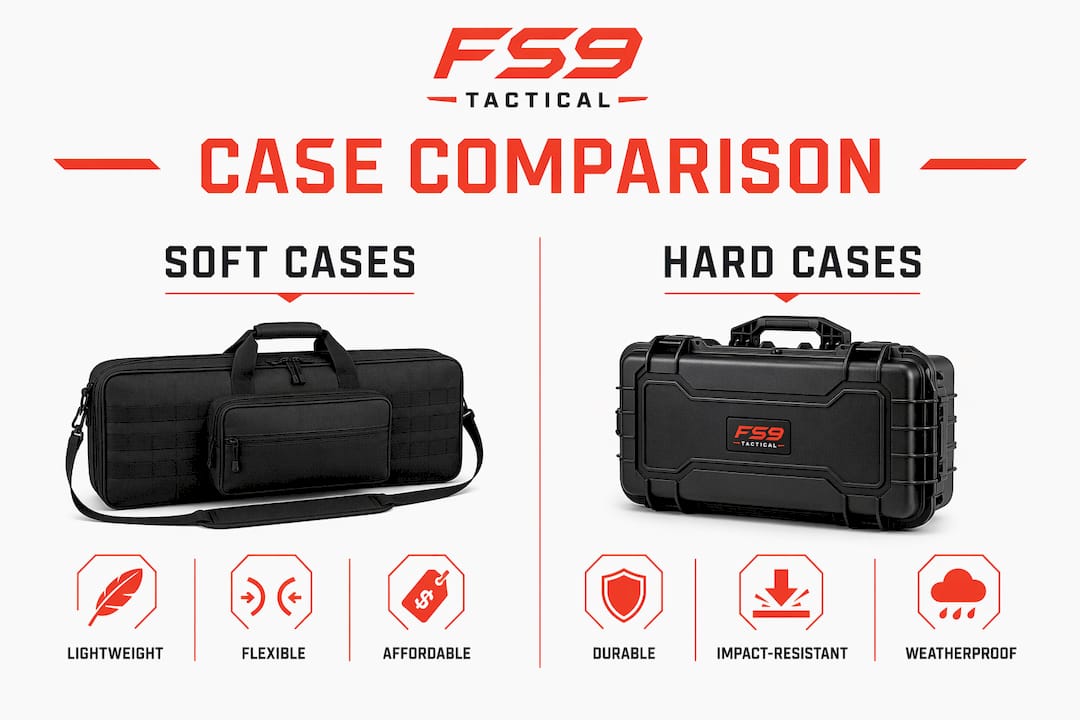
The construction material determines how well a case performs under real conditions. Soft cases typically use 600D polyester shells that are water-resistant and discreet, resembling a sports bag rather than a gun case. Hard cases use high-density polymer shells that resist crushing and puncture. Both material types serve different users and different environments.
Interior foam is where protection actually happens. Three foam options dominate the market: pluck-to-fit foam, wave foam, and custom-cut foam. Pluck-to-fit foam lets you remove pre-scored cubes to create a custom cavity. Custom-cut foam provides a precision fit for specific rifle configurations, including optics and suppressors. Wave foam offers general cushioning without customization.
Carrying systems separate a functional tactical case from a basic bag. Backpack-style tactical cases include padded shoulder straps, multiple accessory compartments, and Velcro-sealed pockets for magazines and tools. Single-handle cases work for short carries. Cases with both options give you flexibility across different transport scenarios.
Key carbine case features to evaluate:
- Material: 600D polyester, 1000D nylon, or hard polymer shell
- Interior padding: Pluck foam, wave foam, or custom-cut foam inserts
- Accessory pockets: Magazine sleeves, silencer compartments, and tool pouches
- Carrying options: Padded handles, shoulder strap, or full backpack harness
- Locking hardware: Dual zipper pulls compatible with TSA-approved padlocks
- Waterproofing: IP67 rating (fully submersible) or IP65 rating (spray-resistant)
- Dimensions: Sized for 36"–42" carbine platforms
Pro Tip: Always measure your carbine with its longest configuration, including a suppressor or muzzle device, before selecting a case. A case that fits your bare barrel may not close with a full setup attached.
Hard vs. soft tactical carbine cases: which one fits your needs?
The choice between hard and soft tactical rifle cases comes down to your primary use case. Neither type is universally better. Each solves a specific problem.
Soft cases cost $50–$200 and suit shooters who transport their carbine frequently. They are lighter, easier to carry, and low-profile enough to avoid drawing attention in a parking lot or at a public range. The trade-off is impact protection. A soft case will not survive a hard drop or a heavy object falling on it.
Hard cases run $150–$500+ and deliver protection that soft cases cannot match. An IP67-rated hard case is fully dustproof and submersible to one meter of water for 30 minutes without leaking. That level of protection makes hard cases the standard for air travel, vehicle storage, and any environment where the case itself may take a beating. The weight penalty is real, but so is the peace of mind.
| Feature | Soft tactical case | Hard tactical case |
|---|---|---|
| Weight | Light | Heavy |
| Impact protection | Moderate | High |
| Waterproofing | Water-resistant | IP67 or IP65 rated |
| Price range | $50–$200 | $150–$500+ |
| Best use | Range days, daily carry | Air travel, harsh environments |
| Discreet appearance | Yes | No |
| Foam customization | Limited | Pluck, wave, or custom cut |
For a deeper breakdown of soft vs. hard rifle cases, the decision often hinges on how often you travel and what conditions your gear faces.
Pro Tip: If you fly with your carbine more than twice a year, a hard case with an IP67 rating is worth the extra cost. Airlines require firearms to be in a locked hard case, and a quality case protects against baggage handling damage.
How to choose the best tactical carbine case for your needs
Selecting the right case requires matching the case to your firearm, your transport habits, and your budget. A mismatch in any of these areas means you will either carry more than you need or end up with less protection than your situation demands.
Follow this process to narrow your choice:
- Measure your carbine. Record the total length with all accessories attached, including optics, grips, and muzzle devices. Add at least 2" of clearance to find your minimum case length.
- Identify your primary use. Range days favor soft cases for their lighter weight. Air travel and vehicle storage favor hard cases for their impact and waterproof ratings.
- Assess your carry method. If you walk long distances with your case, backpack straps are not optional. A single handle becomes painful quickly with a loaded carbine case.
- Count your accessories. Shooters who carry multiple magazines, a cleaning kit, and a sidearm need a case with dedicated compartments. A bare-bones case will force you to carry a second bag.
- Set a realistic budget. A $75 soft case from a reputable manufacturer protects your carbine at the range. A $300 hard case protects it everywhere else. Buy for your actual use, not your ideal use.
- Check durability markers. Look for reinforced stitching, heavy-duty zippers, and ballistic-grade fabric on soft cases. On hard cases, check the latch quality and the seal rating before buying.
Industry experts confirm that more features do not necessarily mean better protection. Case fit and usage patterns define suitability. A heavy, over-engineered case becomes a burden when your actual use is a weekly range trip.
The Fs9tactical Elite Ranger soft rifle case is engineered for the AR-15 platform and fits various carbine configurations with room for accessories. It uses a lockable, discreet design that works for both range days and vehicle transport.
Maintaining and organizing your tactical carbine case
A well-maintained case lasts years longer than a neglected one. Proper maintenance includes cleaning material surfaces after each use, organizing gear consistently, and using locking mechanisms every time the case leaves your control. These habits protect both the case and the firearm inside it.
Cleaning a soft case is straightforward. Wipe down the exterior with a damp cloth after range sessions to remove carbon residue and dirt. For the interior, shake out debris and spot-clean foam with a mild soap solution. Never machine-wash a tactical case. The agitation damages foam inserts and degrades zipper seals.
Hard cases need less frequent cleaning but require more attention to their seals and latches. Check the rubber gasket around the lid every few months for cracking or compression. A compromised gasket defeats the waterproof rating entirely. Apply a silicone-based lubricant to the gasket annually to keep it pliable.
Organizing your case efficiently saves time at the range and reduces fumbling under pressure:
- Store magazines in dedicated sleeve pockets, not loose in the main compartment
- Keep your cleaning kit in a fixed pouch so you always know where it is
- Use Velcro dividers to separate your carbine from accessories and prevent contact damage
- Label compartments with small tags if you share the case or use it in low-light conditions
Pro Tip: After every range session, unload and inspect your carbine before placing it in the case. A loaded firearm in a case is a safety risk and a legal liability in many states.
For a complete guide to organizing your range bag, consistent habits matter more than the most expensive organizer on the market.
Key Takeaways
A tactical carbine case is defined by fit, material, and use case. Choosing the wrong type costs you either money or protection.
| Point | Details |
|---|---|
| Definition matters | A tactical carbine case is purpose-built for carbine-length firearms, not a generic gun bag. |
| Foam type drives protection | Pluck, wave, and custom-cut foam each serve different firearms and use cases. |
| Hard vs. soft is a use decision | Soft cases suit range days; hard cases with IP67 ratings suit air travel and harsh environments. |
| Fit before features | Measure your full carbine setup before buying; a poor fit negates every other feature. |
| Maintenance extends case life | Clean surfaces, check seals, and organize consistently to protect both case and firearm. |
What I’ve learned after years of watching shooters choose the wrong case
Most shooters buy a case based on price and appearance. They pick the one that looks tactical and fits their budget, then discover six months later that it does not fit their carbine with a suppressor attached, or that the zipper fails in cold weather, or that there is nowhere to store a second magazine. The case becomes an inconvenience instead of a tool.
The insight that changed how I think about this comes from gun shop experience: more features do not mean better protection. I have seen shooters buy a $400 hard case for a carbine they carry to an indoor range twice a month. That case is overkill. It is heavy, slow to open, and takes up half their trunk. A quality soft case with a lockable zipper and a padded interior does the job better for that specific use.
The reverse mistake is just as common. Shooters who travel by air try to save money with a soft case, then get turned away at the airline counter because the case does not meet the locked hard-case requirement. The $100 they saved costs them a missed flight.
My honest recommendation: buy two cases if your use varies. A quality soft case for the range and a hard case for travel covers every scenario without compromise. Fs9tactical builds both, and the AR-15 range bag setup guide is worth reading before your next range day.
— Cody
Fs9tactical gear built for serious carbine transport
Fs9tactical designs firearm storage and transport solutions for hunters, shooters, and survivalists who cannot afford gear that fails in the field. With over 20,000 satisfied users and thousands of five-star reviews, Fs9tactical is the second-largest soft rifle case manufacturer in the U.S. for a reason: every case is built with ballistic fabrics, reinforced stitching, and real-world use in mind.
The Fs9tactical product line covers soft rifle cases, tactical gear bags, and field accessories that work together as a complete transport system. Whether you need a discreet soft case for weekly range sessions or a full tactical loadout for extended operations, Fs9tactical has a solution built to the same standard. Browse the full lineup at Fs9tactical.com and find the case that fits your carbine and your mission.
FAQ
What is a tactical carbine case used for?
A tactical carbine case is used to securely store, protect, and transport carbines and short-barreled tactical rifles. It shields the firearm from impact, moisture, dust, and unauthorized access during range trips, travel, and field operations.
What is the difference between a soft and hard carbine case?
Soft cases are lighter and cost $50–$200, making them ideal for frequent range use. Hard cases cost $150–$500+ and offer IP67-rated waterproof protection, making them the standard for air travel and harsh environments.
What foam type is best for a tactical carbine case?
Custom-cut foam provides the best fit for a specific carbine configuration, including optics and suppressors. Pluck-to-fit foam is a flexible alternative that lets you create a custom cavity without ordering a case-specific insert.
Can I fly with a tactical carbine case?
Airlines require firearms to be transported in a locked hard-sided case. A soft tactical case does not meet this requirement. Always check TSA guidelines and your airline’s specific firearm transport policy before traveling.
How do I maintain a tactical carbine case?
Wipe down soft case exteriors after each use and spot-clean foam interiors with mild soap. For hard cases, inspect the rubber gasket seal every few months and apply silicone lubricant annually to maintain the waterproof rating.
Recommended
- How to Choose the Right Tactical Rifle Case – FS9 Tactical
- AR-15 Rifle Case Size Chart: Every Barrel Length, Every Stock, One Ans – FS9 Tactical
- AR-15 Rifle Case Size Chart: Every Barrel Length, Every Stock, One Ans – FS9 Tactical
- The Evolution of Soft Rifle Cases: From Traditional to Tactical – FS9 Tactical
